Can philanthropy bridge our divides? Q&A with the Council on Foundations
'Philanthropy has the resources, has the ability, has the convening power to model a different path forward, to model a kind of leadership that is reaching across differences.'
Polarization – division – plays out within families, on social media, and in our politics.
A fall 2025 Times/Siena poll showed that 64% of Americans believe we’re too politically divided to solve the nation’s problems. As challenges from division and conflict have grown, so has the field of people taking them on.
In the last 10 years the ListenFirst Coalition, a group of organizations that bring Americans together across divides, has grown to more than 500 members including Engage Winona, Arts Midwest, and Braver Angels.
Divisions and conflict impact every sector, including philanthropy with its foundations and funders. Many in philanthropy hope to lead the way to solutions.
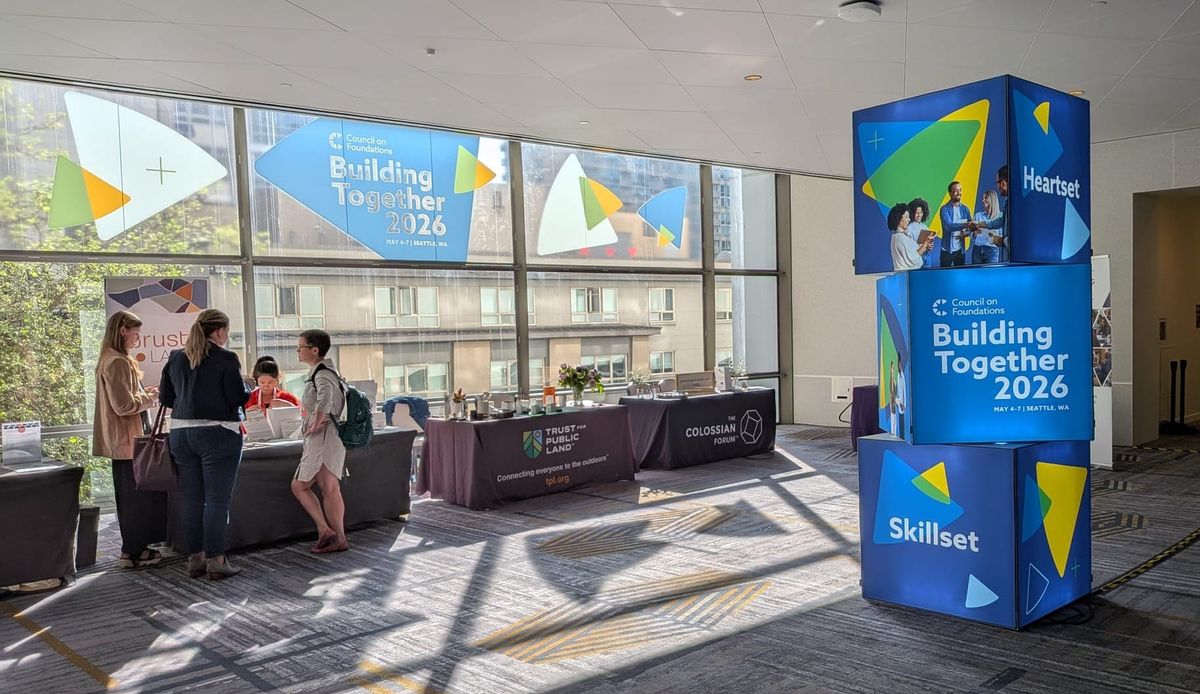
In the last five years, the Council on Foundations made working across difference a strategic pillar. It has been helping its members learn to connect and collaborate across difference, in part through its Building Together conference, the second of which is taking place May 4-7, 2026, in Seattle, Wash.
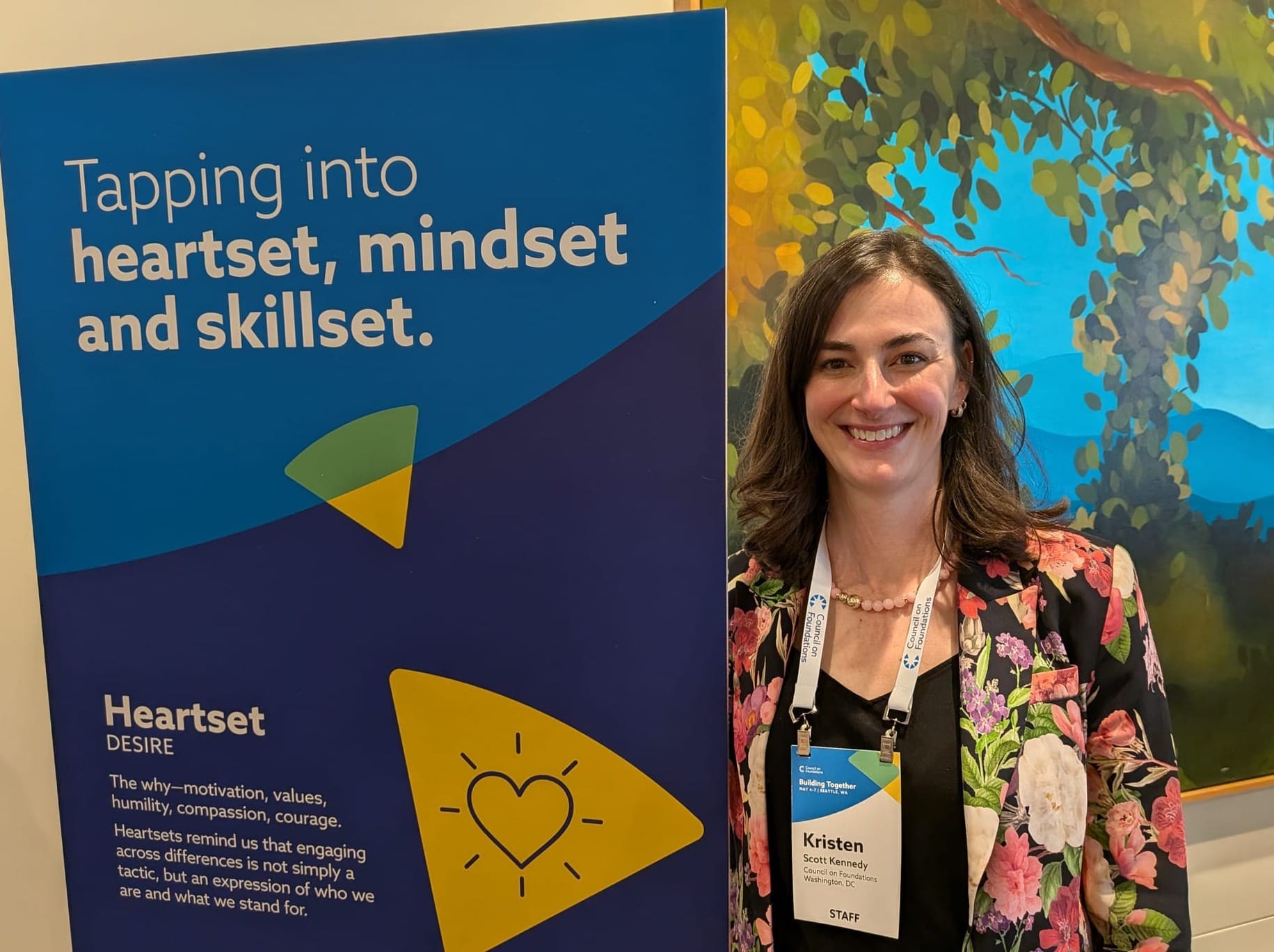
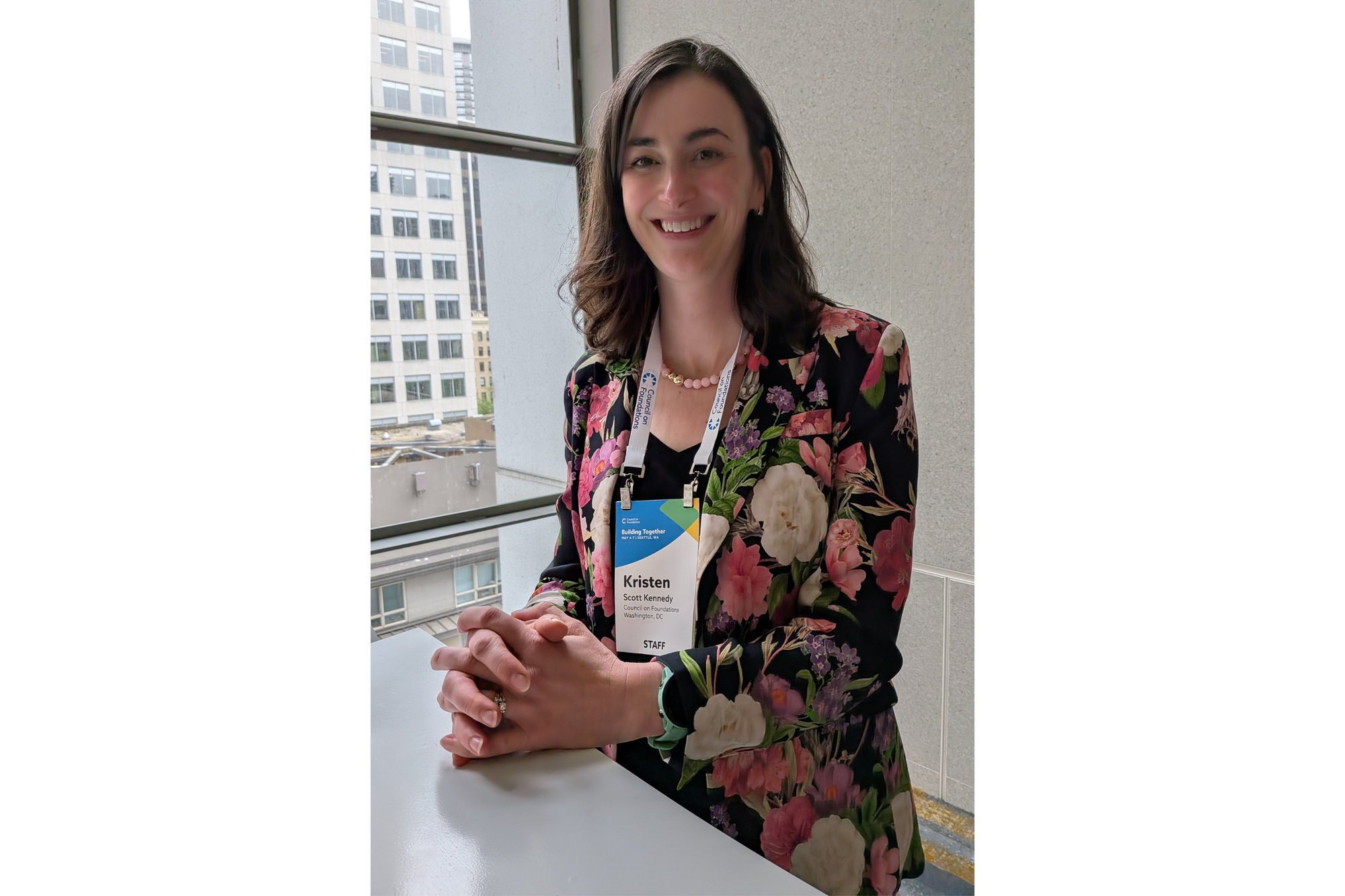
Project Optimist sat down with Kristen Scott Kennedy, executive vice president at the Council on Foundations, to talk about why philanthropy has focused on collaboration across differences and what's next for bridging work across the country. The interview has been edited for clarity and length.
Why did bridging emerge as a focus for the organization?
Kristen Scott Kennedy: We talk about it more as working across differences. And the reason that it came up for us is that when we did our strategic planning process in 2020 and 2021, we listened really, really hard to our community. We did a lot of stakeholder outreach to understand what was the right role for the council to play in this moment.
We are the broadest, most diverse, philanthropy-serving organization. We have over 1,000 institutional members, which means that we have thousands of individuals within our membership. And that membership is very diverse. They come from communities all across the country, big and small, urban, rural.
They are representative of different kinds of philanthropies: community foundations, corporate grant makers, private foundations, family foundations, public grant-making charities. All of these different kinds of organizations are in our membership. I think our membership is really reflective of the diversity of the country. And so we try to maintain essentially a big tent for all of the diversity of the membership.
When we did the strategic planning process, we thought: It’s a challenge. But it's also an important opportunity for us and something that we heard people really wanted.
They wanted to come and find community with people that were different from them, to learn from them, and also to develop a different kind of understanding. So we felt like we needed to lean in there. So one of the pillars of our strategy is about supporting philanthropy to develop the strategies and skills to work across differences.
That's one whole pillar of what we do. And we've been building that programming and implementing it since we released the strategy in 2021. And this conference is a cornerstone. This is the second time we've run Building Together.
We also have the cohort program that we do with the Greater Good Science Center. We work really closely with Resetting the Table who's done staff and board training for us. We do workshops. We have a lot of stuff that we built out over the years.
 Nora Hertel
Do you think of it as solving a problem?
Scott Kennedy: Yeah, I do. Many of the divisions that we see playing out in broader society are reflected back within philanthropy. We're not immune to those destructive forces.
And at the same time, we think that we have an opportunity because philanthropy has the resources, has the ability, has the convening power to model a different path forward, to model a kind of leadership that is reaching across differences and developing deeper understanding and listening really hard and transforming conflict.
We're trying to contribute to these bigger societal problems using philanthropy as a potential norm shaper for what could be possible if folks could do things differently.
Do you see it also ripple out into the programs that members do?
Scott Kennedy: That's one of the hopes, that folks will think about how can they apply a lens of working across difference within their programs, within their investments.
And it could look different ways. There's, how does it look internally – how you operate as a staff? How does it look externally in how you fund, in how you have relationships in the community with grantees with other partners? How does it look at your own strategic level?
We've certainly had folks who, in the last couple of years, have actually developed entire new strategic focuses that are related to this topic.
If folks come to some of our work and hear these conversations and are inspired to say, we want to think about a more intentional integration into how we invest in what our programs look like, fantastic. But we know that different folks have different entry points, so that might not be the right fit for everybody.
What do you hope to change, and how do you measure success?
Scott Kennedy: Part our focus is helping people develop the heartset, the mindset, and the skillset to work across differences. And heartset is really the drive, the motivation, the desire to want to do that work. That's pretty personal.
The mindset is the strategies, the frameworks, the ideas. And the skillset is putting all of that into practice, having the ability, the capacity to make the heartset and the mindset a reality.
What we have heard from folks over the years, and especially when we started doing this work, is a lot of people have come with the heartset. They come because they have this orientation where they want to work across differences. They see it as effective, as a pathway forward.
Sometimes they have some of the strategies, frameworks, mindset pieces. Sometimes they don't. Where folks often get stuck is on the skillset. They're like: I want to do this. I maybe have some ideas of how to do it. But I don't know how to put it into practice.
That's what our program is focused on – changing that, equipping any funder who wants to have all of those components. Because none of them are sufficient on their own. It's really this formula that needs to be in place for folks to be able to implement this work with a level of effectiveness.
Nora Hertel
How do you measure impact?
Scott Kennedy: This is a big question that we're really sitting with, and I don't have a fantastic answer for you yet. I think a lot of folks that are working in the space are really trying to think about that.
We have ways to measure the experience people have with our programs. We have ways to look at application and how they might apply what they're learning.
We're working on, but don't yet have a way to think about, the longer term outcomes of it. We have a sense of where we want to be headed. But we don't have an answer yet.
There's been a lot of really good work that we're trying to learn from around things like the belonging barometer, and the social cohesion index, and some of these other tools that are looking at community-level change.
Mikki Morrissette
What do you think is next with bridging, working across difference nationwide?
Scott Kennedy: My observation over the last couple of years has been that there's definitely an increased interest in conversations about working across differences. I think that one of the things I've seen is that folks are all really coming from different entry points. Part of it is figuring what's the right entry point for my organization, for my work, for my community. What are the goals that I want to accomplish, and how does this frame of working across differences fit?
And for some people that might look like bridging. For some people, it might look like trying to find common ground. For some people it might look like, maybe they have a really entrenched conflict in their community that they need to work through first before they can actually ever get to common ground. Or maybe it's a shared problem. There's all these different ways that folks can enter into the work.
Part of what I'm seeing is an increased awareness of the work, and then more and more folks finding their way into it in a way that makes sense for who they are and what they're trying to accomplish. At least that would be my hope.
It feels like the conversations are getting more sophisticated, and folks are really starting to think about how this could look in their own contexts – not just on an intellectual level, (but) really taking it home and thinking about: OK, what does this mean for the work that we're doing in my community?