
Prophecy and road map: How 'Letter from Birmingham Jail' can guide Minnesotans today
St. Cloud Pastor James Alberts II of Higher Ground Church of God in Christ reflects on Rev. Dr. Martin Luther King Jr.'s letter as the state faces a surge of federal immigration enforcement.
Editor's Note: The headline on this story has been updated to correct a misspelling.
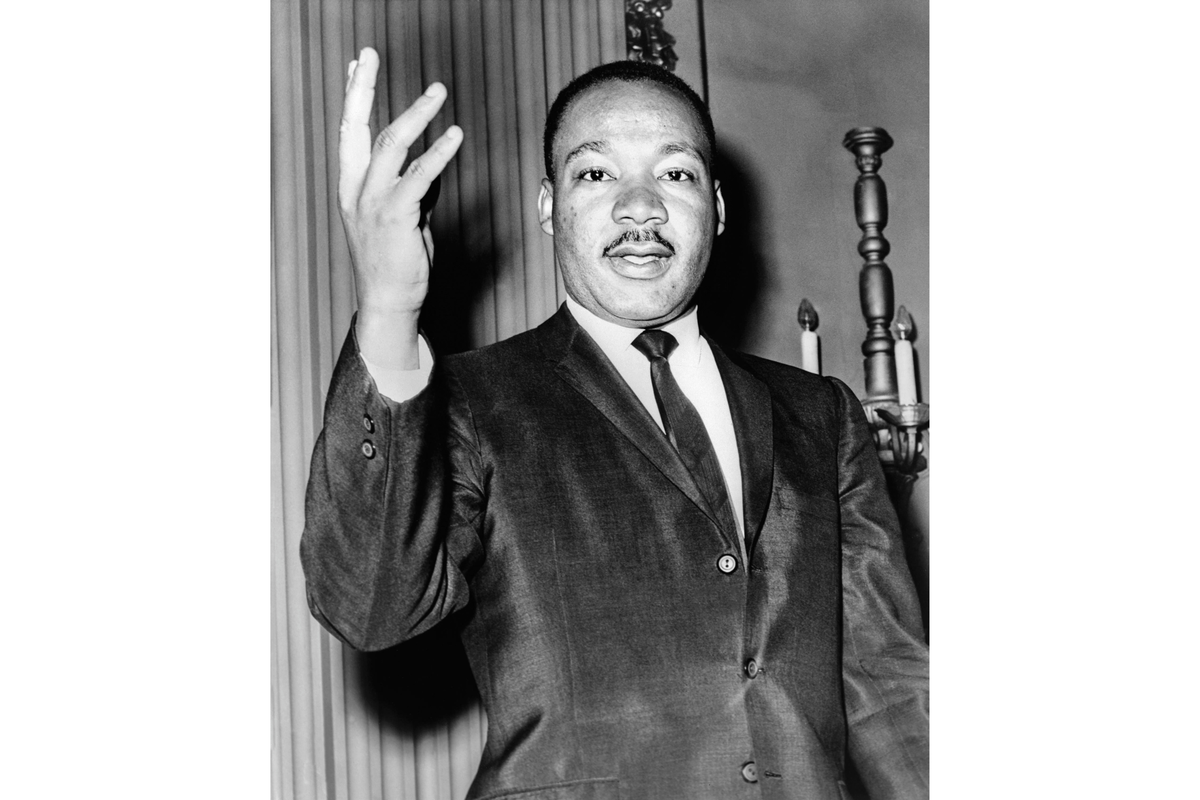
ST. CLOUD – The Rev. Dr. Martin Luther King Jr.'s "Letter from Birmingham Jail" is 63 years old.
Yet it resonates in Minnesota as U.S. Immigration and Customs Enforcement agents surge across the state, and community members protest and document their actions, including the killing of Renee Good. Minnesotans launched global protests against racism following the murder of George Floyd by a police officer in 2020 and have seen equity programs rise and fall in response.
On Martin Luther King Jr. Day, January 19, 2026, Pastor James E. Alberts II of Higher Ground Church of God in Christ reflected on King's letter in front of a live audience at St. John's Episcopal Church in St. Cloud, Minn. He discussed the letter with Project Optimist Executive Director Nora Hertel and fielded questions from sponsoring churches.
King's letter is available to read here. And the full discussion with Pastor Alberts is available to watch on YouTube here.
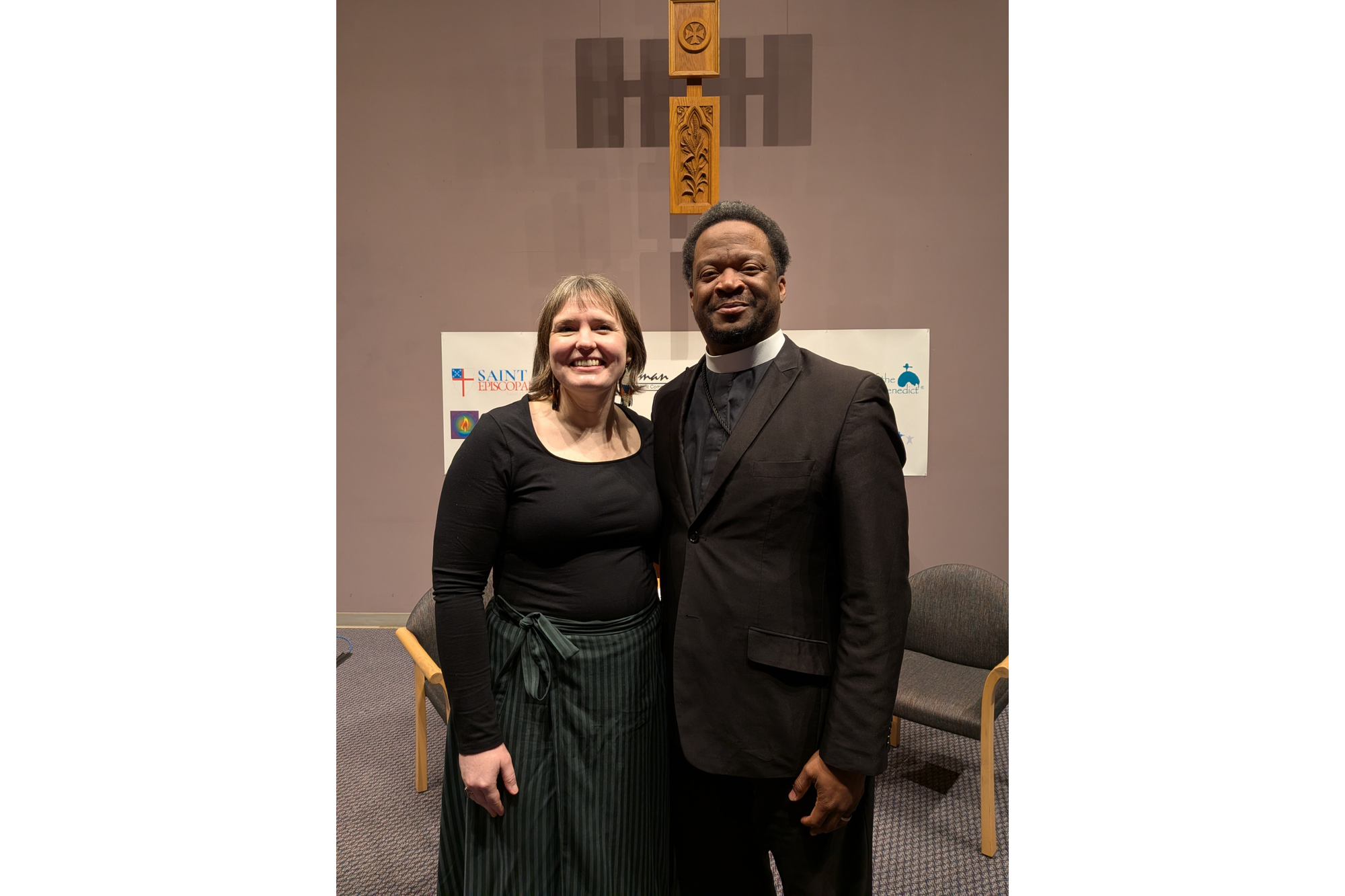
Here is a selection of insights from the interview, edited for length and clarity by Nora Hertel.
Hertel: How is (the letter) landing today with all that’s happening in Minnesota?
Pastor Alberts: Today. 2026. For as much as Dr King was dealing with in the day and the time that he wrote this prophetic work, the prophecy that was given to us now about what the landscape is and who the players are and what may be a path forward – is absolutely amazing.
Hertel: Do you mean in terms of dealing with injustice and needing to address that, come together, and how to do that?
Pastor Alberts: There's a guilt that I feel that the injustice is the same. I feel a way about Dr King writing about something over 60 years ago that we are still dealing with in no less way today. It would seem as if racism in the form that it was seen at the time is running amok.
And (I'm) proud at the same time. I'm a transplant to Minnesota, I've been here for 30 years. But before then, in my family, the core of my family comes from Texas. And they experienced segregation. My great-grandfather, my grandparents, my mother, my father, experienced segregation. Segregated schools. Colored water fountains. The whole thing. All those things.
And it's amazing when you think about it, because from my standpoint it's like a documentary, almost. When you hear people talking about it at that time. And then you read Dr King's letter, and it's like, wow, OK, I hope that we've graduated from that. And then advance to 2026, and it's like, no, you haven't.
And does that mean that we as a community, or as a culture, have we regressed or was this here consistently? And if that was the case, was it our responsibility to weed it out to bring it out and about and deal with it then? And that's where Dr King's letter gets very, very prophetic in the ways in which he foresaw us handling that.
 Nora Hertel
Hertel: Are you talking about the steps of fact gathering, negotiation, purification, and direct action? Can you tell us a little bit about how we can use that as a road map now?
Pastor Alberts: You know, that was one of those areas that actually begin to chill me down to the bone. Because if the road map or the game plan was given to us then, and it applies now, then did we just not run the play, like did we just not execute on?
Because the letter can be broken down into basically four different movements. That's the first section where he justifies the purpose for him being there. And that's where the line: Injustice anywhere is injustice everywhere. And we, we have a responsibility to participate in what he called a garment of destiny, and tugging on it in any one place means that it reaches us all. Then he gets to that four-step process for dealing with this. And when we see what Dr. King has written down – he actually wrote it down.
I want you to picture what it is to deal with racism, segregation, and injustice, inequality. And then we look upon that time in American history as a very dark time, a lot of turmoil, a lot of stuff that was going on. And we here have the benefit of seeing us come through that, such that if we ever saw it again, we should at least re-review the notes.
We have it, the injustice, the steps. As we review all that was given to us, why in the world are we still stuck?
Hertel: He writes this letter from jail in response to another letter that was written by eight clergy members, and he's addressing their concerns. That letter also is very, it could have been written now. I’ve heard those things before – this is not the right time, or wouldn’t it be better to negotiate instead of taking direct action in the streets? The opposition – we’re still hearing the same thing today.
Pastor Alberts: "Oh, Pastor Alberts, we don't need to go marching down the street. Oh, Pastor Alberts, we shouldn't protest and boycott. Oh, Pastor Alberts, we should really try and work those things out."
And the amazing thing about all of this is where we're having this conversation, here in Minnesota, amongst "Minnesota nice." Right? The passivity that comes along with that, that we’re able to, in the midst of all the things that we normally deal with, we can smile, grin, bear it.
I think that it is divine, that the opportunity was taken – because Minnesota nice never has to mean passivity. It has never had to mean that we put up with everything, and we're never going to come face to face and deal with it.
I think that what we have had an opportunity to see in the weeks up to and following tragedy, in the very place where you thought you could just get away with it if you just came in here acting big and bad, was that there is a righteousness that shines, even in the midst of the darkness that is being cast on us, that your shadow that you’re trying to pass on us is only there because there’s a light that’s bigger than you behind you.
Dr. King talked about just laws and unjust laws, and where then do you draw the line? And he oftentimes said, I don’t have a problem following just laws. But every law must be, in that time of investigation, we have to understand whether or not justice is in the law or if the law was meant unjustly from its inception.
 Nora Hertel
Rev. Alberts: One of the questions that I have right now – Who's the moment calling for? Who is that that is needed? Now, oftentimes, the moment is calling for whomever answers. What does that look like?
The children of Israel wanted a David when Jesus showed up. And they rejected Jesus. Because they wanted a David. And at a moment like this, are we asking for a king? Are we asking for another Dr. King to show up? With a melodic voice and a depth of vocabulary that speaks intelligently into the camera, inspires us to walk out into the street and move the veritable mountains that exist upon us? That in great words and with courage and power walks out and brings us together?
No. Absolutely not. For one, the other side is ready for that. That's one. And two, that would mean that it wouldn't be you, or you, or you.
And it just might be you that this time is calling for. And how would it be if the answer was already given, and we were just all sitting around waiting for the answer. It's better that we don't know and that we all try.
So that if we are the answer, we step into the destiny that causes.
Hertel: You mentioned how this letter has so many jewels in it, and one of them is the quote: Justice (too long) delayed is justice denied. And there's a question that was submitted about time.
Submitted question: King talks about “the myth of time,” and how it serves the oppressor. In a 1964 speech, he said, “We must help time, and we must realize that the time is always ripe to do right.” What are some practical ways white people can “help time” today?
Pastor Alberts: Just do it, if you’re thinking about it.
One of the things that I've always wanted to know is that – because I've been Black all my life. I’ve fought for most of the stuff that I've been able to accomplish, hard. Fought against myself. Fought against my family. Then I fought against the world. And the hardest fight was always myself. If I can get past me, everything else, I can handle that.
And yet, I deal with people who sit in a place where they’re so privileged, they don't know they are. They sit in such a comfortable spot. And they come and they say, “What can I do?” And my response is, “Be you. Be you, and be confidently you.”
I don't want you to come and be me. Ain’t enough room in here for anybody else. And according to my wife, one of me is enough.
But I need you to be you. And what I would say in response to everybody asking that question, “What can white people do?” Man, y'all can do a lot. Do it. Don't wait on me. Do it.
Vote with your money. Part of Dr King’s campaign was a campaign on poverty because one of the things that makes being not white so hard is the gap that exists between the financial structure, the have and the have not.
The unequivocal unfairness that brings us to the state of Minnesota while this great thing is going on, is that it was expected that the white Minnesotans wouldn't care what was going on with the Black people that were being accosted, because Minnesota has one of the biggest gaps between the white haves and the Black have nots. Biggest in the country.
We're underneath the state of Mississippi when it comes to the wealth gap. We have an abysmal graduation rate when it comes to Black children, when it comes to colored children, yet we sit upon a very high standard for our education overall. And we get away with the idea or the notion that it is OK because overall, it looks OK. And that’s that “Minnesota nice” part.
And they try to take advantage of that. They didn't take into consideration that even though what you see and what you heard and what you had going on and what was there was not the same as what was in their hearts.
One of the great optimistic places that I try to exist in – and I’ve seen it. I’ve seen it here in the 30 years that I’ve been here, 31. Some have fallen into a trap. That the existence that they had, they learned that, and there was no example of otherwise. When they came into contact with the opportunity that they might have had it wrong, and then getting it wrong: "I don't know if I want to try that again. I didn't really go well the last time we tried that."
And so there are a lot of individuals that are sitting underneath a malaise of ambivalence. It looks like they're ambivalent, but as you have been able to see that they'll show up. Because I'm not the only one who will not watch it (a murder like George Floyd’s) again.
Hertel: What else should we have asked you?
Pastor Alberts: Is it going to be worse before it gets better?
Yeah. We have only begun.
How does a Black pastor today read King’s "Letter from Birmingham Jail"? was sponsored by the following organizations: Bethlehem Lutheran Church, Christ Church Newman Center, Collegeville Institute for Ecumenical and Cultural Research, First United Methodist Church of the St. Cloud Region, St. Cloud Unitarian Universalist Fellowship, Saint John's Episcopal Church, Salem Lutheran Church, and the Sisters of the Order of Saint Benedict at Saint Benedict's Monastery.