Men build health, community, and little libraries at Hopkins Men’s Shed
'Sheds are grassroots. It's whatever the members want to do. That's number one.'
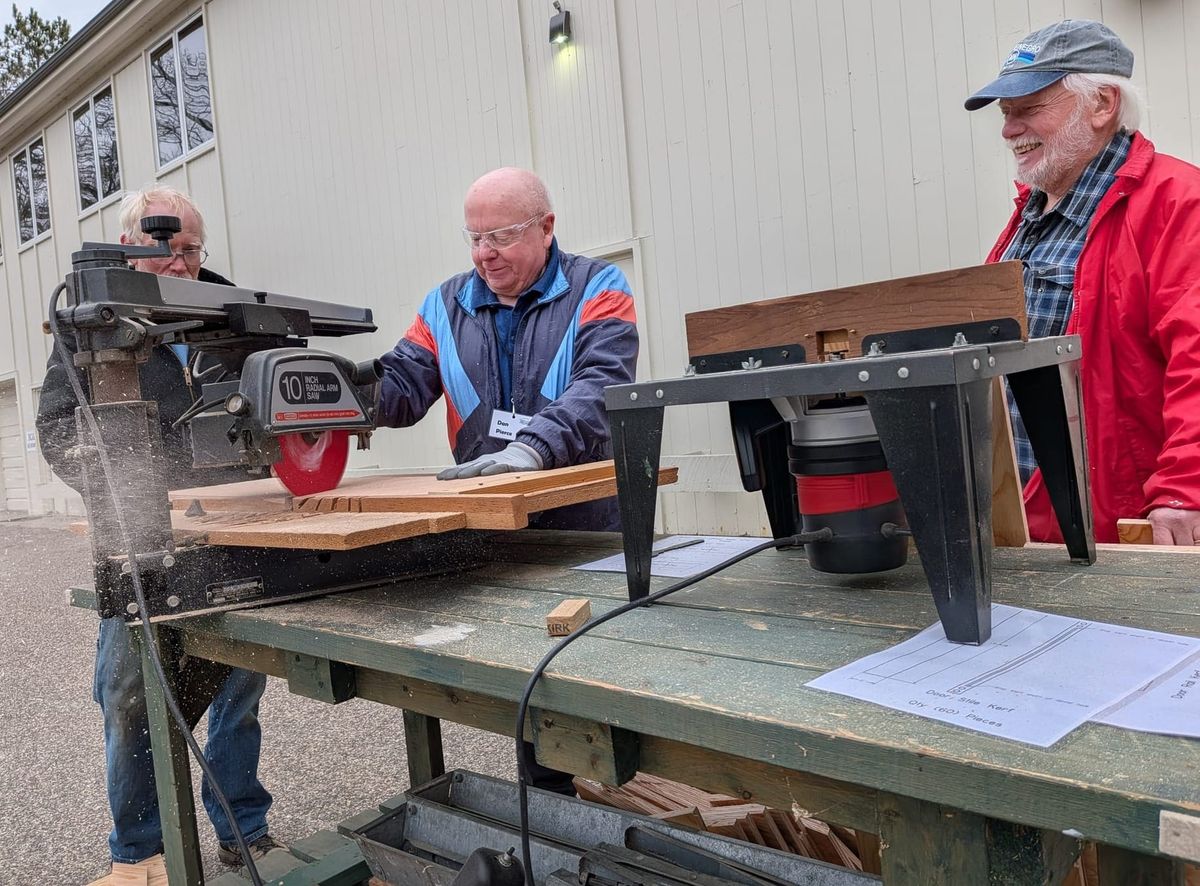
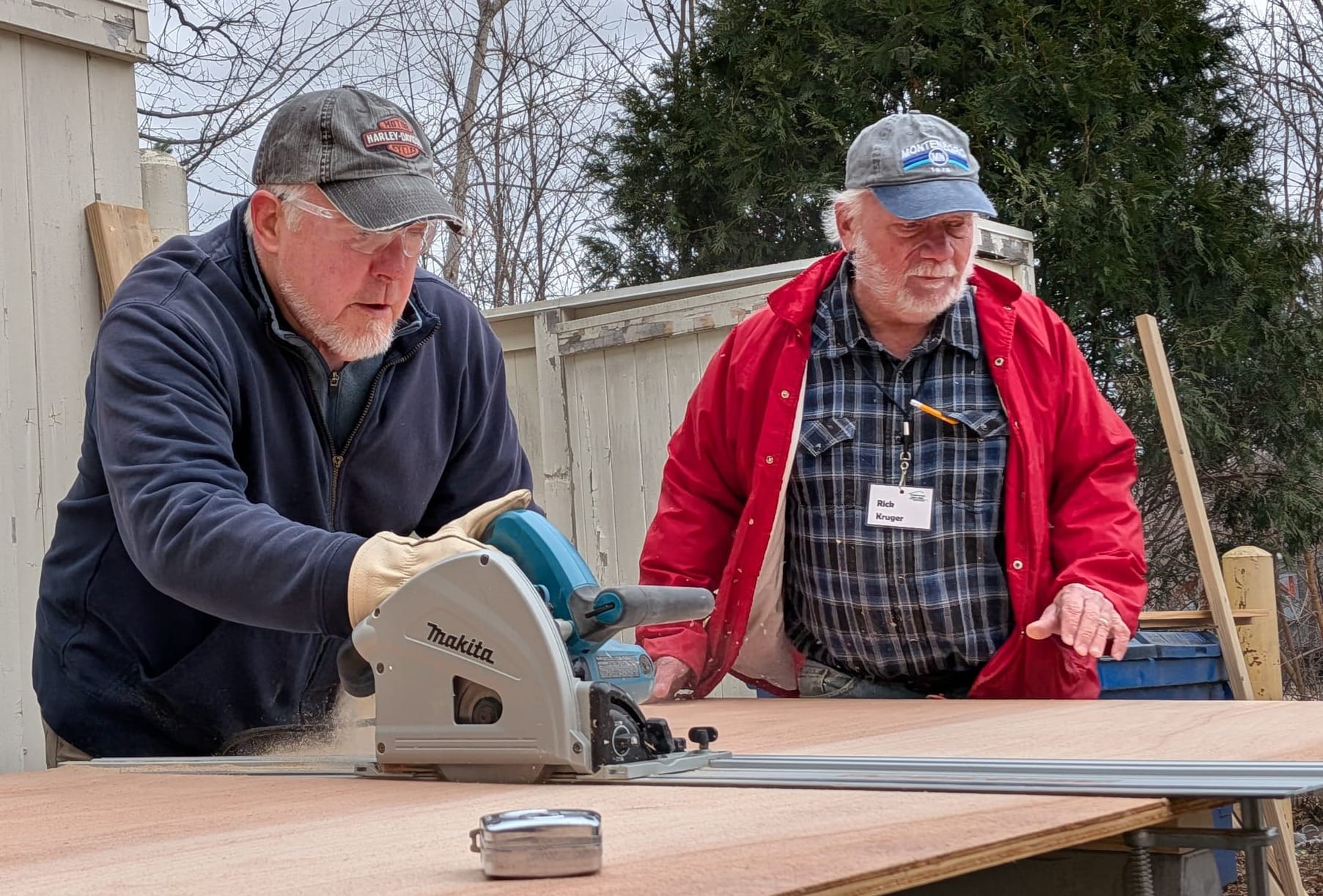
HOPKINS – Five saws whined and bit through wood boards in a parking lot in Minnetonka, Minn., in late March.
Two or three retirees manned each saw, cutting pieces for 30 Little Free Libraries. Inside the shop several men gathered around a table to drill holes in the pieces and chat between tasks.
This side-by-side, shoulder-to-shoulder time is what Men’s Sheds create for their members. The Hopkins Men’s Shed also creates a lot of woodcrafts for their community in the western suburbs of the Twin Cities – beds, little libraries, clothing racks, benches, and more.
“I’m not a big chatter. But if you’re working on a project with somebody else, and you’re conversing as a side line, it just seems more natural,” said Glen Juntti, treasurer of the Hopkins Men’s Shed and member for 9 years.
Men’s Sheds started in Australia in 1993. They provide spaces for men to connect with each other for their mental and physical wellbeing. They can serve as an antidote to the loneliness epidemic and poor mental health. Sheds look and function like social or service clubs.
“Sheds are grassroots. It's whatever the members want to do. That's number one. They can choose to be a choral group. There's a shed that actually, their whole thing is model railroads. That's in North Carolina,” said Mark Winston, director of the U.S. Men’s Sheds Association.
Why do we need Men’s Sheds?
Men isolate, and women congregate in retirement, said Dan Pierce, president of the Hopkins Men’s Shed, citing an Australian study.
Isolation leads to loneliness which leads to mental health issues like depression and physical health issues like hypertension. The U.S. surgeon general called for more social connection and community building in a 2023 advisory on the epidemic of loneliness and isolation.
 Jen Zettel-Vandenhouten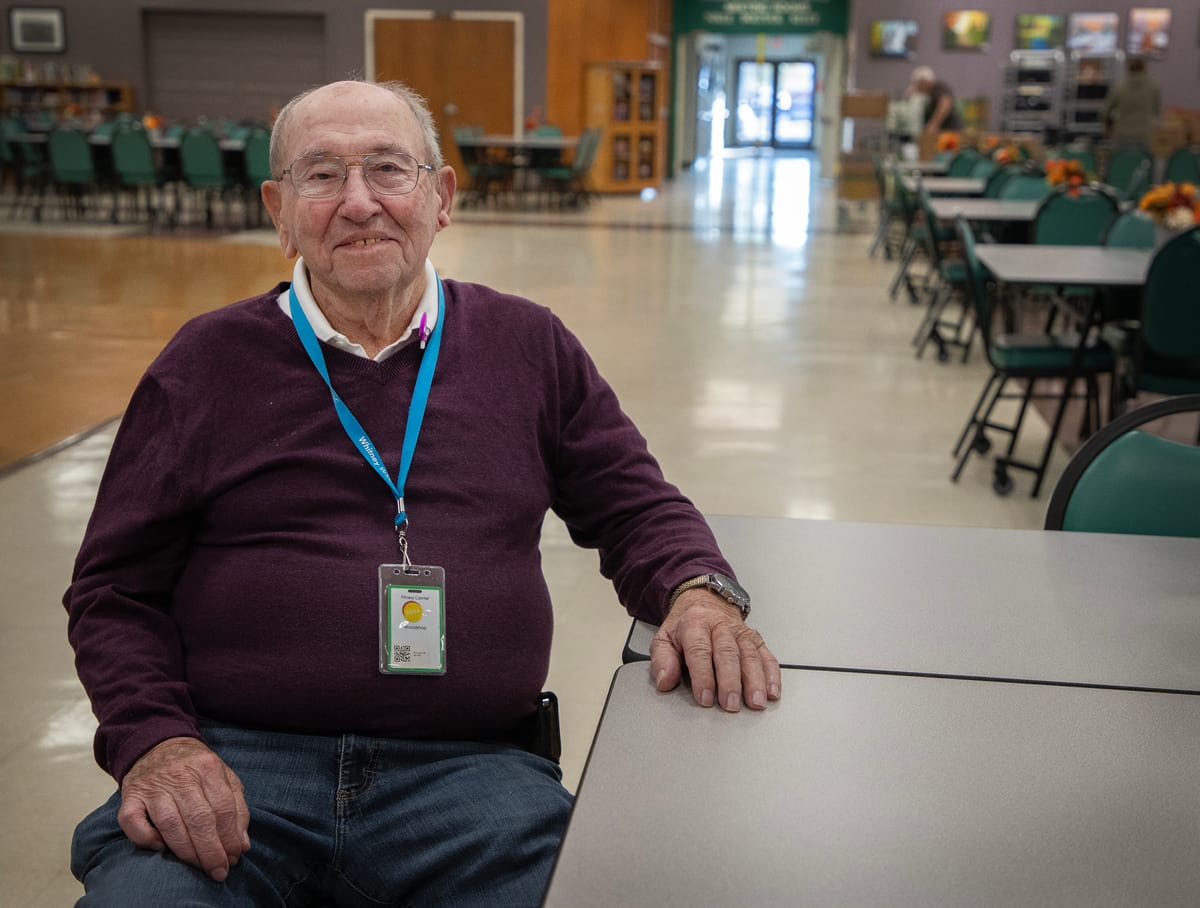
In Minnesota, Baby Boomers were among the least lonely in a survey reported in late 2024. But a review of the state suicide data shows higher rates among men, adults age 50 and older, and rural residents. Men’s Sheds can decrease those risks and increase what experts call protective factors.
Winston, director of the U.S. Men’s Sheds Association, interacts with groups across North America and had a member thank him for getting his life back.
Another in Canada told Winston: “I've been thinking about committing suicide. It's been so bad. And the shed has saved me from this.”
This is a solutions journalism story! Here’s how you can tell
This story includes the four pillars of solutions journalism needed to make it a solutions story, according to the Solutions Journalism Network.
Response: The story focuses on the response to the problem of isolation and declining health among older men. The solution featured is a set of groups called Men’s Sheds. Participants connect while doing things together, “shoulder to shoulder.”
Evidence: Studies show that Men’s Sheds can improve mental and physical health of participants.
Limitations: New sheds are more likely to succeed with multiple founders. Some must manage finances if they want to rent space or take on other expenses.
Insights: Groups determine what they want to focus on, from public service and woodworking to music and model trains.
Sheds around the world
Australia is home to more than 1,000 of the 4,000-plus Men’s Sheds worldwide. They’re in 17 countries and highly represented in Ireland.
Researchers have studied the sheds’ impact over the last three decades.
A study of two sheds in rural Alberta, Canada, found positive mental health impacts.
“Many of the men interviewed speak openly about the ways in which their participation in a Men’s Shed helped them with serious mental health issues like loneliness, grief, and depression,” according to the 2023 report. And they shared experiences of camaraderie, inclusion, and purpose.
 Nora Hertel
A 2021 study found that 60% of Scottish shed members reported improved physical health: They moved more, drank less, improved their diet, and were more able to overcome injury or illness.
There are more than 30 sheds in the U.S., plus more in development.
“The U.S has the potential of someday doing 5 to 10,000 sheds easily. We're just on the cusp of this,” Winston said.
The Hopkins Men’s Shed was the first in the continental U.S. when it launched in 2016. It is one of five in Minnesota listed on the U.S. Men’s Shed’s website, including three others in the Twin Cities and one in St. Cloud.
The group started at the Hopkins Activity Center with help from two women on staff who are now retired and honorary members of the shed.
“When this started … oh what a gap to fill,” said Susan Newville, who was coordinator at the center when the shed formed.
See the members of the Hopkins Men's Shed in action at their workshop on Thursday, March 26, 2026. (Nora Hertel for Project Optimist)
How do they work?
Members in Hopkins started with odd jobs around the center and the city, painting a storage room and adding shelves.
The group, now with 25 members, has nearly outgrown its regular meeting room. They bring in speakers and have discussions as the adjacent gym hosts line dancing.
Members get out in the community as well, manning a fish fry or building and delivering beds to children who don’t have them. They’ve clocked more than 4,500 volunteer hours in their 10 years, and they’re proud of it. That includes construction of more than 100 Little Free Libraries and more than 70 beds for children.
Getting the word out can be a challenge, Winston said. And having more than one founder helps improve the possibility of success.
Some groups decide to become nonprofits like the Hopkins Men’s Shed. Some choose to rent space or use donated space.
“They can turn it into anything they want,” Winston said. “Don't turn it into a bar. Don't turn it into a discussion group on politics, or you're going to blow it up. But it's fairly open.”
Members of the Hopkins group have a penchant for tinkering, fixing, and building. That shapes their activities.
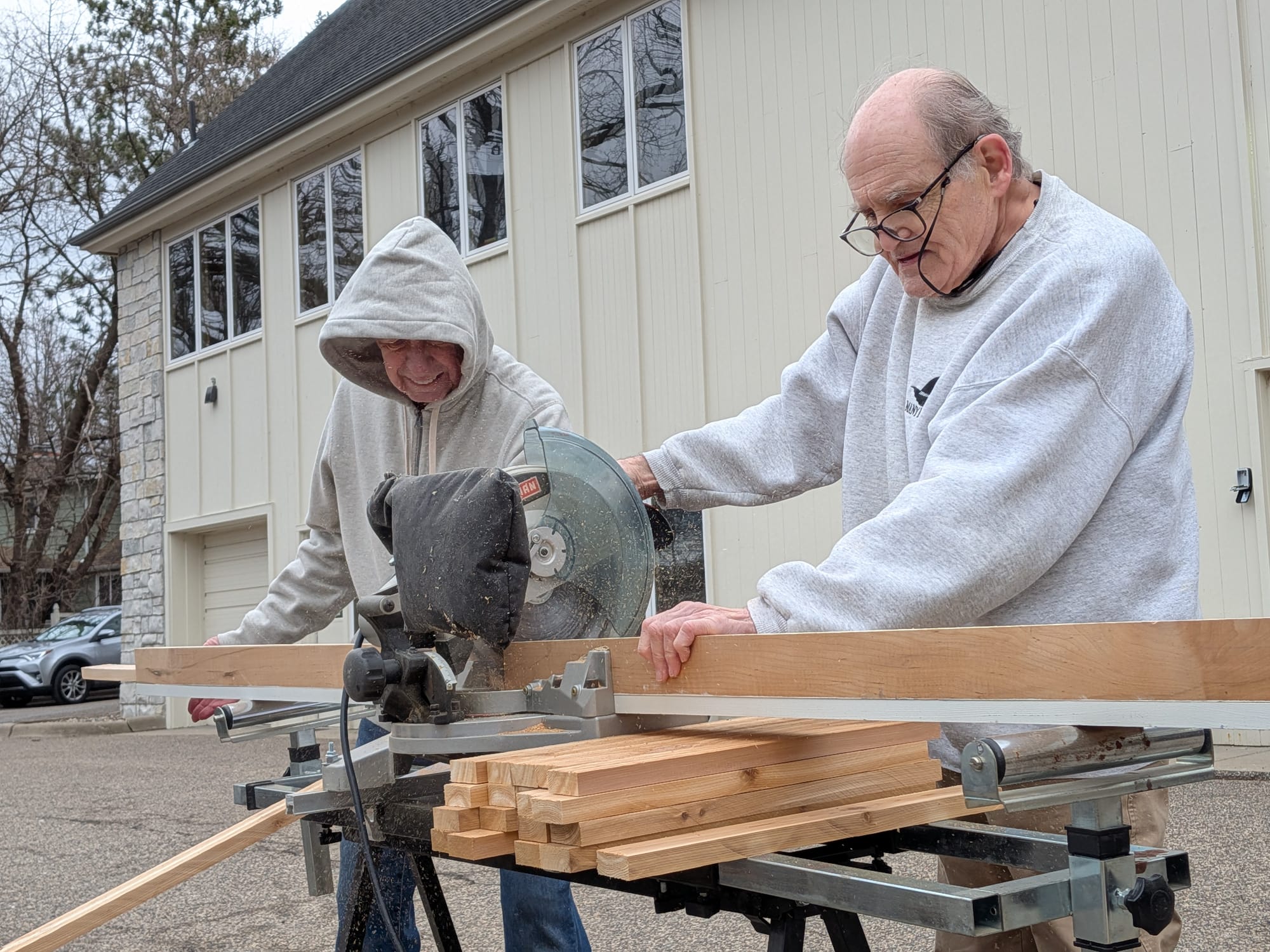
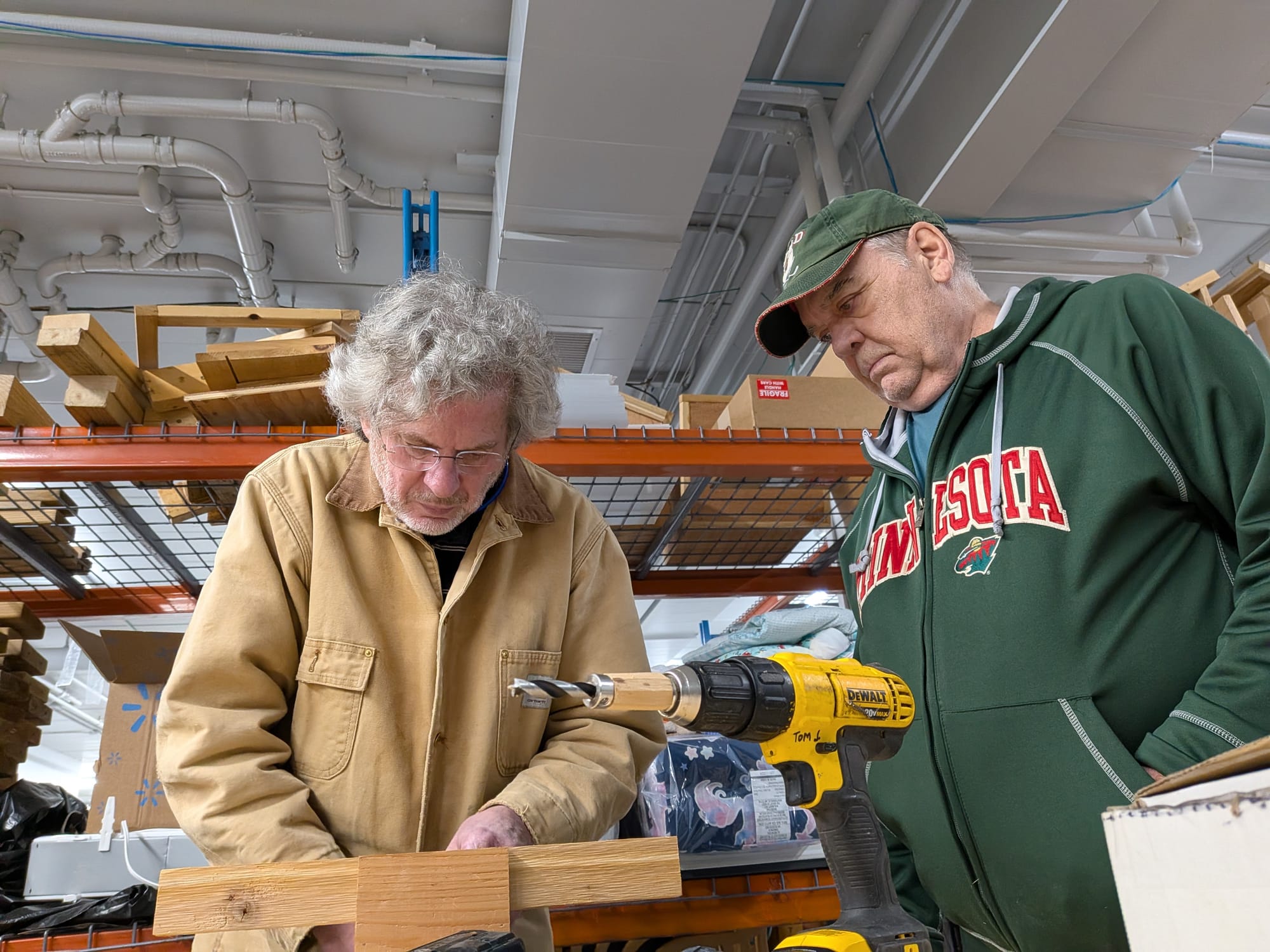
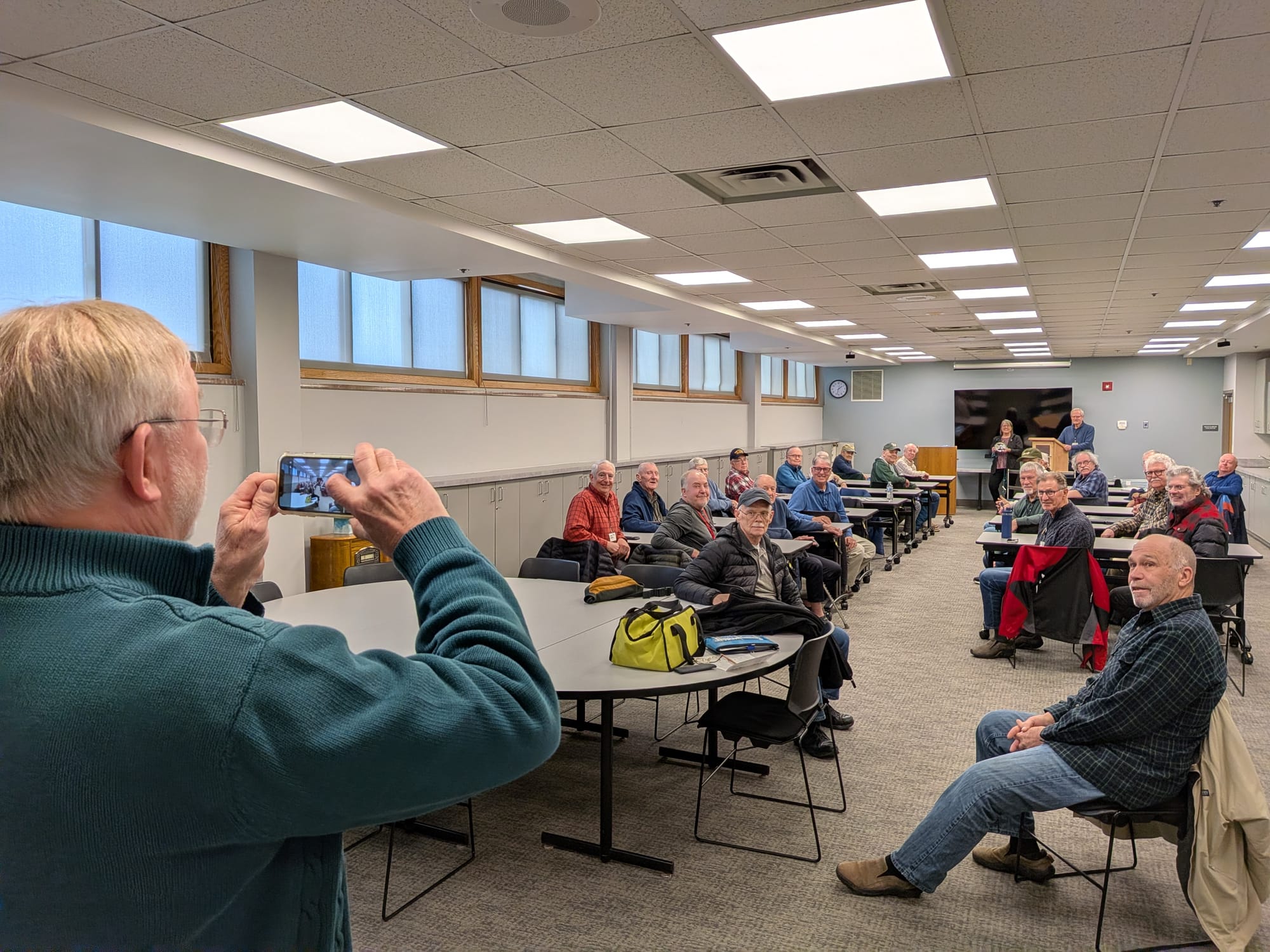
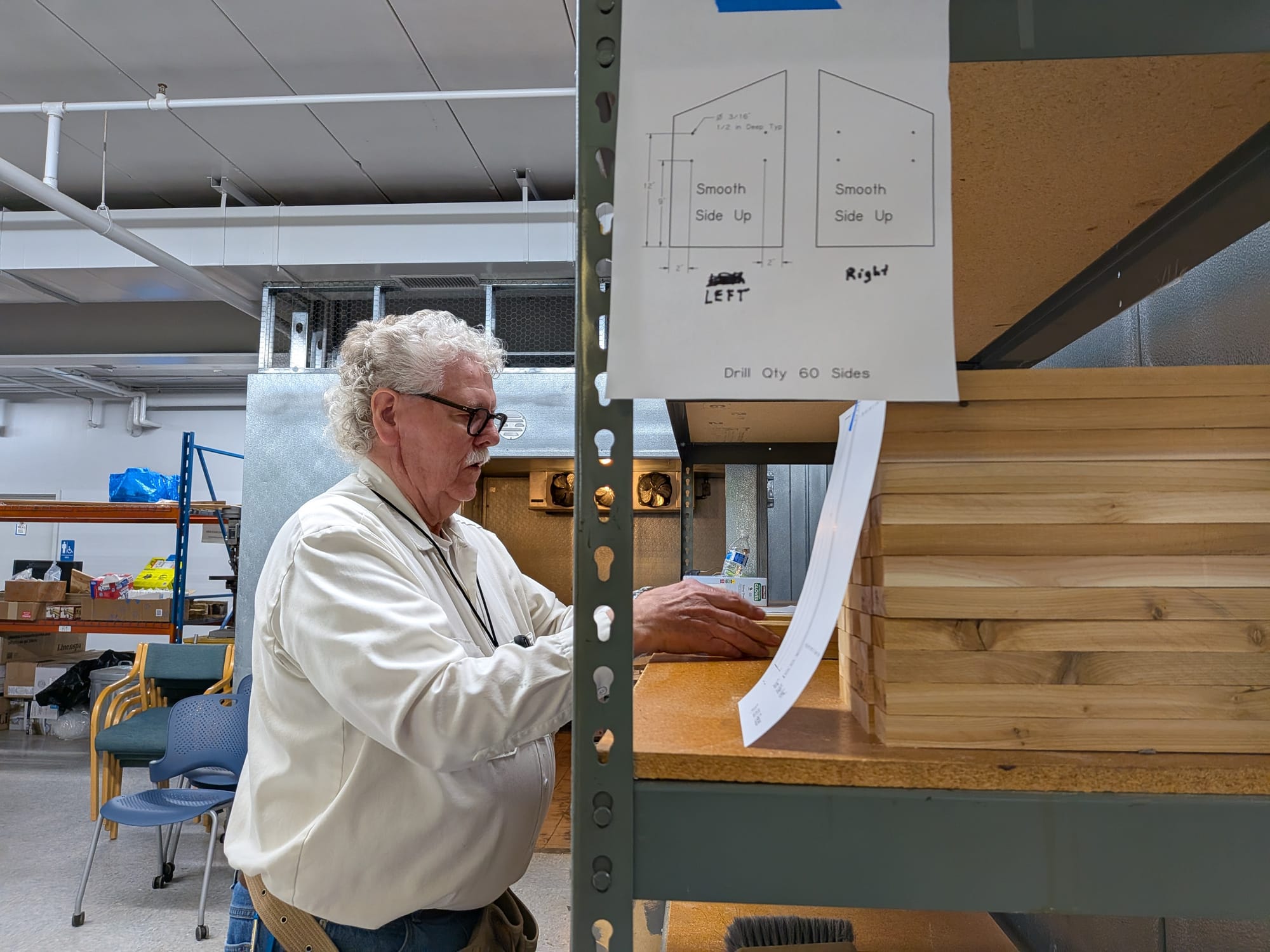
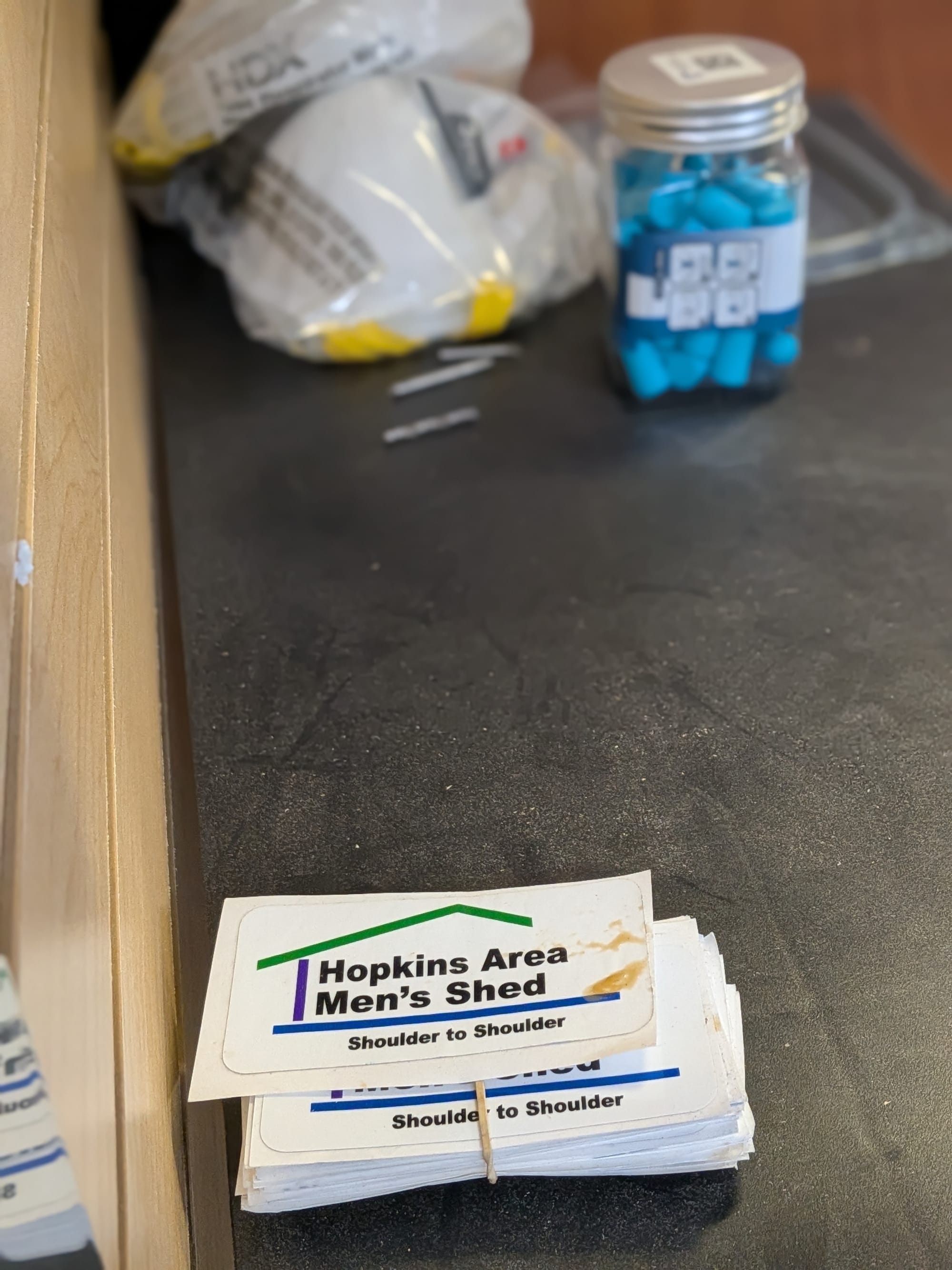
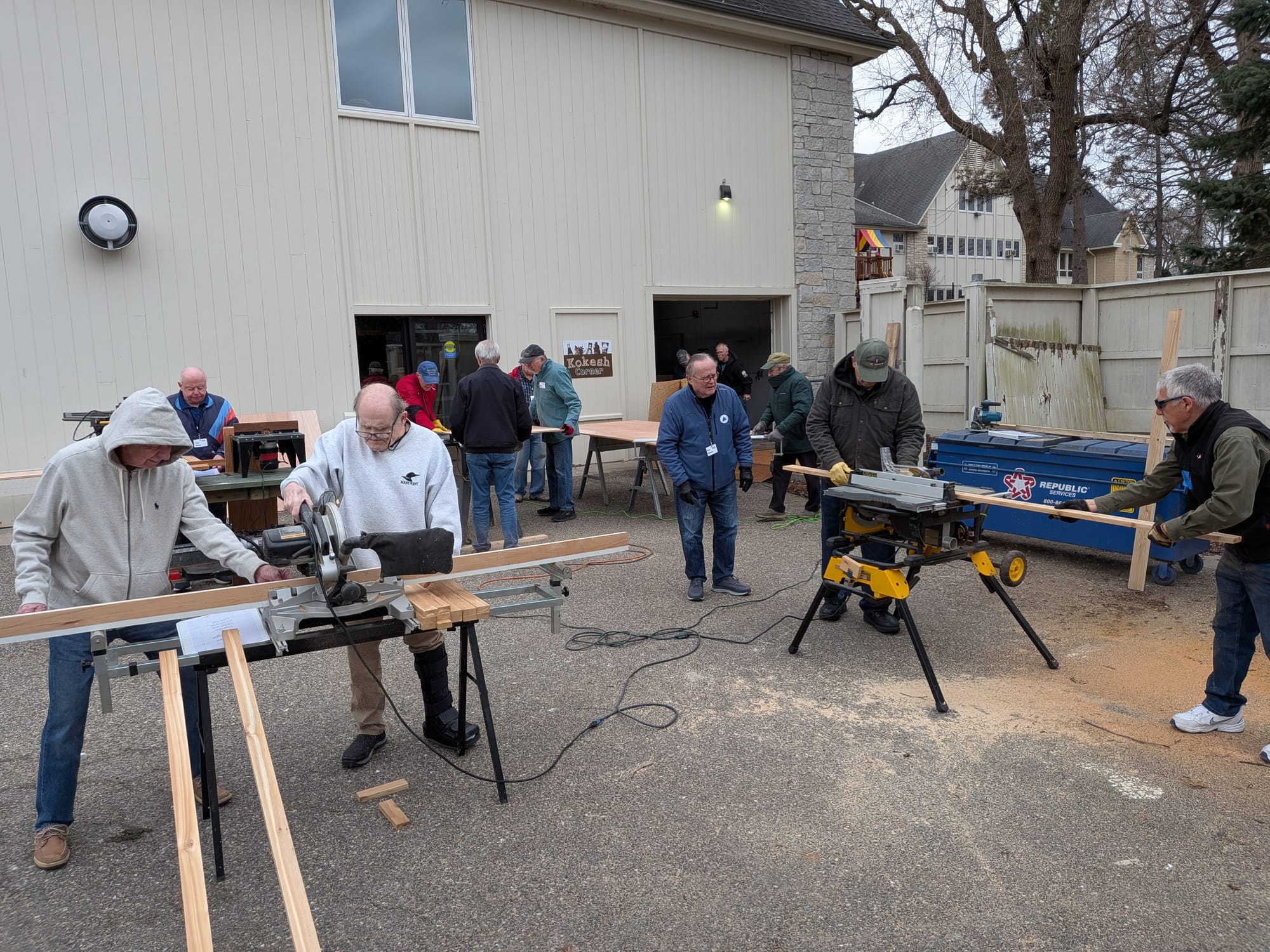
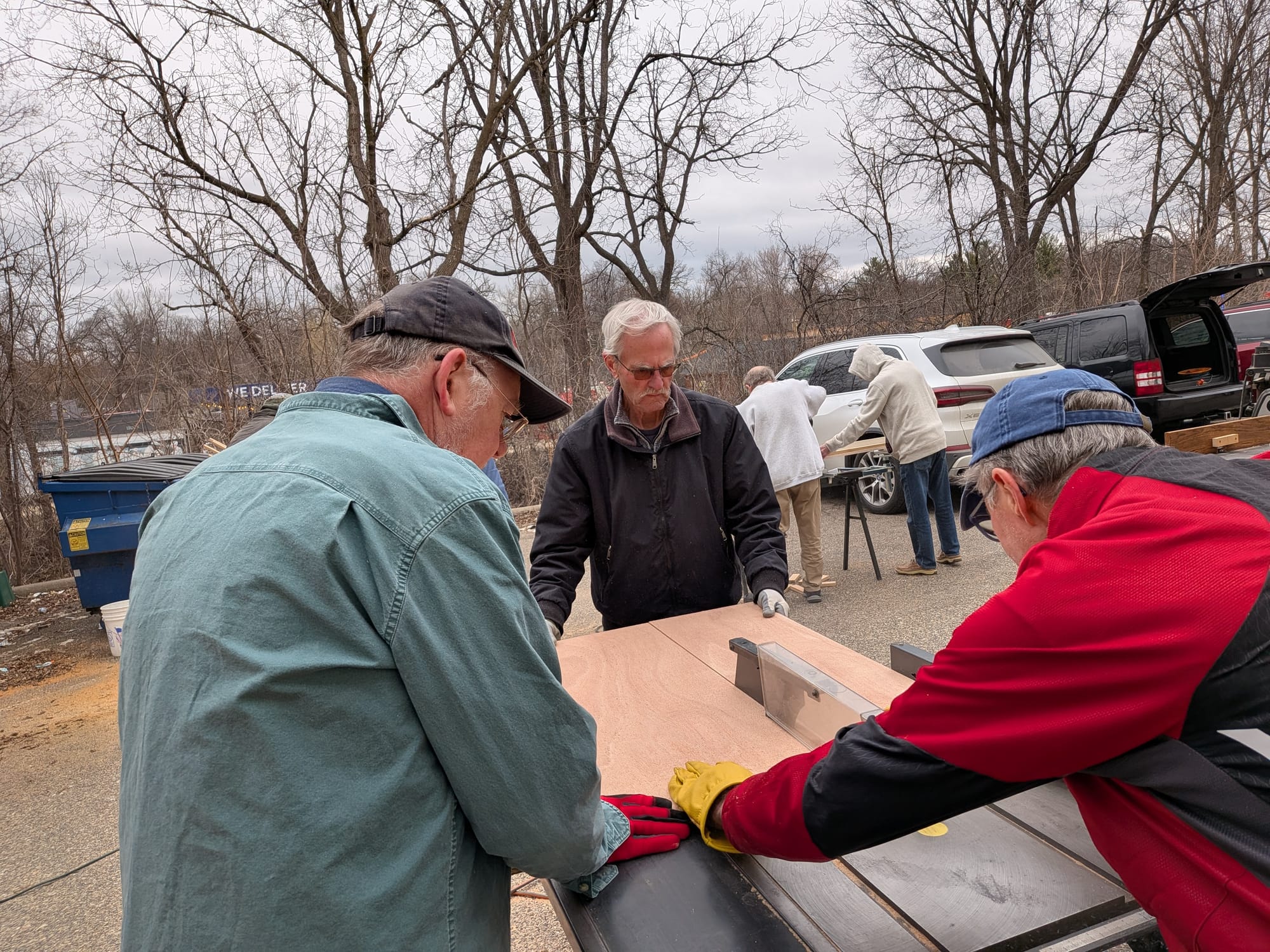
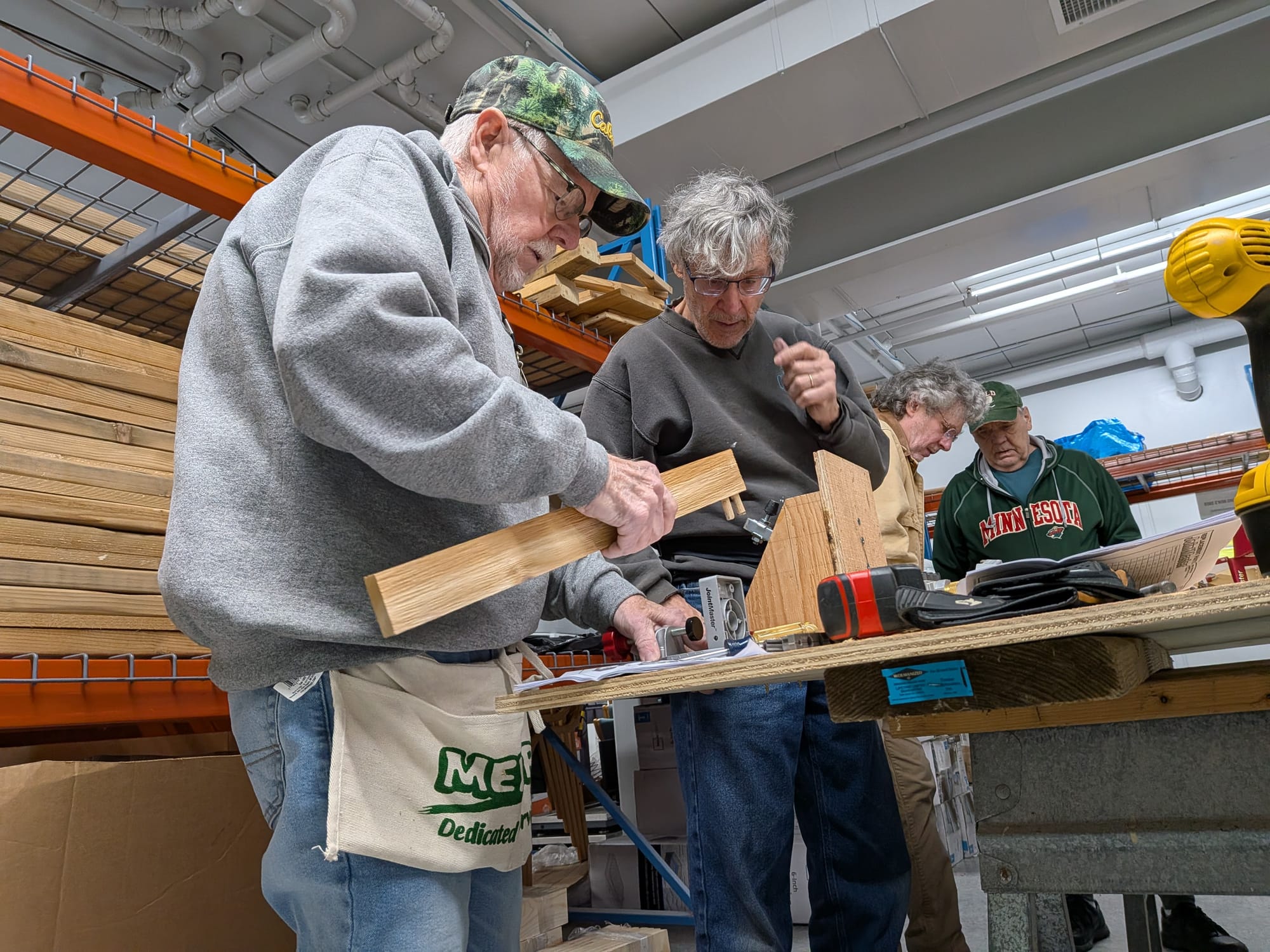
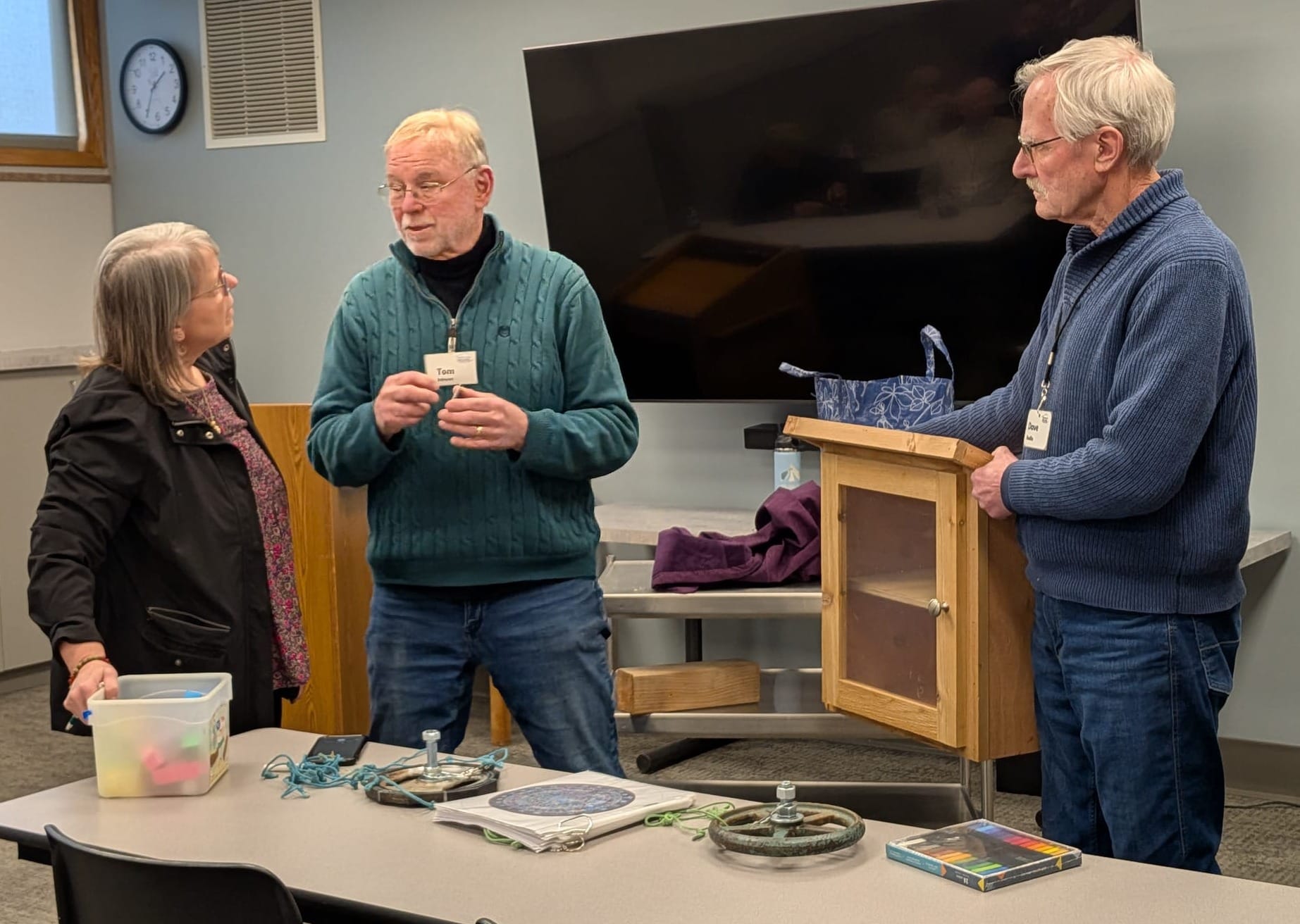
Photos from Hopkins Men's Sheds meetings on March 19, 2026, at the Hopkins Activity Center and March 26, 2026, at the ICA administrative building in Minnetonka, Minn. (Nora Hertel for Project Optimist)
“I've always enjoyed making things, fixing things, working with my hands,” said Pierce, the group's president, after a March meeting. “I was a backyard mechanic.”
He’s looking for another long-term project for the group.
“We’re here to keep this group together and occupied," he said, "keep our minds active."
This story was edited by Becca Most. Nora Hertel fact-checked it with help from Dan Pierce.
 Nora Hertel