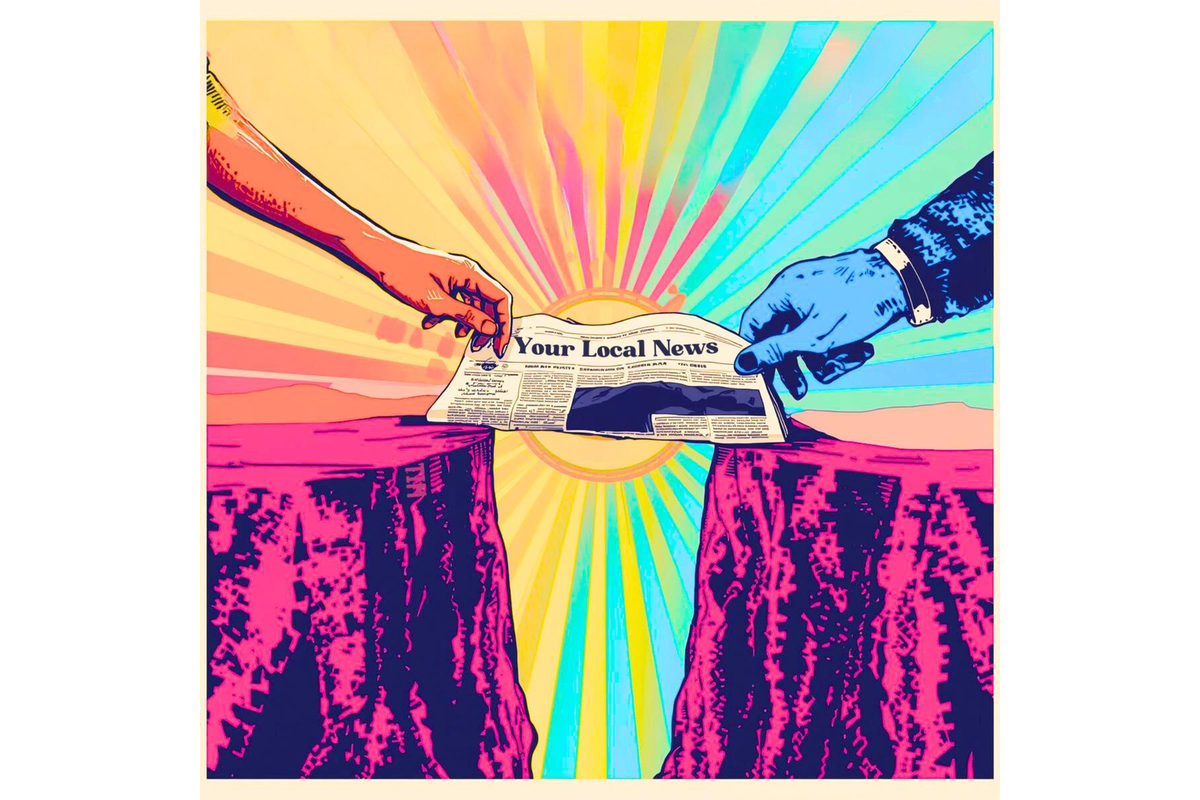
Why some communities don’t trust the media — and what newsrooms are doing about it
A variety of approaches — including outreach and stressing transparency — is being used to engage audiences
By Paul Cuno-Booth
Granite State News Collaborative
As faith in the news media hits a record low, many newsrooms around the country are doubling down on transparency, community engagement and local connections as ways to build and maintain audiences’ trust.
Just 31% of Americans surveyed in a Gallup poll last year expressed confidence in the media to report fairly and accurately — down from around 70% in a similar survey 50 years ago.
There’s a sharp partisan divide to that, with many more Democrats than Republicans saying they trust the news media to do its job. But that’s not the only division. Younger generations tend to have less confidence in traditional news media than older people.
And members of some communities have long felt marginalized in mainstream coverage. In one survey, nearly two-thirds of Black adults said the news they see about Black people tends to be more negative than coverage of other racial and ethnic groups.
‘Dual information spheres’
Sue Robinson, a professor in the School of Journalism and Mass Communication at the University of Wisconsin at Madison, says several factors have driven the decline of trust in news. One is the growth of conservative media, led by Fox News.
“We have these dual information spheres, and what has happened is we don't have the same shared set of facts,” she says. “And so that information sphere has been told that the liberal news media, that the sphere over here, is just fake news.”
Meanwhile, many communities — including Black and other communities of color and lower-income communities — have long felt marginalized by mainstream news outlets, in part due to bias and stereotypes in coverage produced by mostly white newsrooms.

The news industry’s economic challenges are another role, she says. Since 2005, the country has lost more than 3,000 local newspapers, and newsroom jobs have been slashed by more than half, according to the Northwestern University Medill School of Journalism’s latest report on the state of local news.
“Once you stop seeing reporters covering events, you stop seeing the coverage that you want, you start seeing wire stories instead of a local angle to coverage – that's another problem with trust,” Robinson says.
Finally, the spread of new forms of digital communication — and news outlets’ failure to adapt — eroded some of their authority, she says.
Local news still tends to score higher marks on trust than national news. While fewer than half of Americans think media outlets in general report the news accurately and cover the most important stories, around 70% still say their local media does a good job, according to Pew Research surveys.
But Robinson says local news outlets aren’t immune to feelings of mistrust fueled by political divisions.
“We're feeling that everywhere, right?” she says. “We're feeling that in our own families. We're feeling it at a school board meeting.”
Joy Mayer, executive director of Trusting News, a nonprofit that works with news organizations on strategies to increase trust, says the flood of online content has made it harder for news consumers to know what to trust.
Another problem is that journalists aren’t representative of the country as a whole — they tend to be better educated, better off financially, more liberal politically and more likely to live in big coastal cities — and their coverage reflects that.
“Journalism does a really good job covering some aspects of society, and doesn't do as good a job covering other aspects of society,” Mayer says.
Mayer says her recommendations to news outlets are based on three core principles.
One is transparency, for example making ethical standards and other policies public and explaining how editors and reporters make decisions about what to cover. Another is engagement: talking to people in the community, understanding what they need from their local news source and working to earn sources’ trust.
The third is humility, she says: “Showing up with enough curiosity to really hear people when they tell you why they don't trust you or what they need from you that you're not giving, or why your news feels irrelevant or not useful to them, and being willing to make changes as a result.”

Taking ‘a hard look at ourselves’
That was the mindset that editors at the Chattanooga Times Free Press adopted when, around 2020 and 2021, they began hearing more from conservative-leaning readers accusing them of bias — some of whom unsubscribed, says Allison Shirk, vice president of content and newsroom for parent company WEHCO Media.
“We kind of had to pause and be like, ‘Whoa, what's going on? Why don't they trust us?’” says Shirk, who at the time was the Tennessee paper’s digital editor. “And we had to take a hard look at ourselves.”
Working with Trusting News, the paper sent out a survey asking for feedback from readers who identified as conservative, garnering 500 responses. Editors followed up with some of those readers to interview them in more depth.
“One thing that just sticks with me from those interviews is interviewing someone who basically was like, ‘You know, it's not that I don't like you guys. It's just, you take a perfectly good steak and you sprinkle salt all over it,’” she says. “And basically what he was trying to say is, you take a perfectly good article and you throw in all of these adjectives — when I just want you to give me the facts.”
 Nora Hertel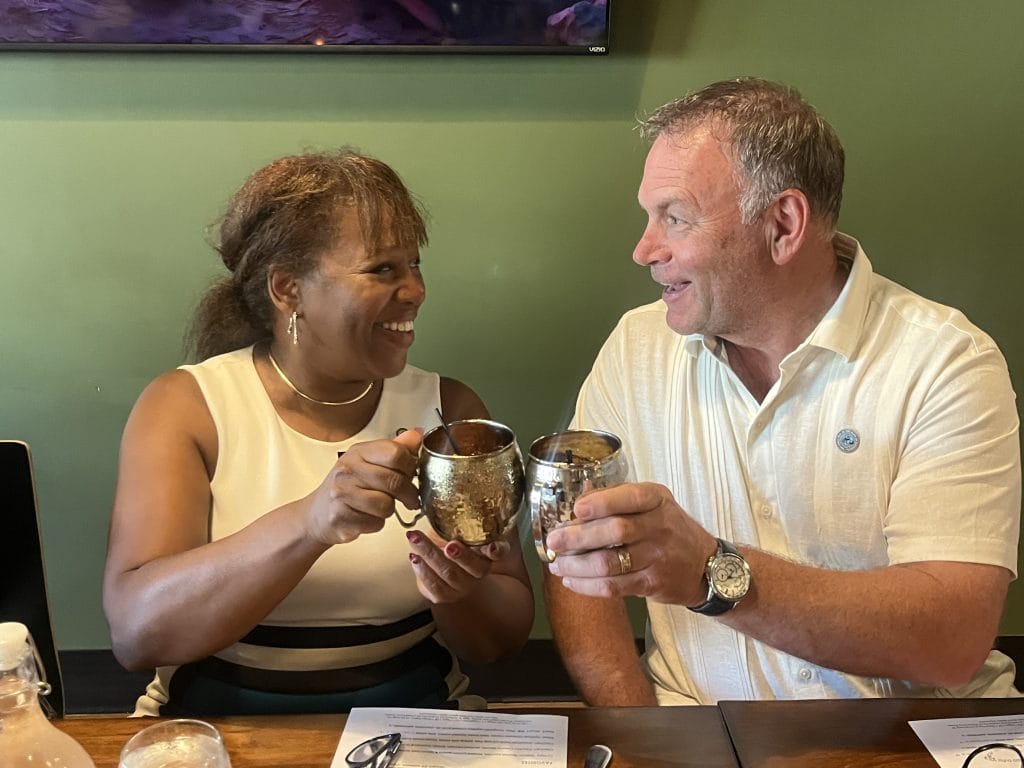
Shirk says those complaints often centered not so much on local content, but on Associated Press wire stories. One step the paper took in response was to start scrutinizing the language of wire stories more closely to flag language that could suggest bias.
For example, if a story stated that Donald Trump “wrongly” claimed the election was stolen, the Times Free Press wire editors might add in an extra paragraph explaining why the election was not stolen.
“We would give that extra paragraph of context that our readers were really looking for — instead of just saying, ‘Well, Trump wrongly said this,’” she says.
Perhaps the most important thing, she says, is making sure readers are getting news that’s relevant to them. That means localizing wire stories and putting reporting resources into exploring the local impacts of national issues.
Mikki Morrissette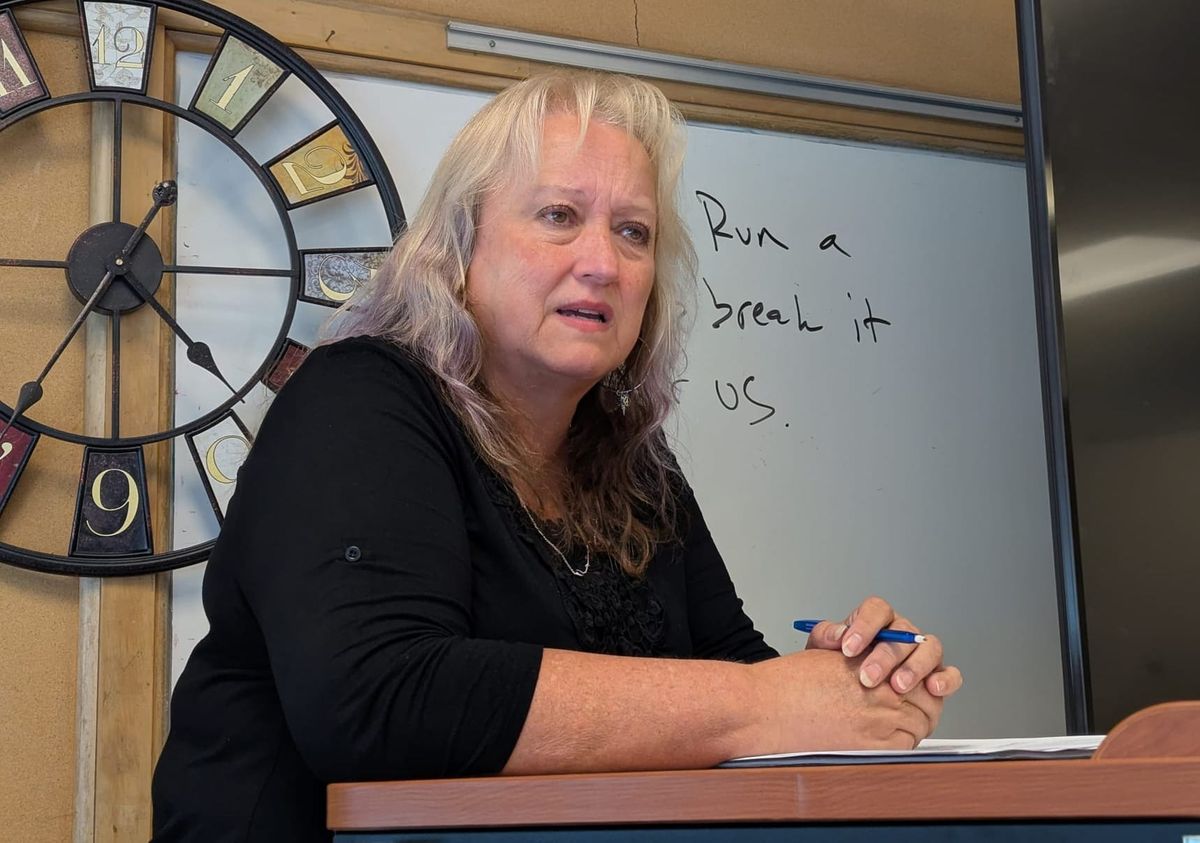
For instance, another of WEHCO’s papers, the Arkansas Democrat-Gazette, still has a full-time reporter in D.C. — a rarity nowadays for a regional outlet of its size. In recent months, Shirk says, a lot of people have responded to his stories on how Trump’s “One Big, Beautiful Bill” will affect local farmers.
“I just think that probably does more in itself to help with trust and reader trust than anything — that we're not just getting it from the wire services – we do have a reporter there that's literally focused on finding the Arkansas angle,” she says.
‘Cultivating relationships’
Dana Amihere is the founder and executive director of AfroLA, a nonprofit newsroom focused on the city’s Black community. She founded it after working at mainstream news outlets and getting frustrated with how they reported on that community.
“I can say personally, as a Black person that lives in South Los Angeles, that a lot of the media — public media, newspapers, others — they only show up when there's a sheriff's car or something,” she says.
Amihere says the result is coverage that portrays Black communities in a negative light — without sticking around long enough to dig into who or what is responsible for the issues they face.
“This is why people and communities of color don't trust you — because you treat them like an afterthought,” she says.
Mikki Morrissette
AfroLA is trying to address that in different ways. That starts with simply being present in the community and doing the kind of accountability journalism that other outlets aren’t.
“It's not responding to a press release about something,” she says. “It's cultivating relationships so that when something happens, people will call you or you already know because you have a presence there. And you're not just showing up when bad things happen.”
Amihere says they also have “community contributors” who write for them, and have made it a priority to connect with young people, whom she says often feel left out of the conversations. For a recent project on environmental justice, professional photographers were paired with high school students, who went out into the community to talk to people and record short audio stories on issues like air and water quality, trucks driving through residential areas to warehouses, and the impacts of oil infrastructure.
Nora Hertel
Transparency is also key. AfroLA makes its newsroom policies available online, and last year crafted a mission statement for its election coverage.
Amihere wants AfroLA to feel accessible and approachable, not an “ivory tower” that claims to be the authority on everything. Its tone reflects that. Stories are written conversationally, sometimes with quips that get “a little sassy and a little salty.”
“I never say that we are really ‘covering’ communities,” she says. “We're working alongside them.”
Bringing transparency
Erica Smith, managing editor for digital at the Times Union in Albany, N.Y., says transparency about how the paper makes certain editorial decisions is one way to build trust. In her experience, reader mistrust often starts with confusion — for example, about what’s news and what’s opinion.
“It started prompting us, here at least, to dig into other things,” she says. “Well, what questions do people have about how we cover our politics? What questions do people have about how we cover education, or any other types of things?”
Now, the paper will sometimes run an explanation of how or why it covers certain topics — when it names suspects in criminal cases, say, or how it covers suicides. Smith says that often comes in response to reader questions about a particular story. Those explanations can then be attached to future stories on that topic.
Another step the Times Union has taken: making it easier for people to flag corrections. At the bottom of every article, there’s now a brief explanation of how to report an error, with a link to a submission form. The description also includes a link where people can submit a letter to the editor if they want to respond to an article in more depth.
Nora Hertel
“Even when they're pointing out something or think we were wrong, I've really been impressed by the people who say, ‘Hey, I'm really glad you do this,’” Smith says.
The Times Union has also worked on updating its author bios, to give readers a better sense of the people producing the journalism.
Smith says when newspaper staffers have set up a booth to talk to people at the farmer’s market, there’s a split between those who believe what they see on MSNBC vs. Fox News. But that gap narrows when talking about local government and politics.
“I think a lot of times when people say they don't trust the media, they're thinking of the big national outlets and issues,” she says. “They're not necessarily considering the local TV station or newspaper or newsletter as ‘The Media.’”
This story is part of Know Your News, a Granite State News Collaborative and NENPA Press Freedom Committee initiative on why the First Amendment, press freedom, and local news matter. Stories are shared freely with outlets nationwide to promote awareness of the importance of a local free press. Share this story with someone who doesn’t usually read local news.
