In polarized times some MN Democrats and Republicans find common ground
Minnesota Legislative Exchange makes time and space for lawmakers to connect.
America did not become polarized overnight. A new program with Minnesota lawmakers pushes back against that trend. But it’s a long game.
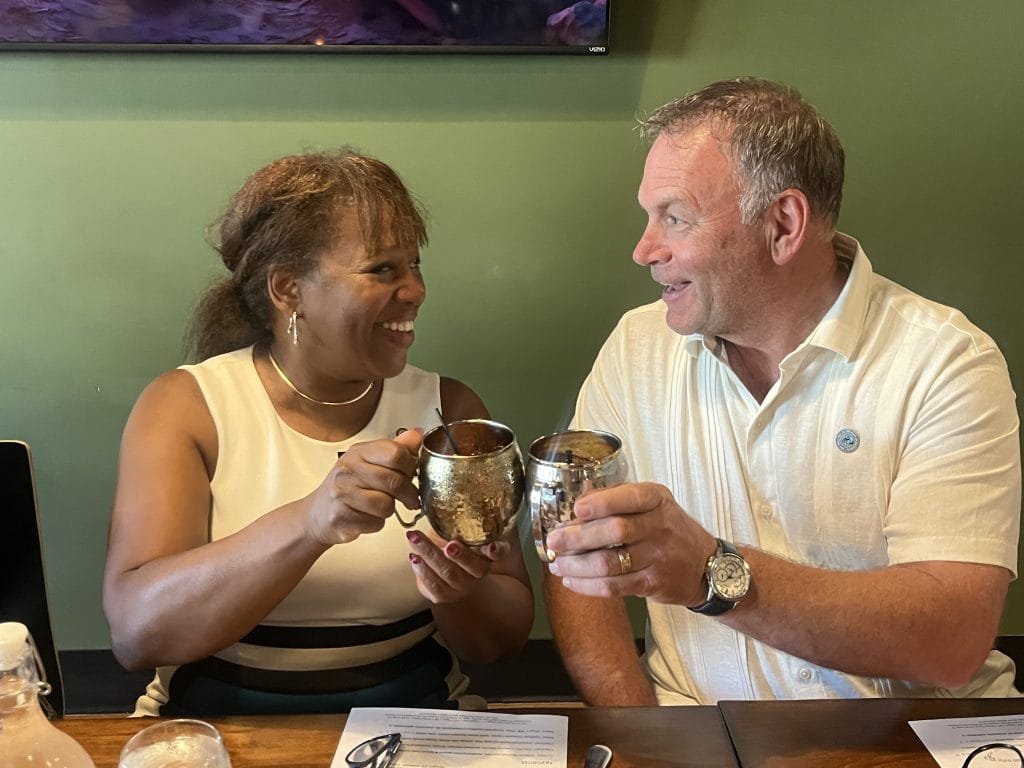
The Minnesota Legislative Exchange, run by nonprofit Citizens League, pairs lawmakers from different political parties and different parts of the state. They spend 12 to 36 hours in each other’s districts and take time to talk with community members and each other.
The Minnesota Legislative Exchange is one of the first of its kind and launched around the same time as a program in Michigan. The state-level exchanges are based on a national program called the American Congressional Exchange that started in 2018.
“Improving the way our government works, improving relationships, building trust between people of different political backgrounds is going to take time,” Citizens League Executive Director Jake Loesch told Project Optimist. “There’s no way to shortcut that.”
 Jen Zettel-Vandenhouten
The first two lawmakers to participate in the Minnesota Legislative Exchange connected in June 2025, shortly after the political attack that left former Democratic House Speaker Melissa Hortman and her husband Mark Hortman dead.
“I feel like our emotional connection is even better now because we worked through all that together. That was a serious gut punch to everybody, but especially to our DFL colleagues,” said Rep. Dave Baker, a Republican whose district includes Willmar, Minn., about the killings.
Baker was paired with Rep. Mary Frances Clardy, a DFLer whose district includes West St. Paul and Inver Grove Heights, Minn.
Lawmakers suggest potential partners for their exchange. They host and drive each other in their respective districts when they’re matched together.
“They have private time to talk to each other and get to know each other,” Loesch said.
What do they do on their visits?
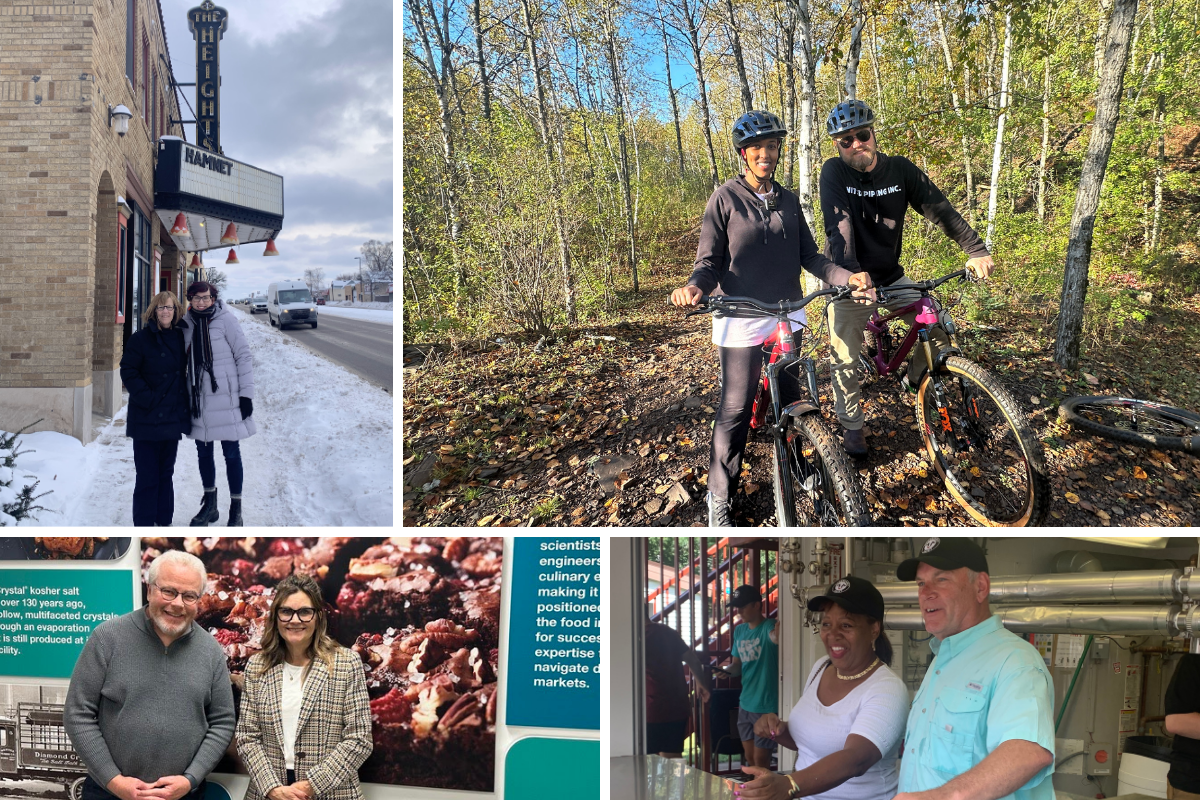
Another pair, Minneapolis DFL Rep. Anquam Mahamoud and Iron Range Republican Rep. Cal Warwas, visited three mining sites in northern Minnesota and went mountain biking together. In Minneapolis they visited George Floyd Square and the Minneapolis American Indian Center among other stops, according to Citizens League.
Reps. Baker and Clardy launched the program with a tour of Kandiyohi County, about two hours west of the Capitol in June 2025. They visited a freight rail terminal, behavioral health hospital, and turkey processing plant.
When Clardy hosted Baker, the pair toured a metro area community college, observed a demonstration of de-escalation crisis training, and visited a manufacturer of seaplanes.
They each had time in and out of their area of expertise. Clardy recently retired from a career in education, and Baker has a background in business.
Baker and Clardy shared their experience at a virtual event in January hosted by Citizens League and the Center for Rural Policy & Development.
This is a solutions journalism story! Here’s how you can tell
This article includes the four pillars needed to make it a solutions story, according to the Solutions Journalism Network model.
- Response: The story focuses on a response to the problem of political polarization. The solution featured is the Minnesota Legislative Exchange, which pairs lawmakers with different backgrounds and helps them develop a relationship.
- Evidence: Lawmakers who participated talk about building trust and becoming more open minded with members of the opposite party. The national program points to bipartisan legislation that emerged from partnerships in its exchange.
- Limitations: Coordinating lawmakers’ schedules can be tough because they’re busy. Fostering these connections requires lawmakers to be open minded. And it takes time.
- Insights: Coordinators ask lawmakers to suggest potential pairings so there’s a baseline interest and curiosity. They get time to talk one-on-one as they travel through each other’s districts.
Citizens League has been around since the early 1950s and helps Minnesotans engage with civic life and public policy. It announced the exchange program in April 2025 and eight lawmakers have participated since then.
How do they measure success?
The American Congressional Exchange has paired federal lawmakers since 2018 and points to specific bipartisan policy that emerged from those partnerships, “from bolstering mental health and veterans’ resources, advancing a responsible fiscal policy agenda, to combatting the scourge of addiction,” according to its website.
“The problem we are trying to solve here is the polarization and division that feel so prevalent in our politics,” Loesch said.
He points to a fall 2025 poll in which 64% of Americans surveyed said we’re too politically divided to solve the nation’s problems. There are still 33% of survey respondents who think we can address the nation’s problems.
Baker wants to work with Clardy on something related to education. He said they’ll find common ground now to ease communication on tougher subjects.
 Mikki Morrissette
“It’s just building this trust to know that no matter what happens here, I am not going to want to have you get stuck in a very bad vote or something that I can’t help support you,” Baker said. That might even mean pushing some issues within their own parties.
Clardy shared that her time in Baker’s district checked some of her assumptions. She was surprised by the diversity in Willmar and how it was embraced. Afterward she noticed she had more curiosity with a lawmaker she disagreed with.
“If you want to stay in your lane, stay where you are, that’s fine,” Clardy said. “But if you want to grow and actually serve more people, this is an opportunity to understand and to practice in a safe space.”
This story was edited by Becca Most. Nora Hertel fact checked it.