
Can we expect to see more U.S. citizens denaturalized?
"We are in this place where a lot of the processes and procedures that we used to count on, certainly as lawyers and as advocates and policy folks, are really breaking down in ways that we didn't expect."

Citizens born outside of the U.S. can be stripped of their citizenship, or denaturalized. But it has not been a common occurrence.
The U.S. Department of Justice filed about 11 denaturalization cases per year from 1990 to 2017, according to a fact sheet from the National Immigration Forum. That number rose to an average of 42 cases per year during President Donald Trump’s first term in office. It dropped to 16 cases per year under President Joe Biden. The current Trump administration plans to drastically increase these figures.
In 2024 about 26 million naturalized citizens lived in the U.S.
U.S. Immigration and Customs Enforcement officers surged into the Twin Cities and beyond from December 2025 through February 2026. Immigrants with citizenship and other legal status worry about losing the protections they rely on to live in Minnesota.
Project Optimist and St. Cloud Somali Community Radio drafted questions for the Immigrant Law Center of Minnesota on this topic. Project Optimist journalist Nora Hertel interviewed Julia Decker, policy director at the Immigrant Law Center of Minnesota, on Feb. 24, 2026.

Could you explain a little bit about how the Immigrant Law Center of Minnesota works and your role there?
Decker: Immigrant Law Center of Minnesota is a non-profit, nonpartisan organization that primarily provides free legal services to low-income immigrants and refugees across the state of Minnesota and also in North Dakota.
And we do lots of different immigration cases for people who are eligible for our services. This includes things like citizenship and green cards, DACA cases (Deferred Action for Childhood Arrivals), temporary protected status. It also includes things like U-visas for people who've been victims of a crime here in the United States. And it also includes cases for people who are in immigration court facing deportation. So we do all sorts of cases.
We know that the Trump administration is working on ways to strip naturalized citizens of their citizenship if they commit certain crimes. Is it possible? And is it happening or likely to happen more?
Decker: So, this is something that the current administration has stated that they want to increase and prioritize denaturalization. Denaturalization is something that is a possibility. It exists under the current law. It is a process that has to go through the courts. So it's not something that can just be done through the U.S. Citizenship and Immigration Services or something like that. It actually has to go through the federal courts.
Traditionally it was used for things like somebody who was a member of the Nazi party in the past or somebody who had been part of a terrorist organization, and that was found out later. This was usually a very, very rare occurrence.
This administration, as we have seen, has been increasingly restrictive, increasingly hostile towards many immigrants, including immigrants with lawful status, up to and including naturalized citizens. And recently (the administration) said they wanted to refer as many as 100 or 200 cases to the Department of Justice, per month for denaturalization.
We know that a U.S. citizen in St. Cloud has been arrested and charged with interfering with or assaulting a federal agent. Is that something that would fall into the category of validating a reason to denaturalize or deport someone who is a citizen?
Decker: So it's hard to say right now. There was a memo that was put out by the administration. It was by the Department of Justice back in June. They listed out some of the things that they were going to prioritize for denaturalization. And they listed out cases, some of them you would expect. It was things like human trafficking, violent crimes, some types of fraud offenses, terrorism charges.
But there's a catch-all at the very end where they say, any other cases referred to the civil division that the division determines to be sufficiently important to pursue. That's really vague and open-ended. And unfortunately, as I mentioned earlier, this administration has been relatively hostile to lots of groups of immigrants.
It's hard to say, and we don't want to speculate about which specific instances could or could not be. But there is very vague and sort of open-ended language in this memo.
 Nora Hertel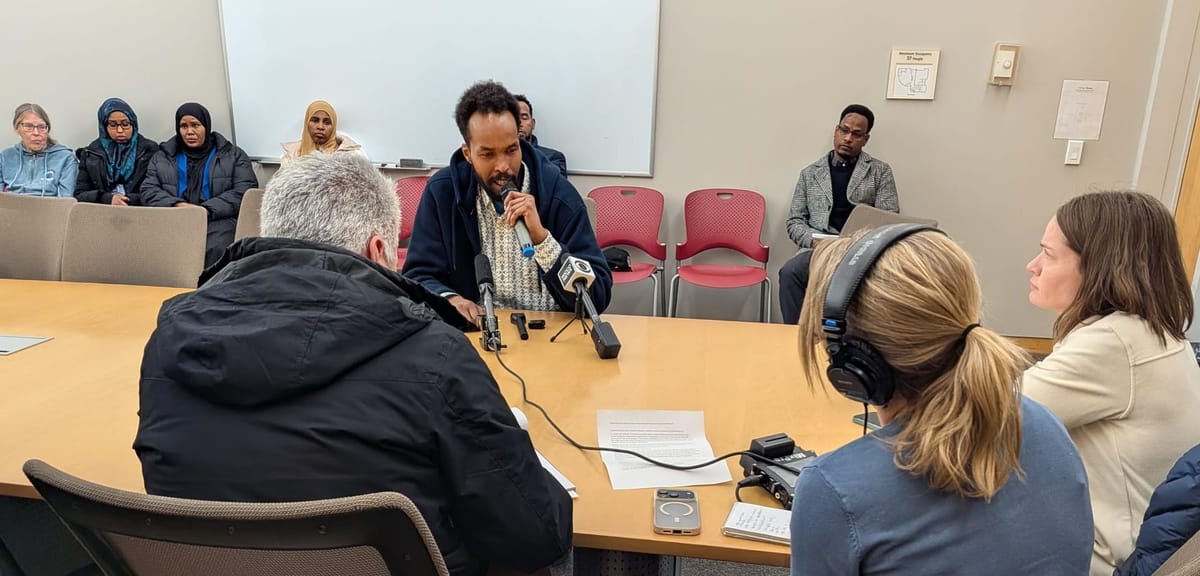
Generally what rights do naturalized citizens have to protect that citizenship status or preserve it?
Decker: Everybody, whether they are citizens or not, has constitutional rights. And one of the things that we have been doing in terms of educating people about their rights – whether it's knowing your rights in your home, knowing your rights in your car when you're going to work, or when you're at your work – is making sure what those rights are and how you can exercise them. We have lots of resources on our website. People can go to our website and access those.
I think one of the more, maybe even more important things to understand for people now, given what we've seen over the past couple months, is that even exercising your rights, knowing your rights and exercising your rights, might not be enough to keep federal ICE agents or immigration enforcement agents from detaining you and taking you to the Whipple Building or something like that.
And so one of the things that we have also educated people on is making some plans. If you are somebody who might be in that situation, making sure you have contact information, and making sure you have some copies of documents, and somebody knows where those documents are. Because unfortunately we're in a position where sometimes exercising your rights, knowing and exercising your rights, might not be enough.
 Newsletter
Your title's policy director, is there any new policy? Obviously constitutional rights are the foundation. But are there other policies that could help protect naturalized citizens, or that would make it easier for them to be denaturalized, at the state level, federal level?
Decker: Right now, this memo that I mentioned is – I wouldn't necessarily say it's a policy change – but it is a memo for the Department of Justice that indicates where they are going to put their priorities within that department. That coupled with the statements about the desire for referrals of cases from the immigration service over to the Department of Justice – again is not a policy change – but I think it's something that should be taken as noteworthy.
Something that we have seen with this administration is, oftentimes things are, I hate to say it, things are often done via social media. Things are often said that way. Policy is often made almost via these statements. And the administration has largely, when they say something, they have done it. It's not to make light of it.
But we are in this place where a lot of the processes and procedures that we used to count on, certainly as lawyers and as advocates and policy folks, are really breaking down in ways that we didn't expect.
I think a lot of us are struggling with that and trying to come to terms with: How do we operate in this era? Certainly there are these memos. But a lot of times, we're operating on: What are they doing? How are they acting and operating? And what can we glean from that, and how do we appropriately adjust and educate and advise in the best way possible?
Hertel: It makes your job kind of tough.
Decker: Yeah. It's been, certainly monthly updates, sometimes weekly updates. Sometimes there are even these daily updates to people where it's like, oh that case changed everything.
That's no way to run any system and certainly not a system where people's lives are in the balance.
Can we zoom out a little bit? And can you share what charges and actions are being taken against Minnesota immigrants, in the big picture and timeline? Operation Metro Surge started in December, but that memo came out mid-year last year. Do we have any data? What are the trends, and is denaturalization a small part, or a big part of that?
Decker: Big picture – national – from the start of the administration through to where we are now, we've seen a move by the administration to restrict lawful pathways overall, immigration overall. They're restricting refugee entries. We have the travel ban. We have halting processing of asylum applications, the termination of temporary protected status for a lot of countries, just really narrowing the ways in which people can get status, and then at the same time, ramping up enforcement actions. So not only narrowing how people can get status, but then really ramping up how many people are getting removed from the country.
 Mikki Morrissette
There have been a lot of moves within the agency, within the Department of Justice, to make those processes faster, to make it easier to remove people, to make those decisions move more rapidly. The trend is …
Hertel: On all fronts, basically?
Decker: Yeah. Bad is a very nondescriptive word to put to it. But everything has been restrictive, narrowing, or just cutting off entirely. All with the intent of if you're on the outside, you can't get in, and if you're on the inside, get out, basically.
Is there anything else that we should have asked you around the issue of denaturalization or bigger picture things that people should know about right now?
Decker: There's the federal actions, right? And then there's all the things that are happening around SNAP and Medicaid and all these other things that also impact immigrants who receive those benefits and are being potentially being cut off from those.
Hertel: It's a lot to juggle and … big impacts.
This is really helpful. Thanks, Julia. If we have anything else related to this, we'll send you a note and stay in touch.
Resources
- Denaturalization: Fact Sheet from National Immigration Forum
- Immigrant Law Center of Minnesota: Resources
- Immigration Policy Tracking Project
Editor's note: Nora Hertel's spouse has the last name Decker but is not related to Julia Decker.
This interview was transcribed using AI tools and checked by Nora Hertel against a recording of conversation. It has been edited for clarity.