Want to publish or use Project Optimist's work?
Here's our policy on republishing our stories and licensing our photos.
Stories
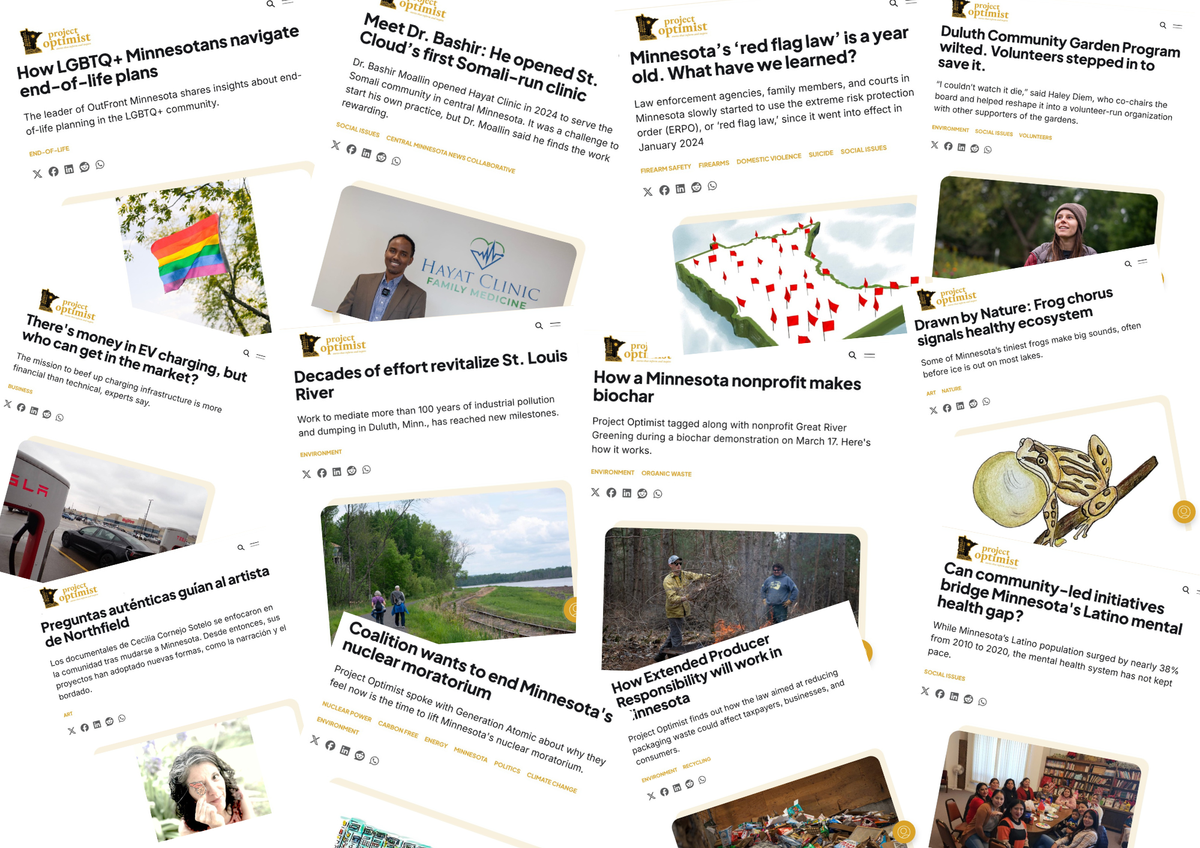
Project Optimist allows its news articles to be republished by other organizations for free, with credit, to further its mission and expand its reach. Please name Project Optimist and the writer and link to the original article on the Project Optimist home page.
Newsletters may be republished as well with permission and without charge.
Republication usually includes photos that were published with the article or newsletter if and only if Project Optimist owns those photos and isn't licensing them from another entity. Photos from stories and newsletters may not be used as file photos or for ad hoc use unless the organization has a specific licensing agreement with Project Optimist.
Project Optimist content may not be placed behind a paywall. Organizations may not publish a Project Optimist story and then charge readers to access it.
To verify if a piece of content is available for republication, contact nora@projectoptimist.news.
We'd love to hear if you use our work.
Photos and illustrations
Project Optimist licenses its photos and illustrations using a sliding scale. Licensees agree to written terms or sign a contract created by Lawyers for Reporters for Project Optimist outlining the limits of the license.
Photos taken for journalism purposes are not to be used by licensees for commercial purposes or sold outright as art prints, for example.
Those who partner with Project Optimist may license photos for free.
Nonprofits and individuals who would like to use Project Optimist photos are charged $25/photo. Large nonprofits or businesses (25-plus employees) must pay $75/photo.
All uses of the photos require credit to Project Optimist and the photographer.
To license a photo or illustration contact nora@projectoptimist.news.
Proceeds are used for general operating expenses at Project Optimist and make up a very small amount of the organization's revenue.
Project Optimist creates content as a public service, not to generate large profits. The organization needs to bring in enough revenue to fund the journalism and storytelling it produces, and it needs to protect the content from inappropriate uses.