
How to keep items out of landfills in greater Minnesota
PHOTO ESSAY: Take a look inside a Fix-It Clinic. The events aim to preserve repair skills, reduce waste, and build community in greater Minnesota.
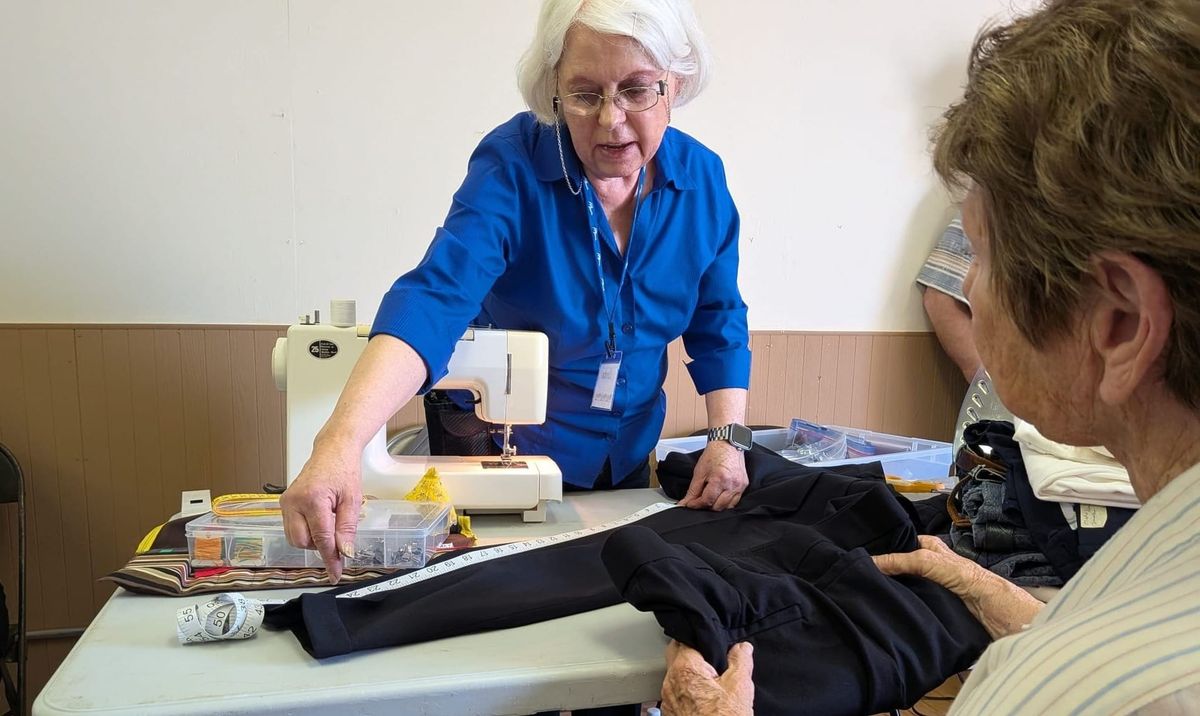
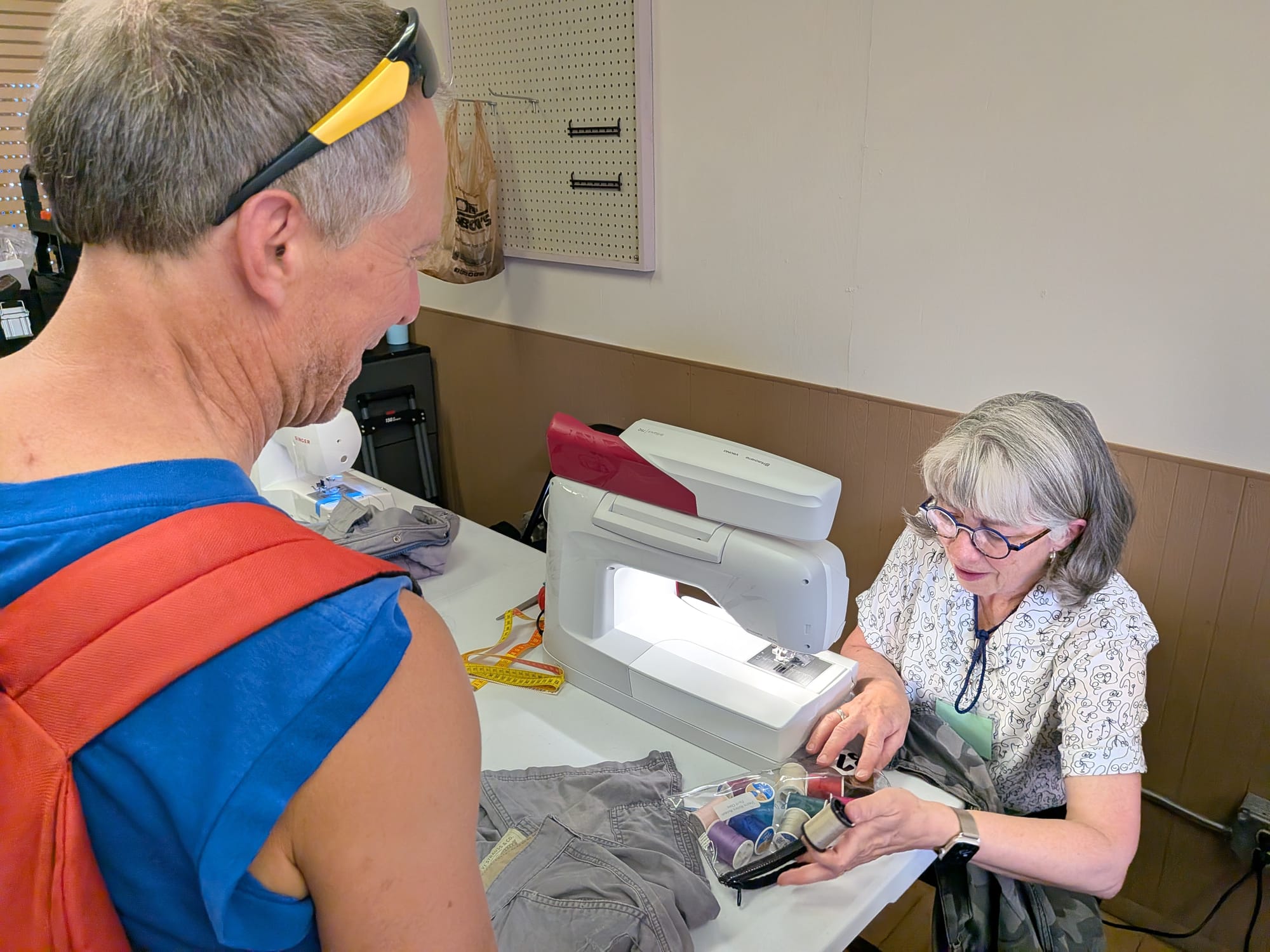
ST. CLOUD, MINN. – Mary Jane Brewster worked on the zipper of an old marching band uniform at a Fix-It Clinic until she was stuck – along with the zipper.
Then she tried a pencil, rubbing it along the metal teeth. The graphite acted as a dry lubricant. And zip!
Zippers are notoriously tricky to repair at Fix-It Clinics, where volunteers mend a broad range of items brought in by community members. The items repaired get weighed and recorded to credit counties for waste kept out of landfills. The state tracks solid waste to measure progress and inform policy.
The Stearns History Museum has hosted six Fix-It Clinics in the St. Cloud area to help preserve the skills needed to fix things while preserving the items themselves. Reuse Minnesota helped the museum and other greater Minnesota organizations launch clinics with plans for the clinics to continue independently.
These events bring people together, prolong the life of useful or sentimental objects, and reduce waste. And reducing waste can save money for individual shoppers and for taxpayers.
The definition of reuse has two parts, said Emily Barker, executive director of Reuse Minnesota: "It's about preventing things from ending up in the landfill, but also, if you fix your coffee pot, then you're able to avoid buying a new thing as well."
Reuse Minnesota's official definition of 'reuse'
Reuse is the continued use, repair, or repurposing of items or materials which extends the life of resources and decreases demand for new production.
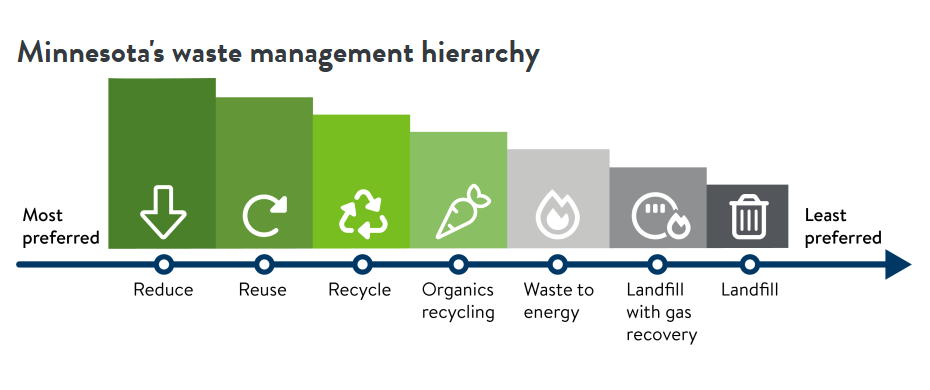
The Minnesota Pollution Control Agency tracks waste in every county from landfill additions to compost, recycling, and reused items. In the waste management hierarchy, the first goal is to reduce consumption of new items, the second is to reuse items and resources already available.
Fix-It Clinics originated in the Netherlands as Repair Cafes, Barker said.
Hennepin County hosted the first Minnesota Fix-It Clinic in 2012 and diverted 22 tons from landfills in its first 10 years. For reference, the MPCA reported more than 43,000 tons of reused materials in the state in 2024 – mostly building materials and household items.
At a late May Fix-It Clinic in St. Cloud, volunteers repaired items weighing more than 270 lbs.
Take a look inside that St. Cloud event with insights, limitations, and other general takeaways on Fix-It Clinics.
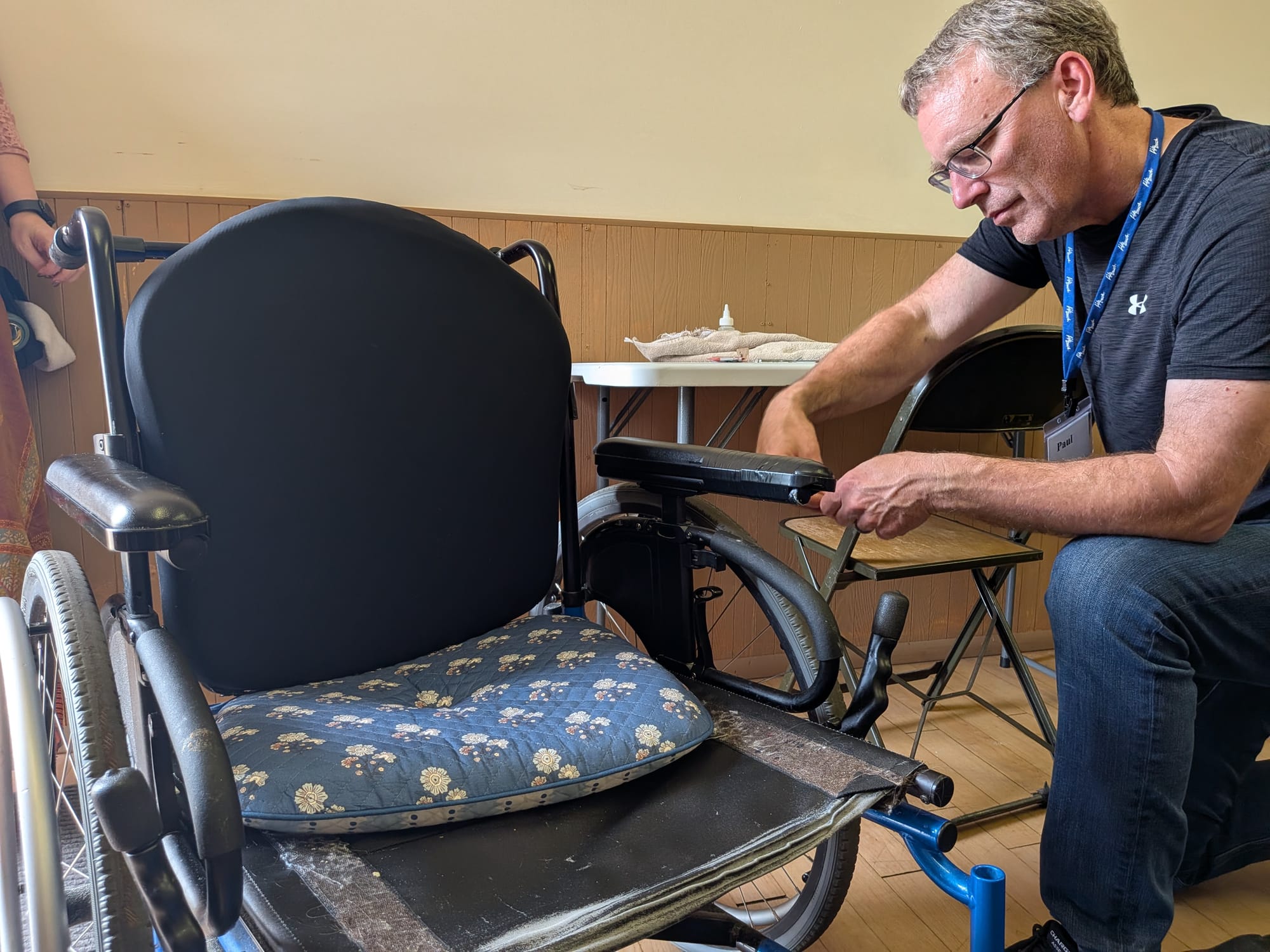
Paul Brenhaug works to repair a wheelchair brought into the Fix-it Clinic. Volunteer "fixers" try to extend the lives of various items from lamps and stereos to wheelchairs and windchimes.
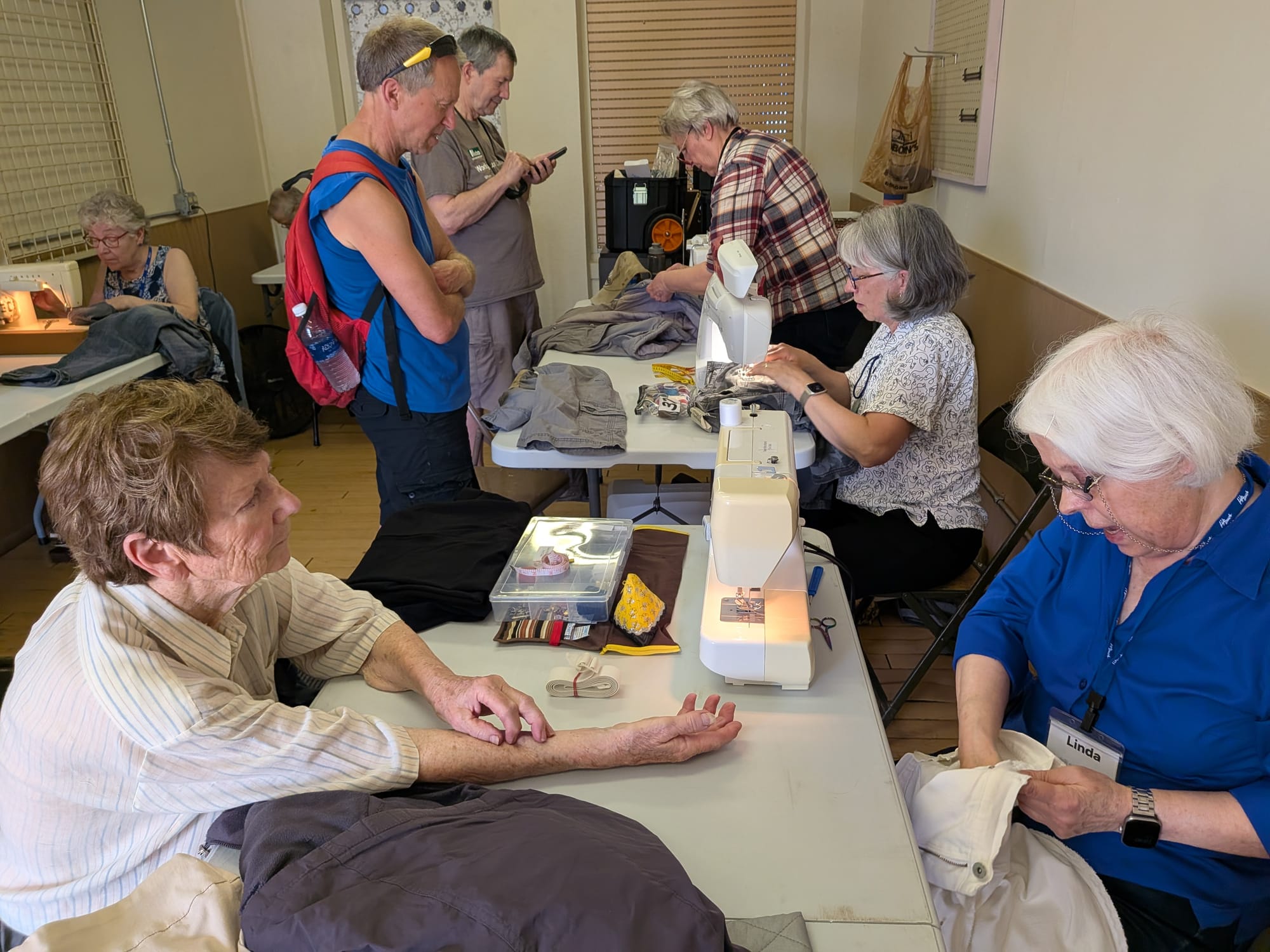
Volunteer "menders" work to repair fabric items and clothing at the Fix-It Clinic. Many bring their own sewing machines. They repair tears and alter hems to allow the owner to continue wearing or using it.
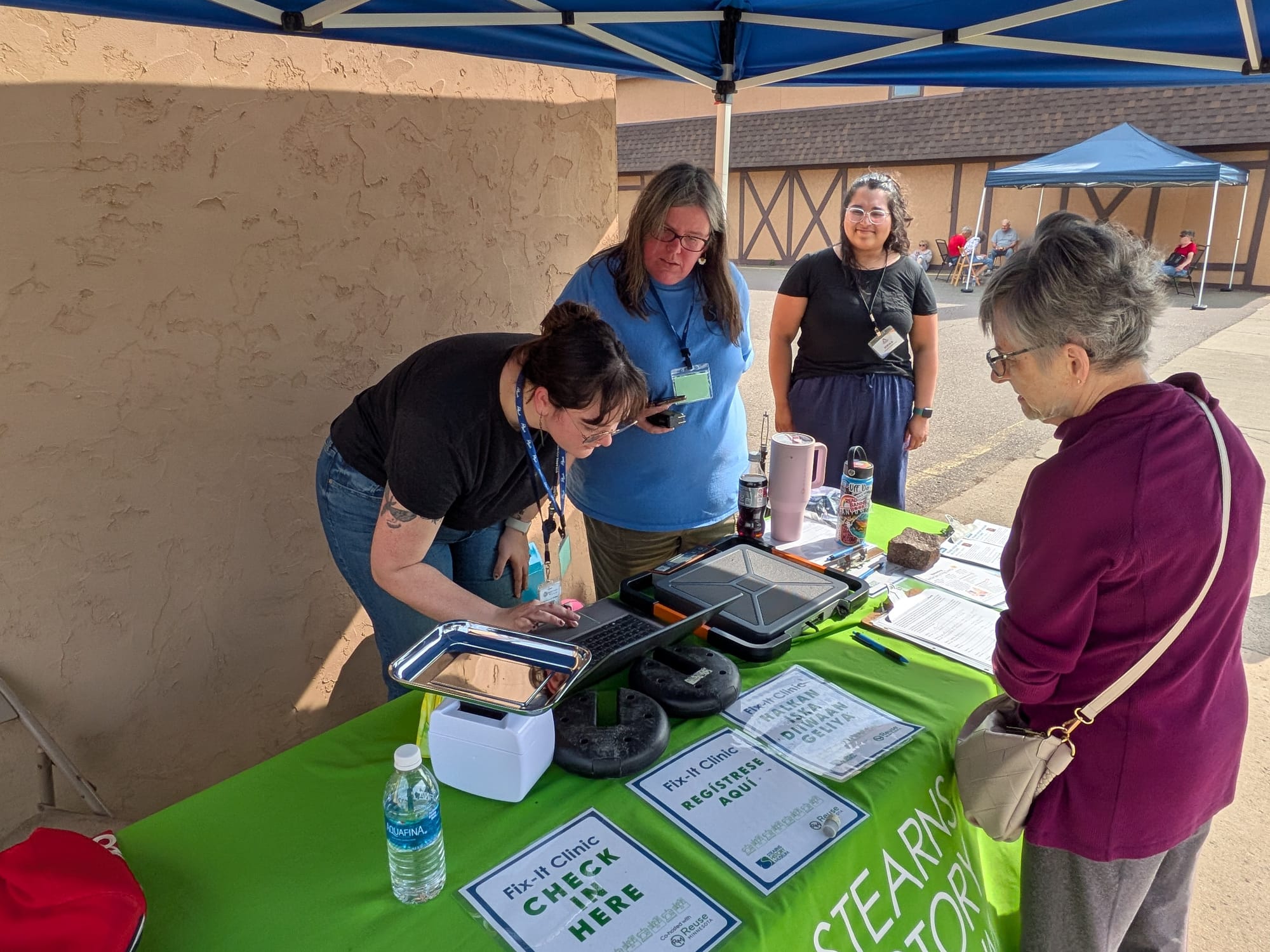
Attendees check-in when they arrive and have their items weighed. The clinics are free. In this photo Gabbie Batzko-Conley (left) of the Tri-County Solid Waste Management Commission documents an item beside Stearns History Museum Executive Director Amy Degerstrom with Interpreter Sofia Brown looking on.
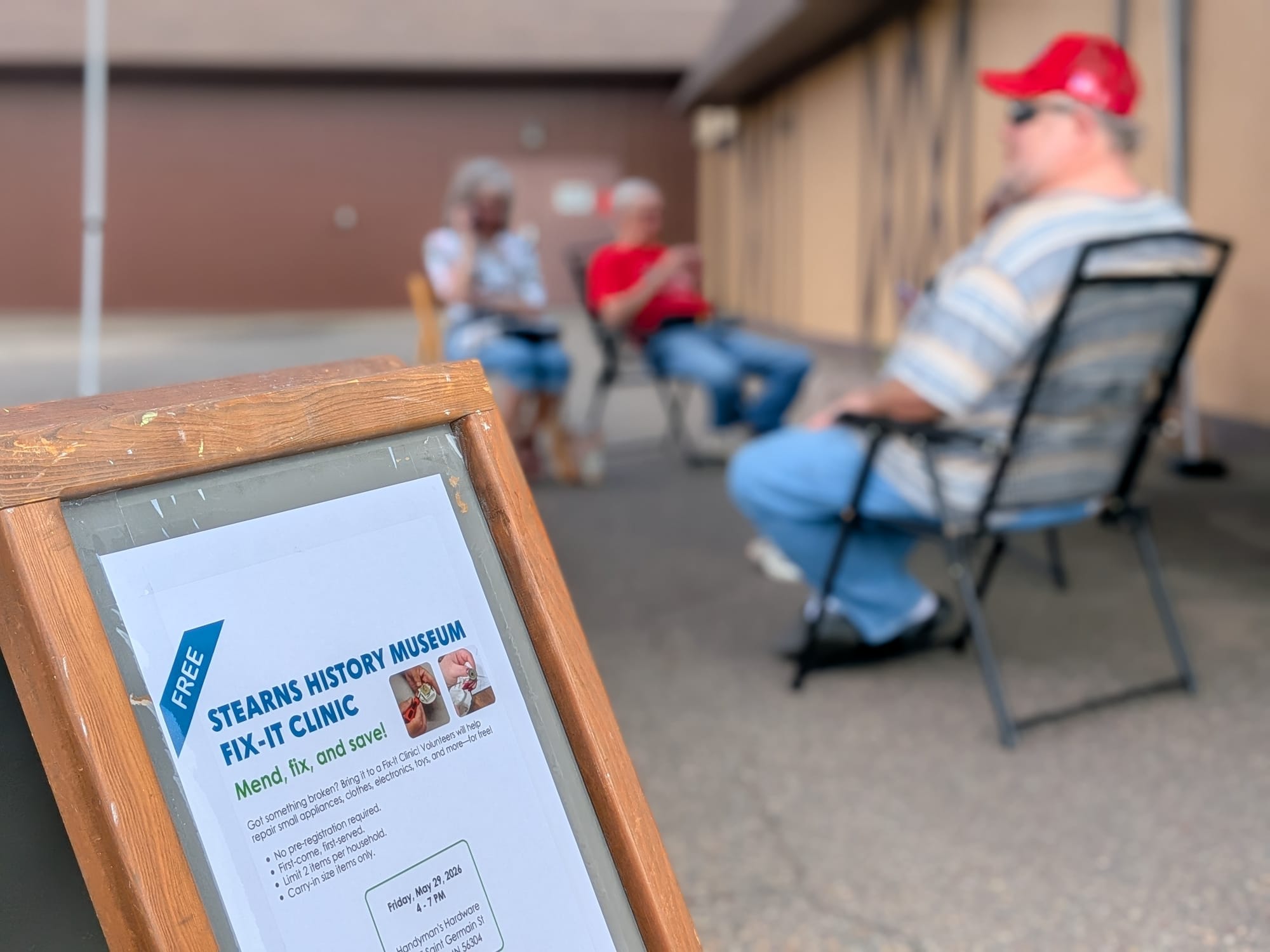
Then attendees wait for their turn. Some of them get to know each other while they wait.
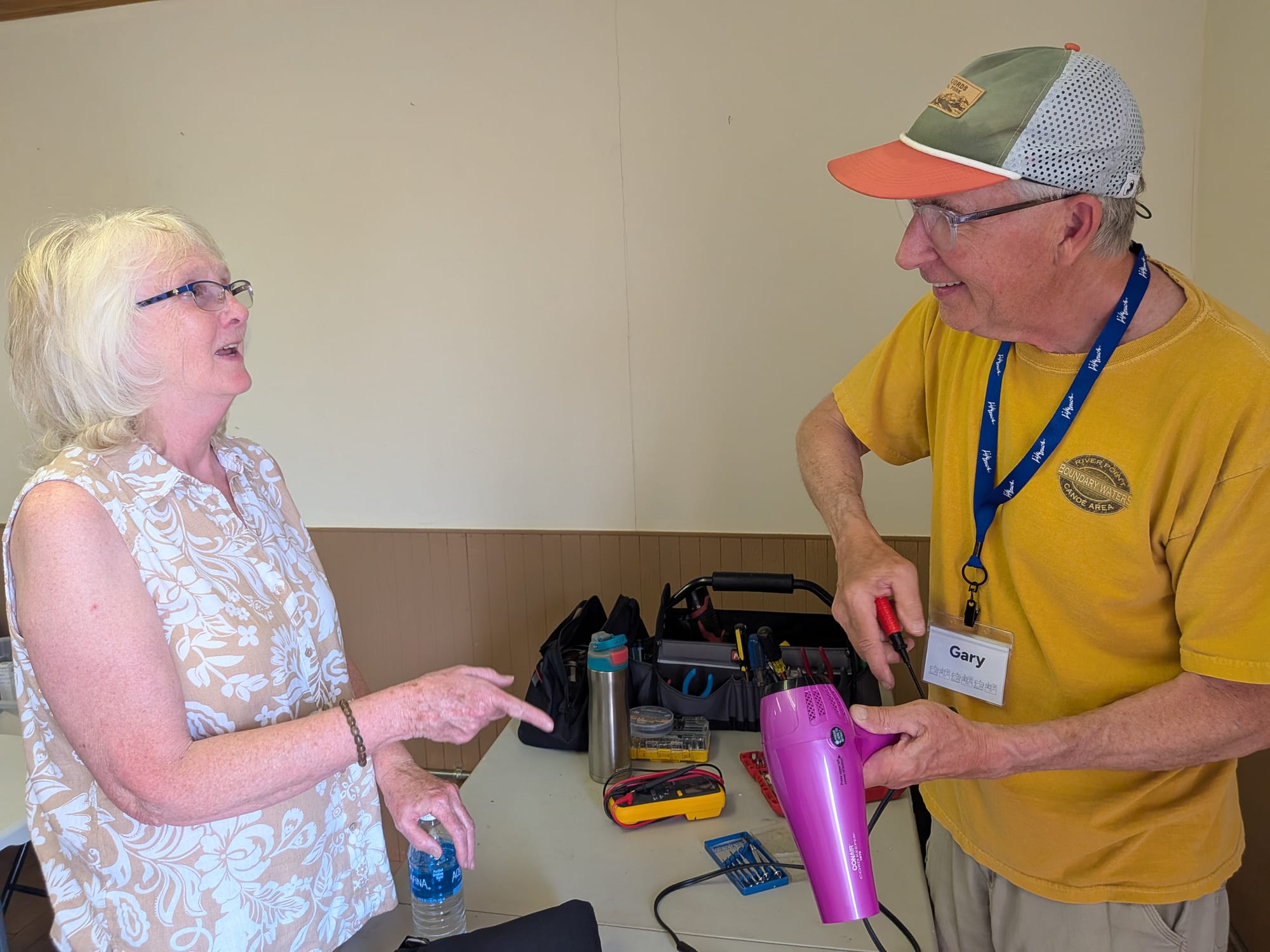
Not every item is fixable. This pink hairdryer does not start working again. But volunteers and community members, like Gary Olson and Julie Platenberg here, chat as they work through the repair process.
One measure of success at a clinic is the fix rate – what percent of items can the volunteers repair, Barker said. "We find that for most of the clinics we've been working with, it's been between 70% and 95%, depending on the event," she said. "Sometimes you just get a bunch of things that are hard to fix, and other times you get things that are a little bit easier."
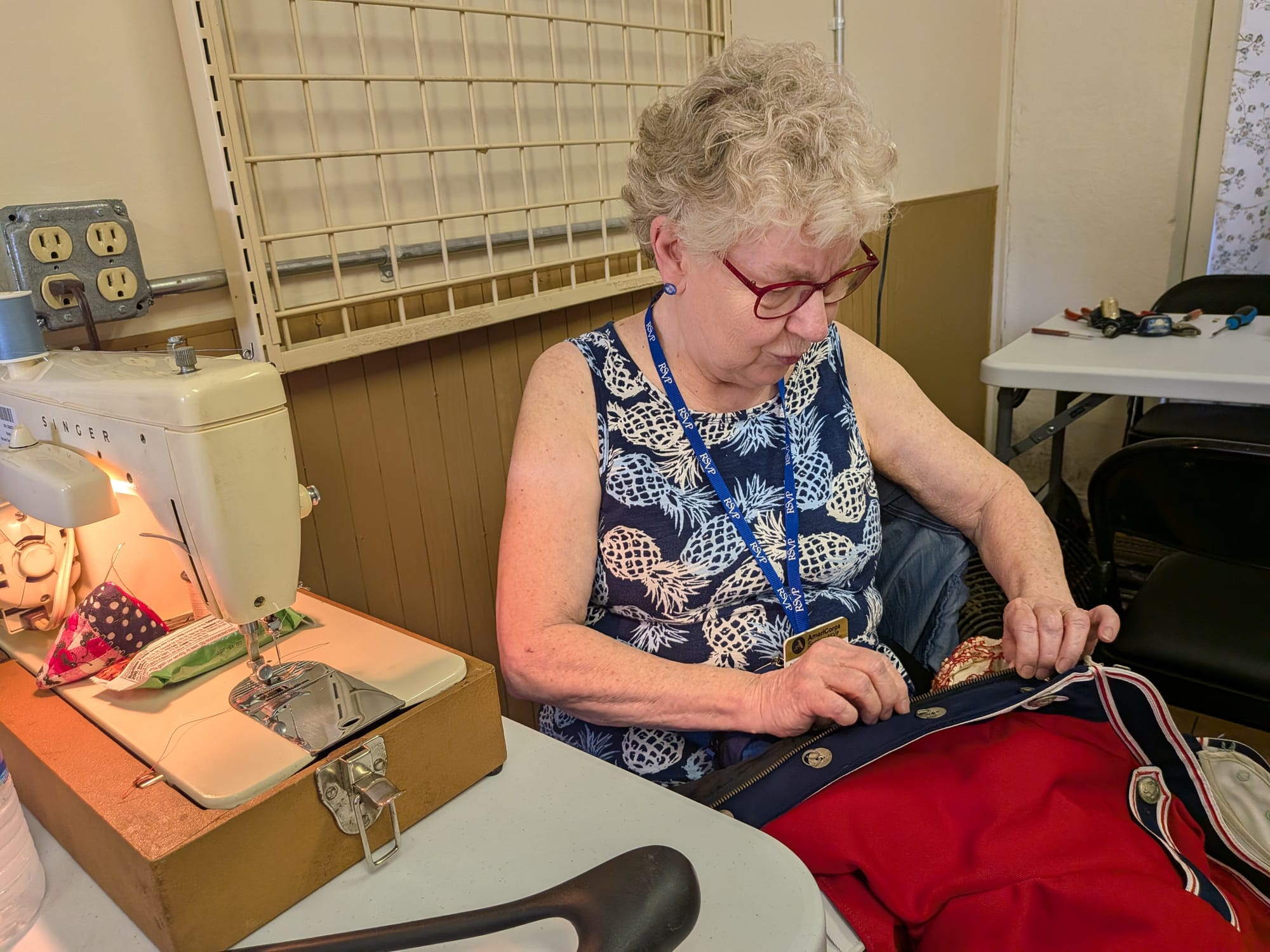
Zippers can pose a particular challenge if some teeth are missing or it requires a full repair, Barker said. In this photo Mary Jane Brewster works on the zipper of an old uniform that she eventually fixes with the graphite from a pencil.
Once a woman brought in a fleece with a broker zipper, Barker said. And the mender cut out the old zipper and sewed a new one into the remaining fabric. "She put it on, zips it up, and she says 'I am just so thankful, because this is the last thing my dad gave me before he died,'" Barker recounted. "This was a really meaningful thing to her."
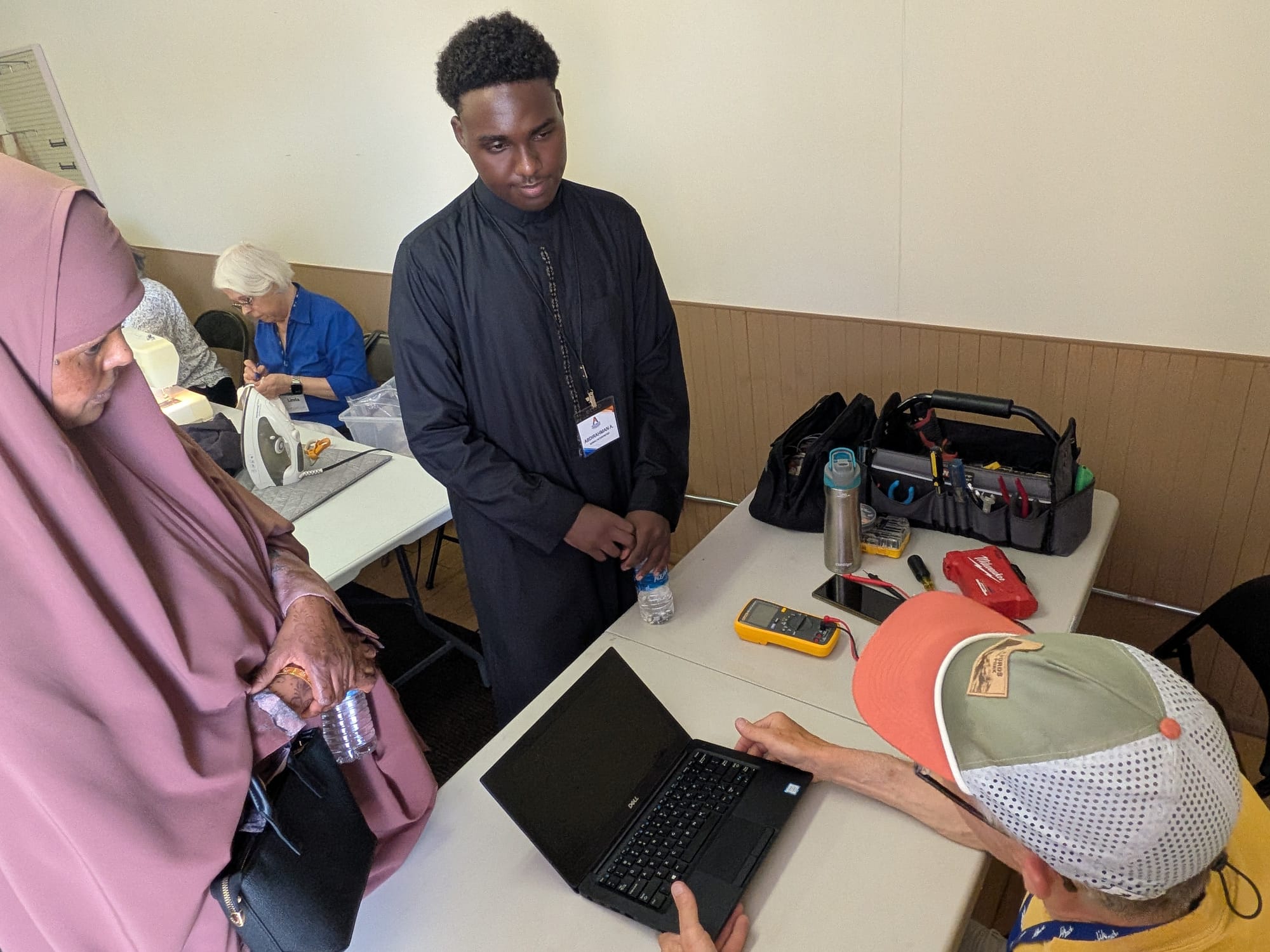
Interpreter Abdirahman Abdi interprets for a woman who brought a laptop to the St. Cloud clinic.
Electronics are difficult as well unless the fixer has experience with them. Sometimes volunteers can troubleshoot software updates, but parts usually limit other repairs, and a damaged battery can be a nonstarter due to safety, Barker said.
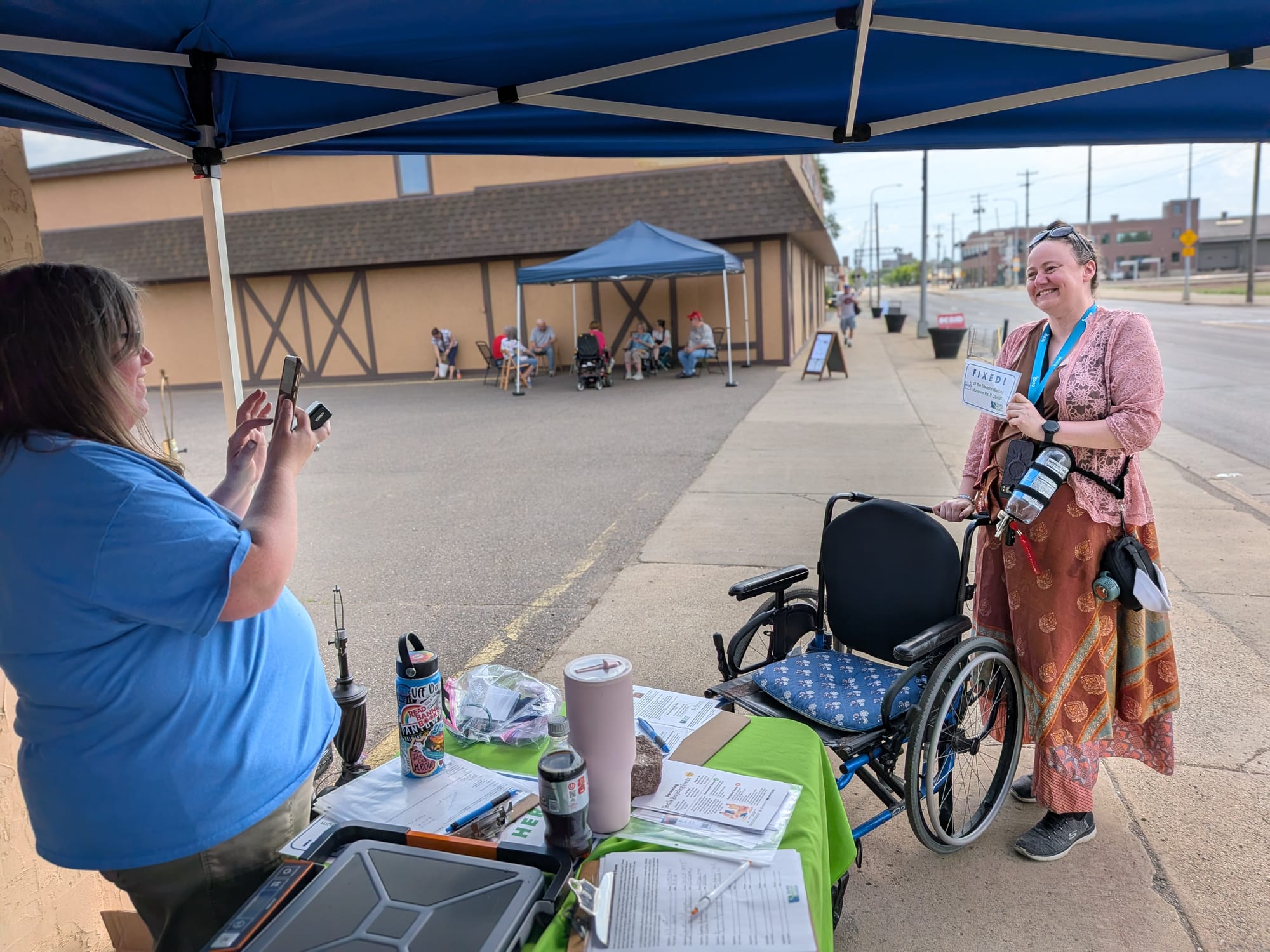
Stearns History Museum staff celebrate and document successful repairs. They take photos of attendees with a sign that says "Fixed" when their items are restored.
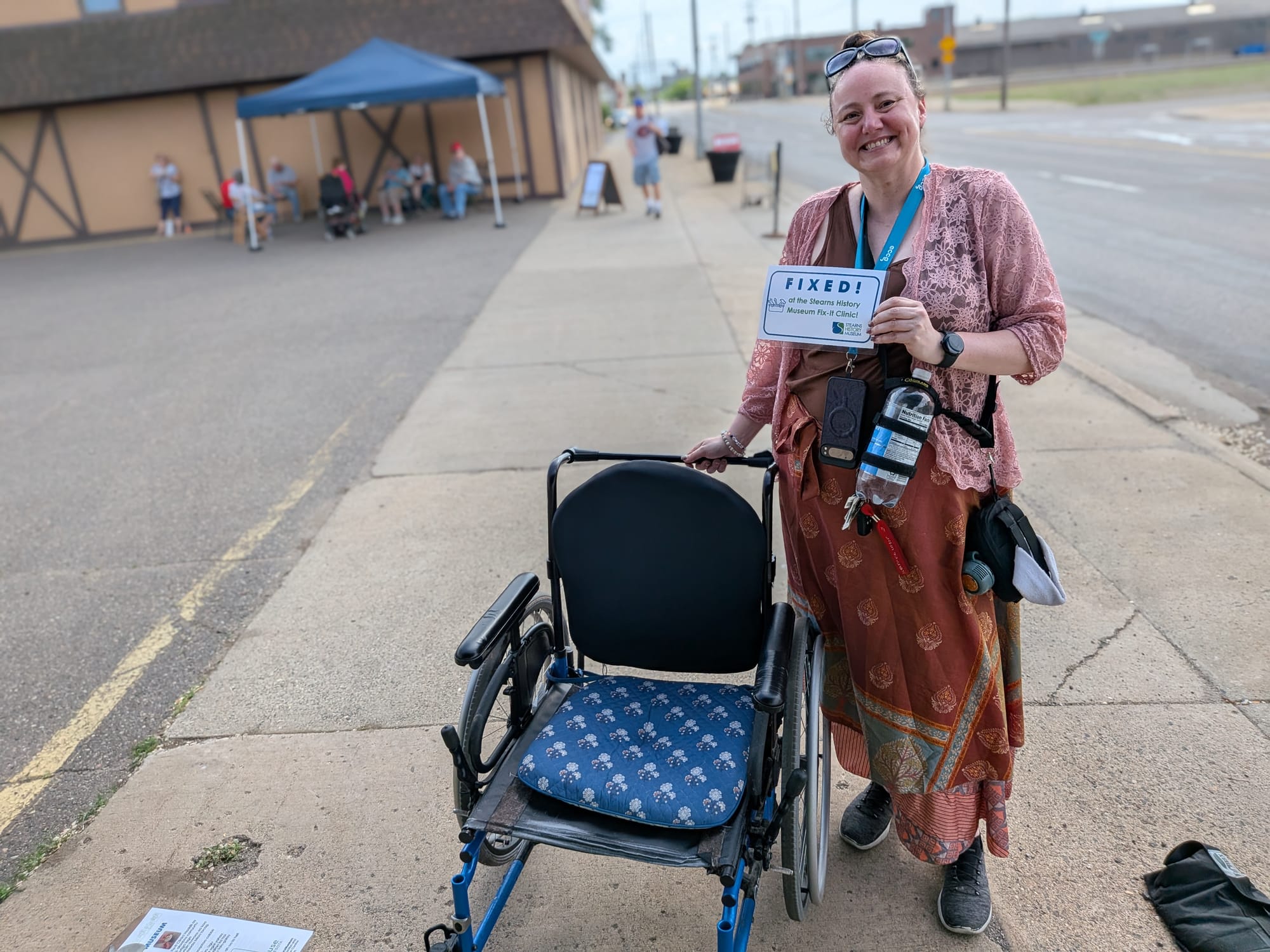
The repairs allow owners to continue to use practical items, preserve sentimental items, and save money.
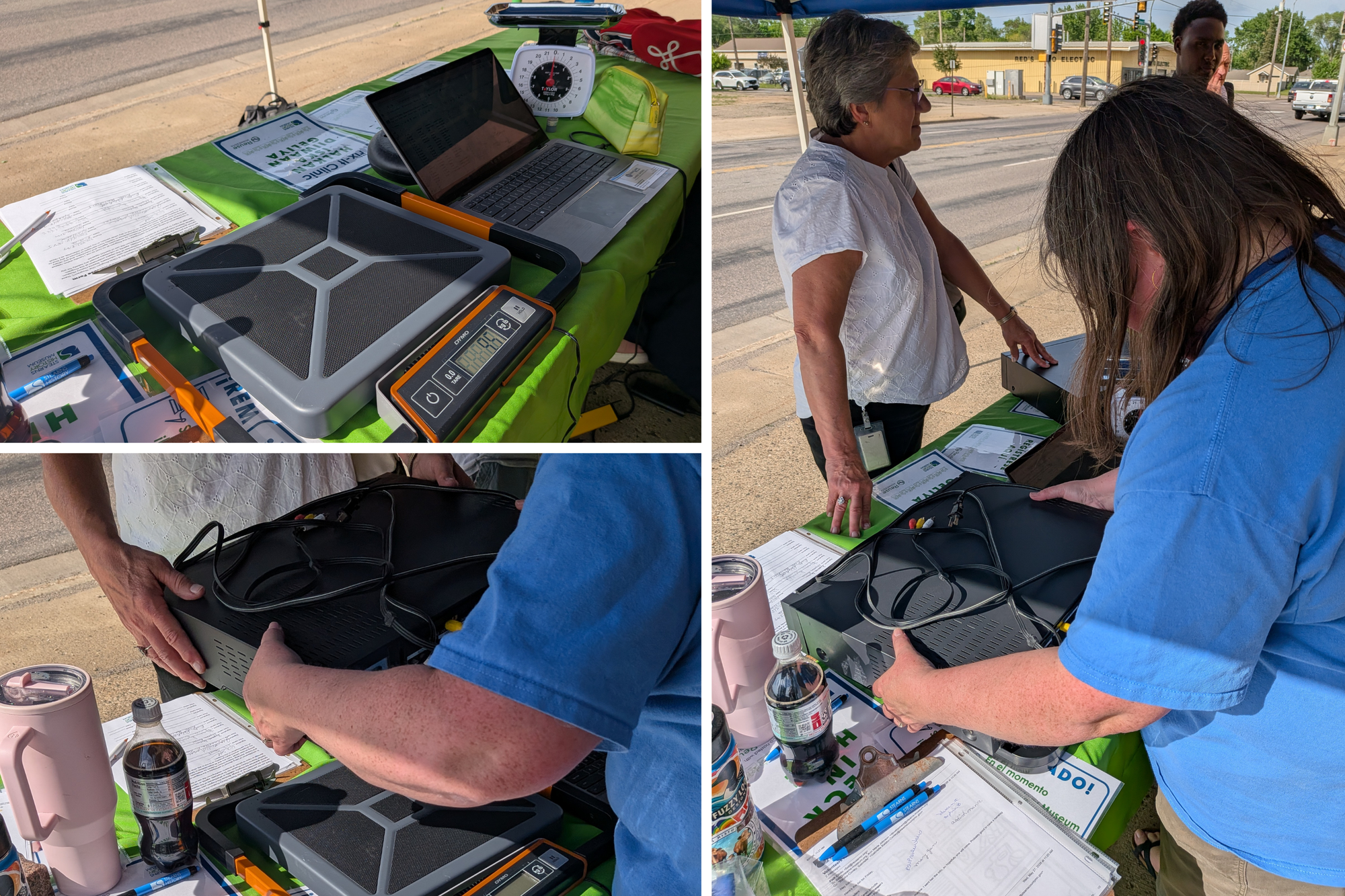
The weight of repaired items is added up to calculate how much is kept from the landfill.
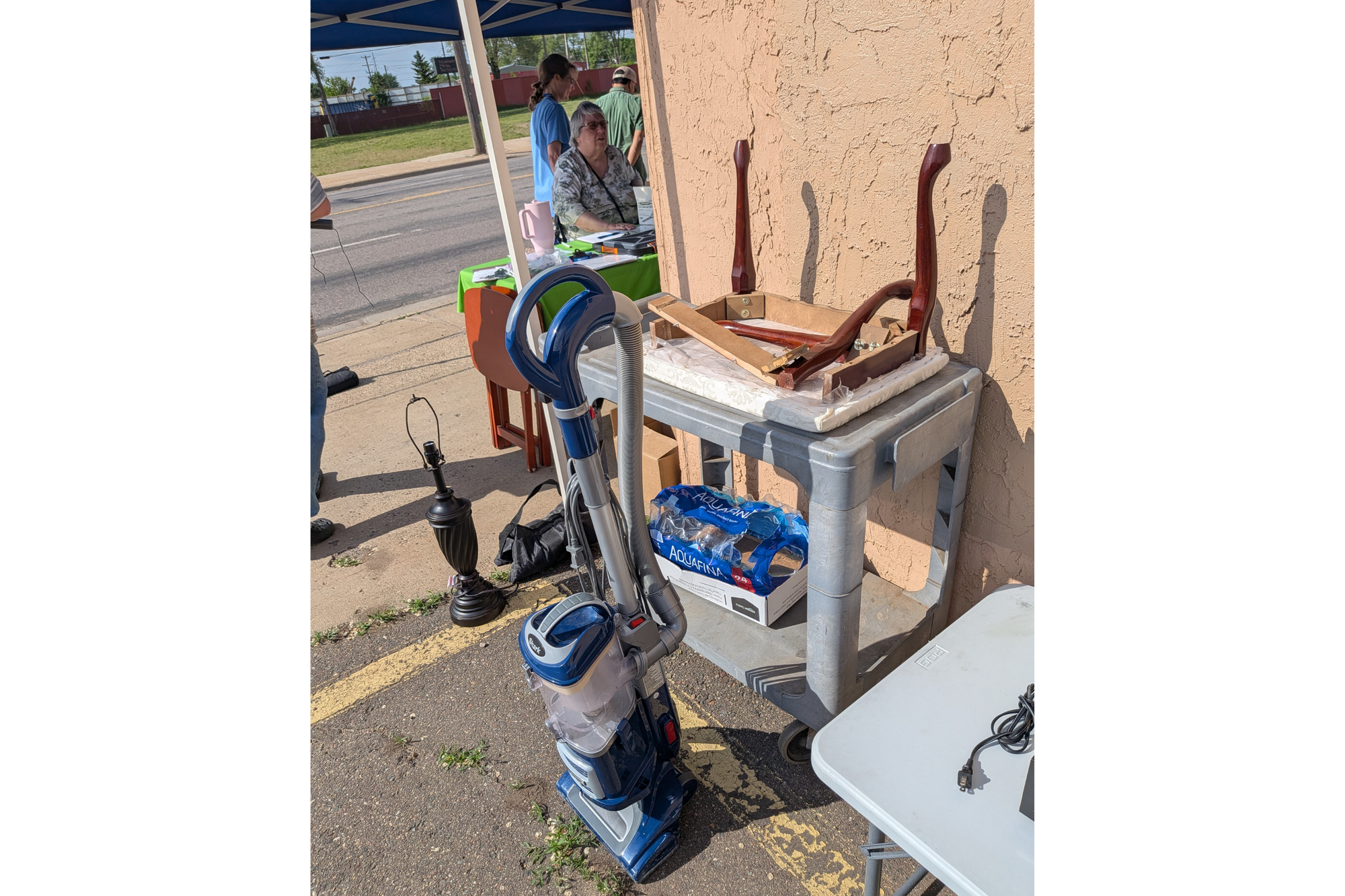
Items wait for repair and range from trinkets to vacuum cleaners – even a pitching machine that would only run slowly.
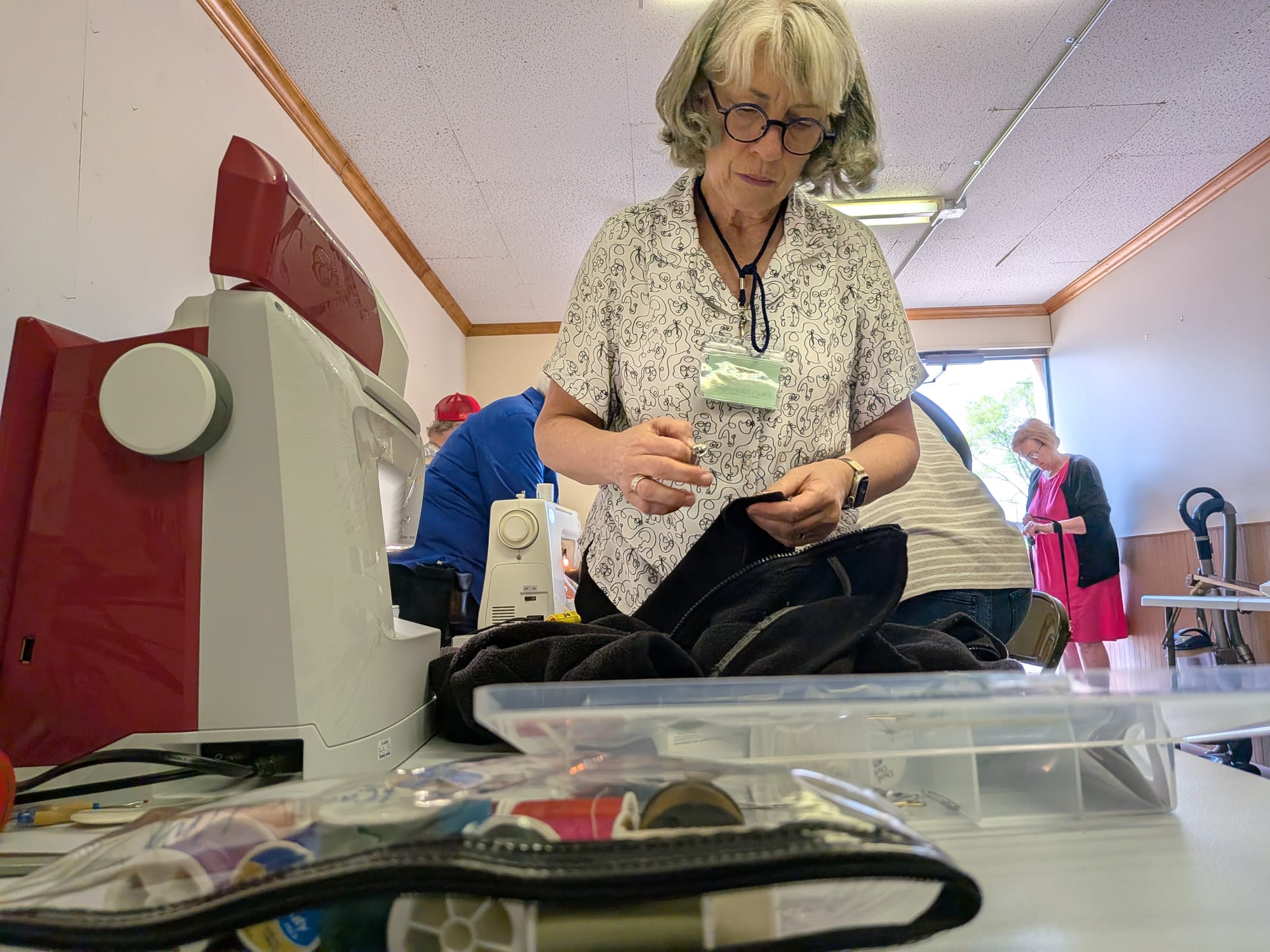
Many volunteers bring their own equipment. In this photo Karen Imholte works on mending a clothing item.
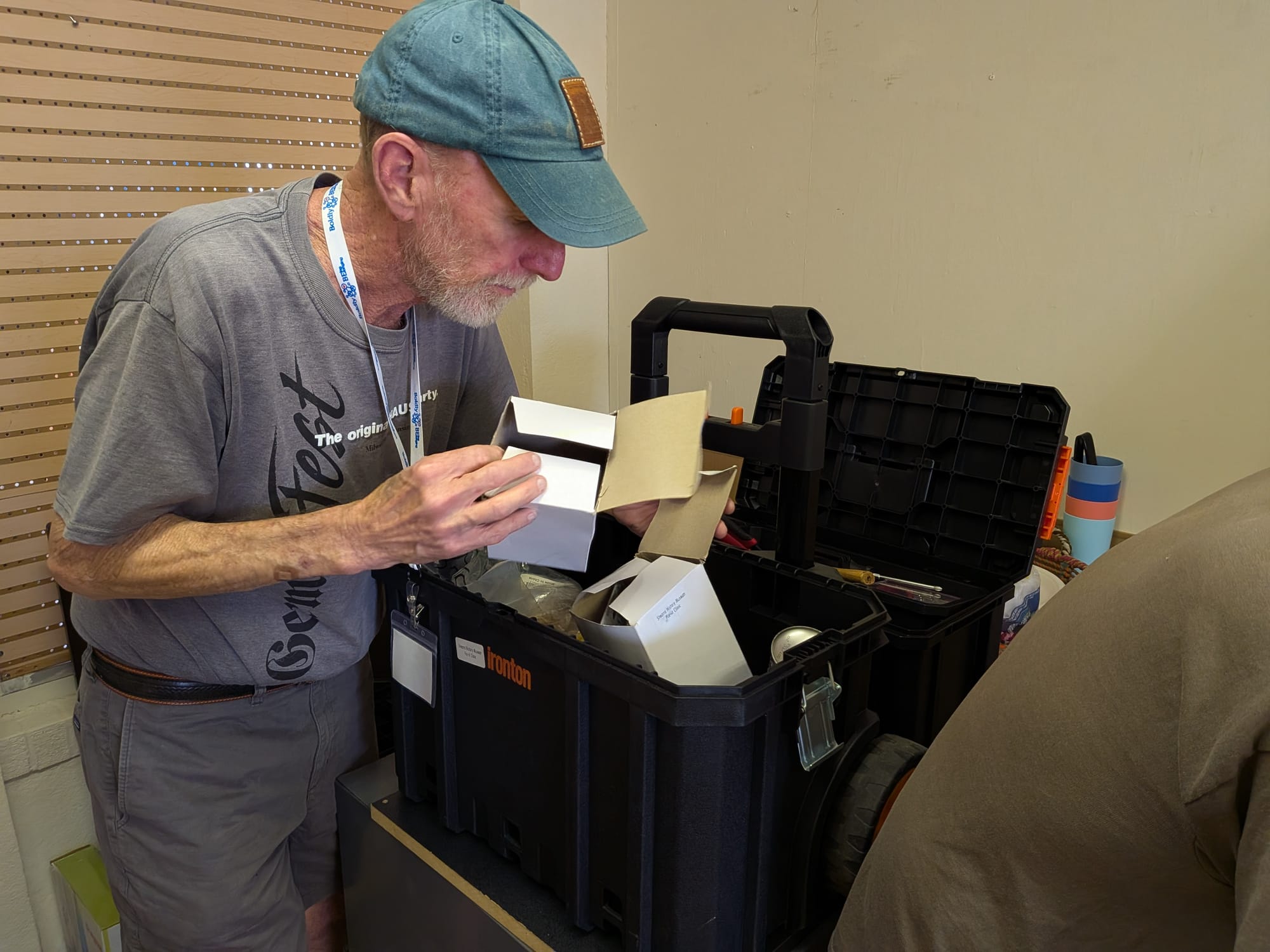
But it’s helpful for clinics to keep a stash of items to help with repairs. In this photo, volunteer Tom Willkomm looks for an item in the Stearns History Museum's supplies.
"You don't have to spend any money to make these events happen," Barker said. "But if you do have access to at least some budget for buying things like glue, oil, lubricants, thread, thermal fuses, things like that."
"If you have the ability to find yourself a sponsor, get somebody who's willing to donate some basic tools like hex wrenches and tiny little screwdrivers. Because if you look at the bottom of any small appliance, it's all those teeny tiny screws," she added.
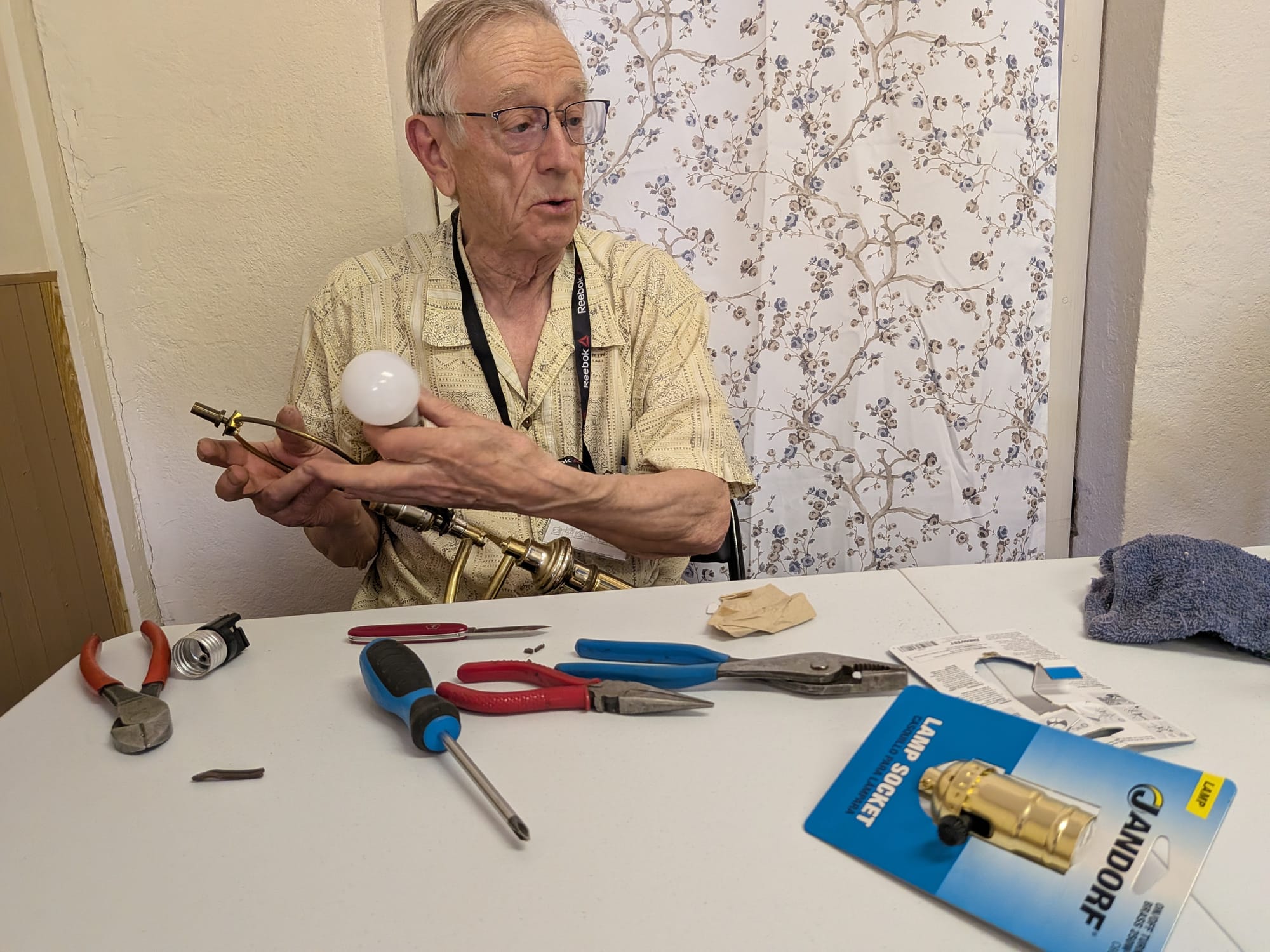
Alan Anderson works on a lamp in this photo. An additional benefit of these programs is the preservation of skills.
There’s a social aspect too. These events bring people together and can act as an antidote to isolation and loneliness.
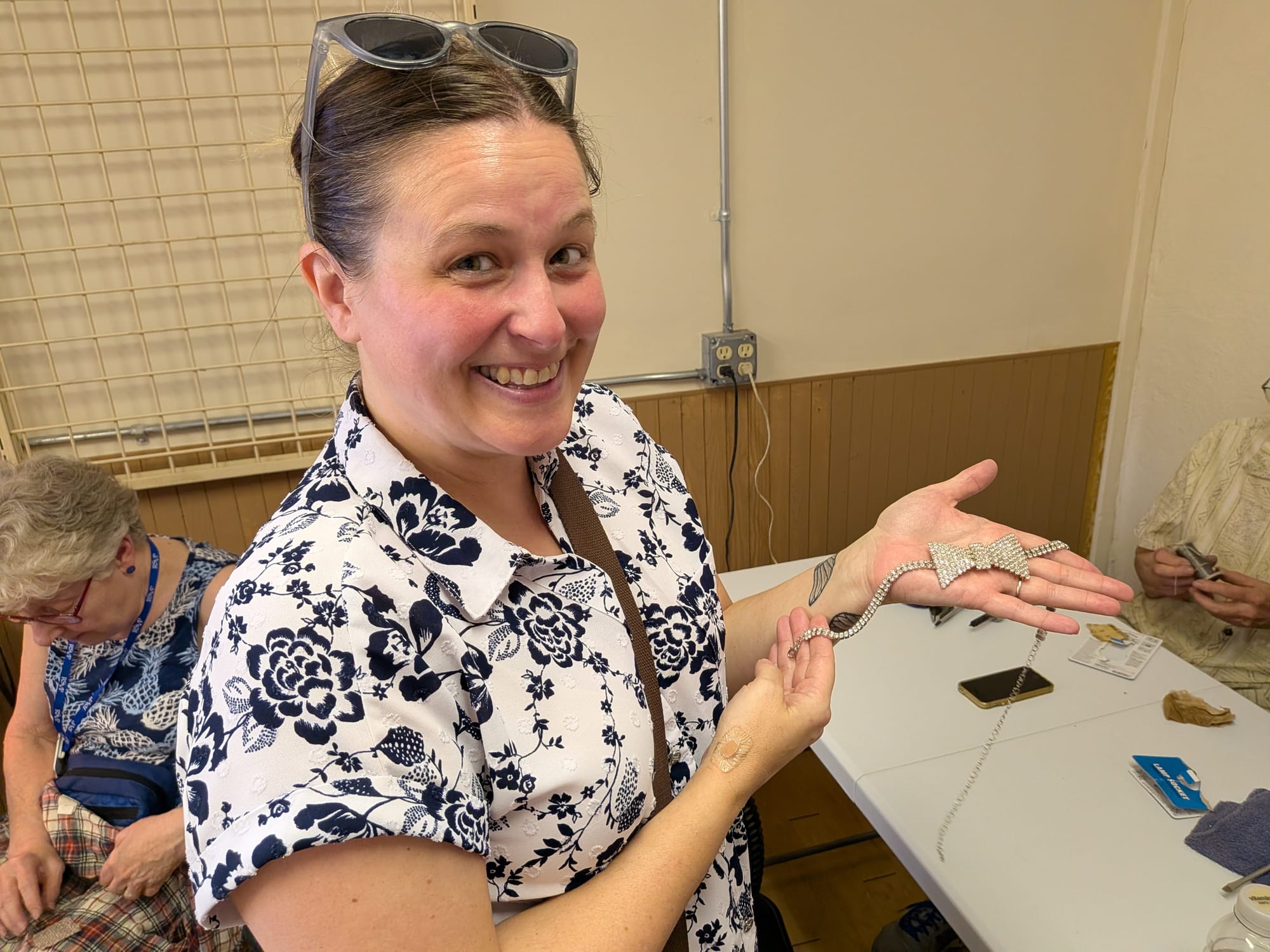
Liz Stewart shows off a bowtie necklace that was soldered back together by fixer Alan Anderson.
Reuse Minnesota has partnered with Chisago, Dodge, and Olmsted counties as well as Pope/Douglas Solid Waste Management in the Alexandria area and the Stearns History Museum as part of its greater Minnesota effort. The funding comes from a Minnesota Pollution Control Agency grant.
Reuse Minnesota offers resources for organizers across the state who want to host Fix-It Clinics.
"Fix-It Clinics are a perfect example of how you invite the general public into the reuse conversation in a fun and encouraging way," Barker said.
This story was edited by Becca Most. Nora Hertel fact checked the story with input from Ann Marie Johnson at Stearns History Museum and Emily Barker at Reuse Minnesota. It's available for republication with light editing to accommodate your publication's style guide.