Face of the farm: How women are changing the field
2026 is the International Year of the Woman Farmer. Here’s what that looks like in Minnesota.
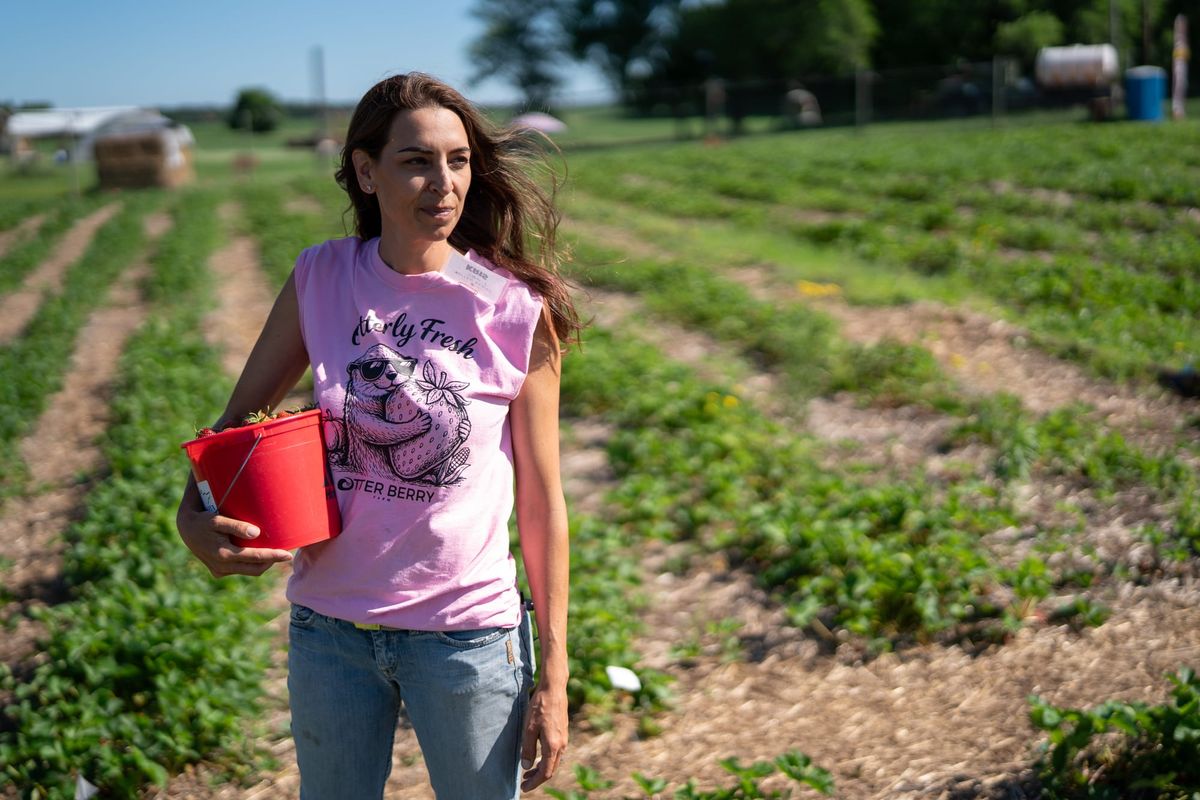
NEW YORK MILLS, MINN. – Kris Huebsch did not expect to be named Woman Farmer of the Year at last year’s Minnesota Farmfest from a finalist pool of "movers and shakers."
She’s still asking: "Did that really happen?"
Huebsch launched and runs a popular strawberry farm in west central Minnesota called Otter Berry Farm. She’s the sixth generation in her family to farm.
"There are so many females in agriculture in Minnesota, in all parts of the country, in the world, quite frankly, that do so much. And a lot of it is behind the scenes," Huebsch said in an interview with Project Optimist in late June.
Some women are hands-on, working 80 hours a week, driving the tractor, she said. Others are raising kids and helping here and there: picking up parts, feeding calves, running food to the guys.
In the last 20 years, more women have become the lead or face of their farms, said Susanne Hinrichs, University of Minnesota Extension educator. According to the latest agricultural census, 31% of Minnesota farmers are female.
And women have been involved in agriculture since the beginning of food, Hinrichs quipped.
The United Nations named 2026 the International Year of the Woman Farmer. The goal is to "raise awareness of the role of women in agrifood systems and the challenges they face."
The role of female producers became more visible in U.S. data since the agricultural census started allowing farms to name more than one farm operator in 2002. And women farmers are increasingly visible as leaders of microfarms and agrotourism businesses, and as inheritors of family land.
"You can be your own boss … and also have your kids there," Hinrichs said. "There's so much richness in farm life. There's a lot of work that goes along with it. Yet you can fit all that together in that space."
 Noah Beardslee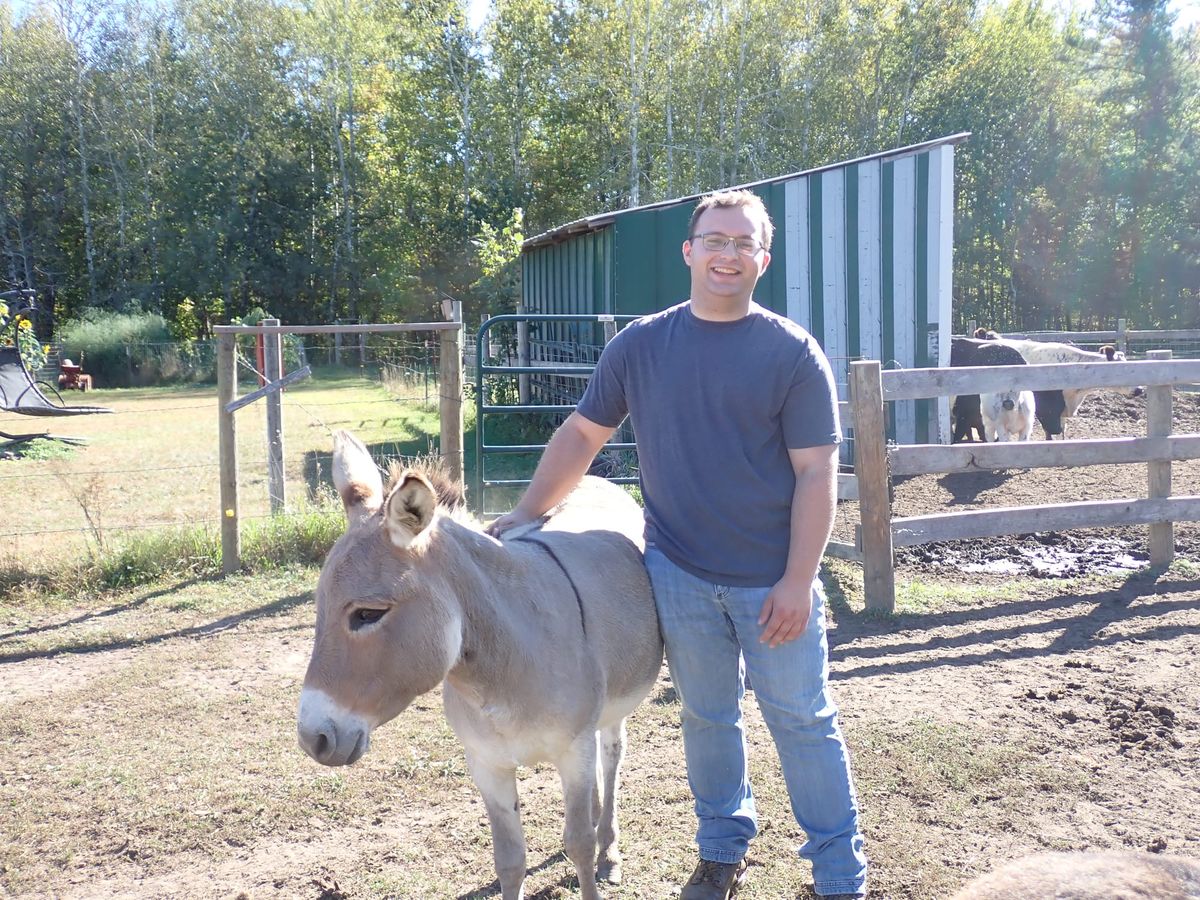
A new spin on a family farm
Huebsch of Otter Berry Farm grew up on a dairy farm in northeast Ohio. She studied animal science at Montana State University-Bozeman where she met her husband from Perham, Minn. He is the fourth generation to farm in his family.
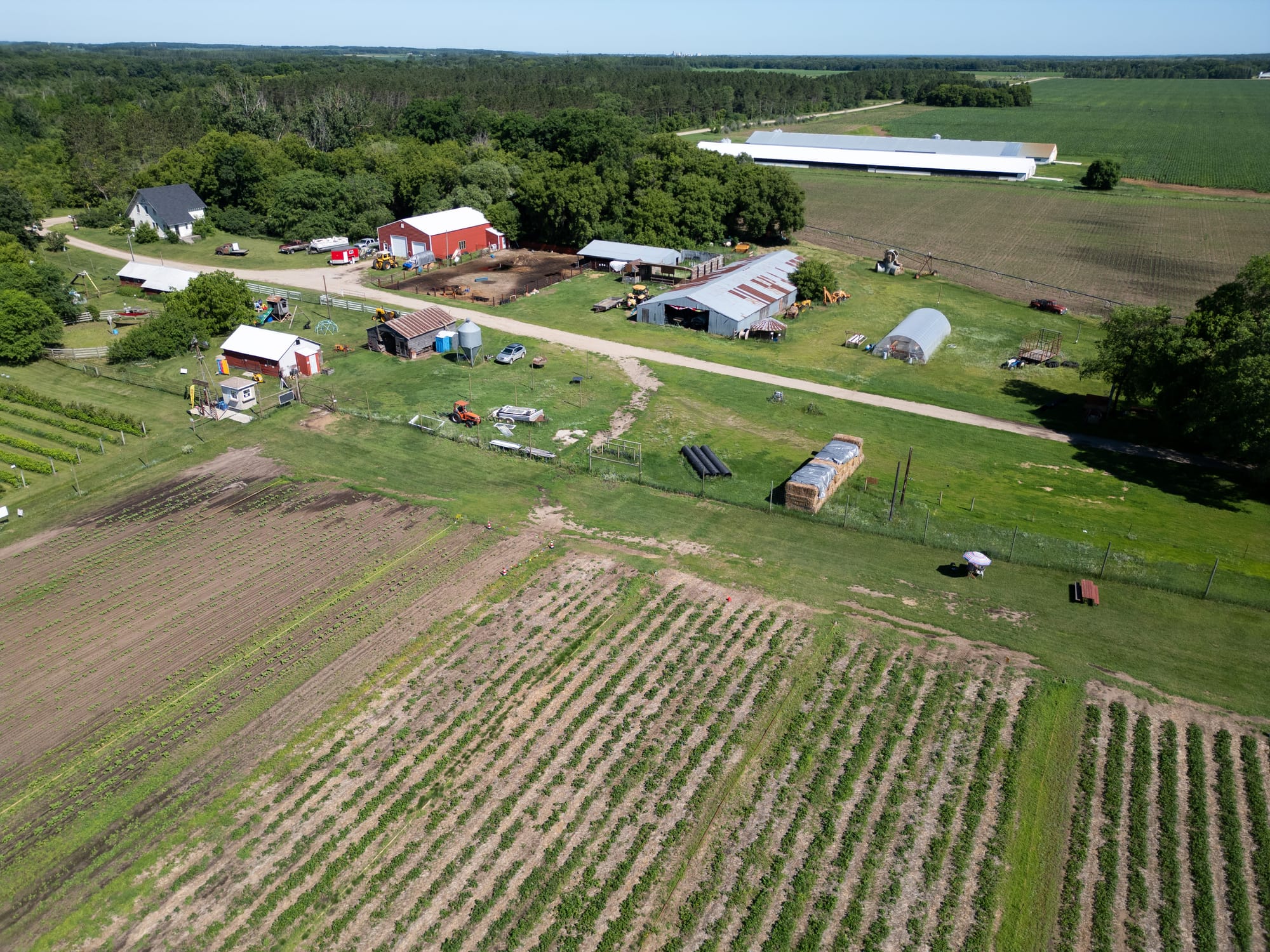
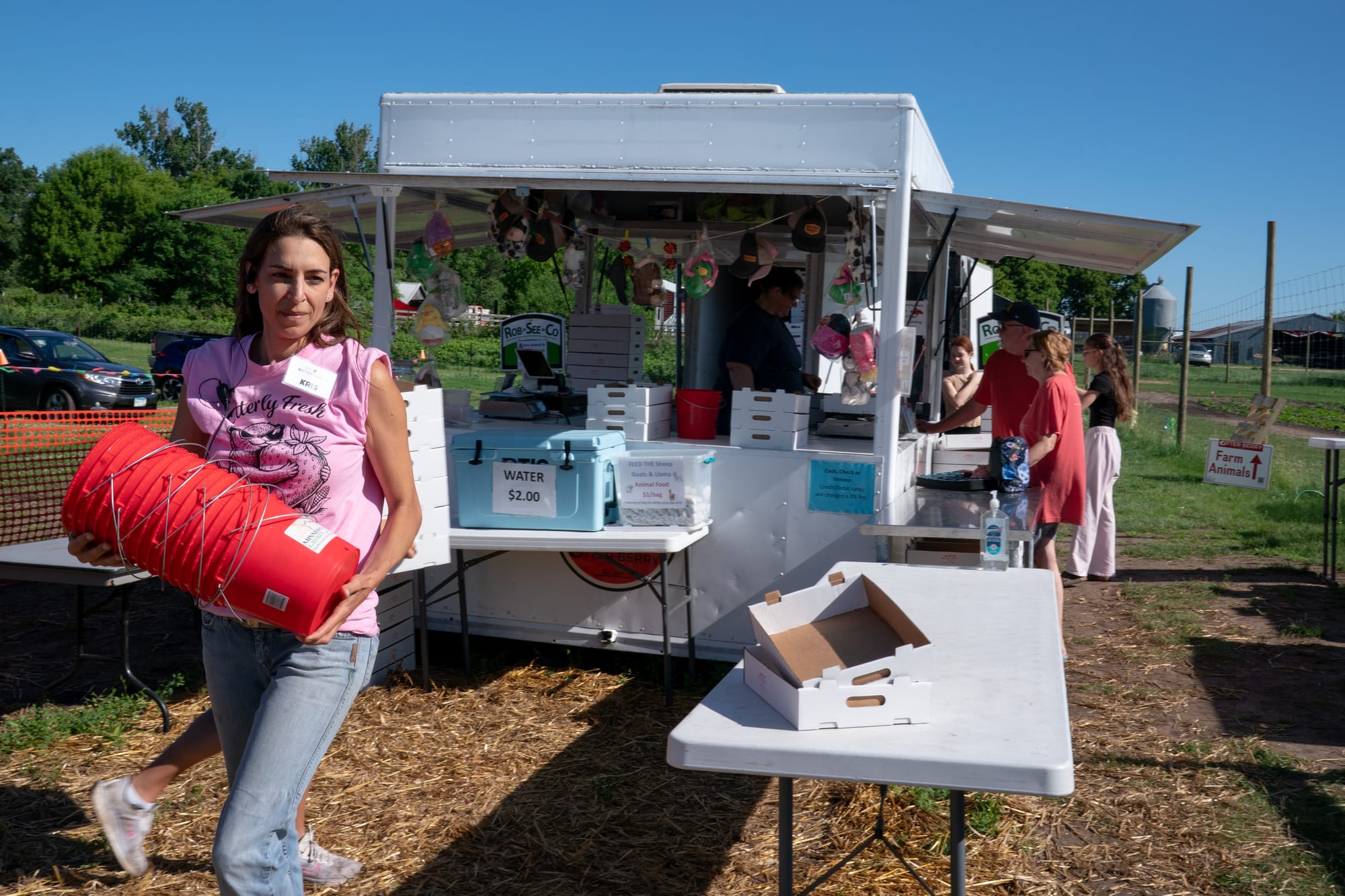
They started the strawberry operation 10 years ago to generate a little income and allow Huebsch to be with her kids. Otter Berry Farms sells direct to consumers and allows them to visit the farm and pick their own fruit.
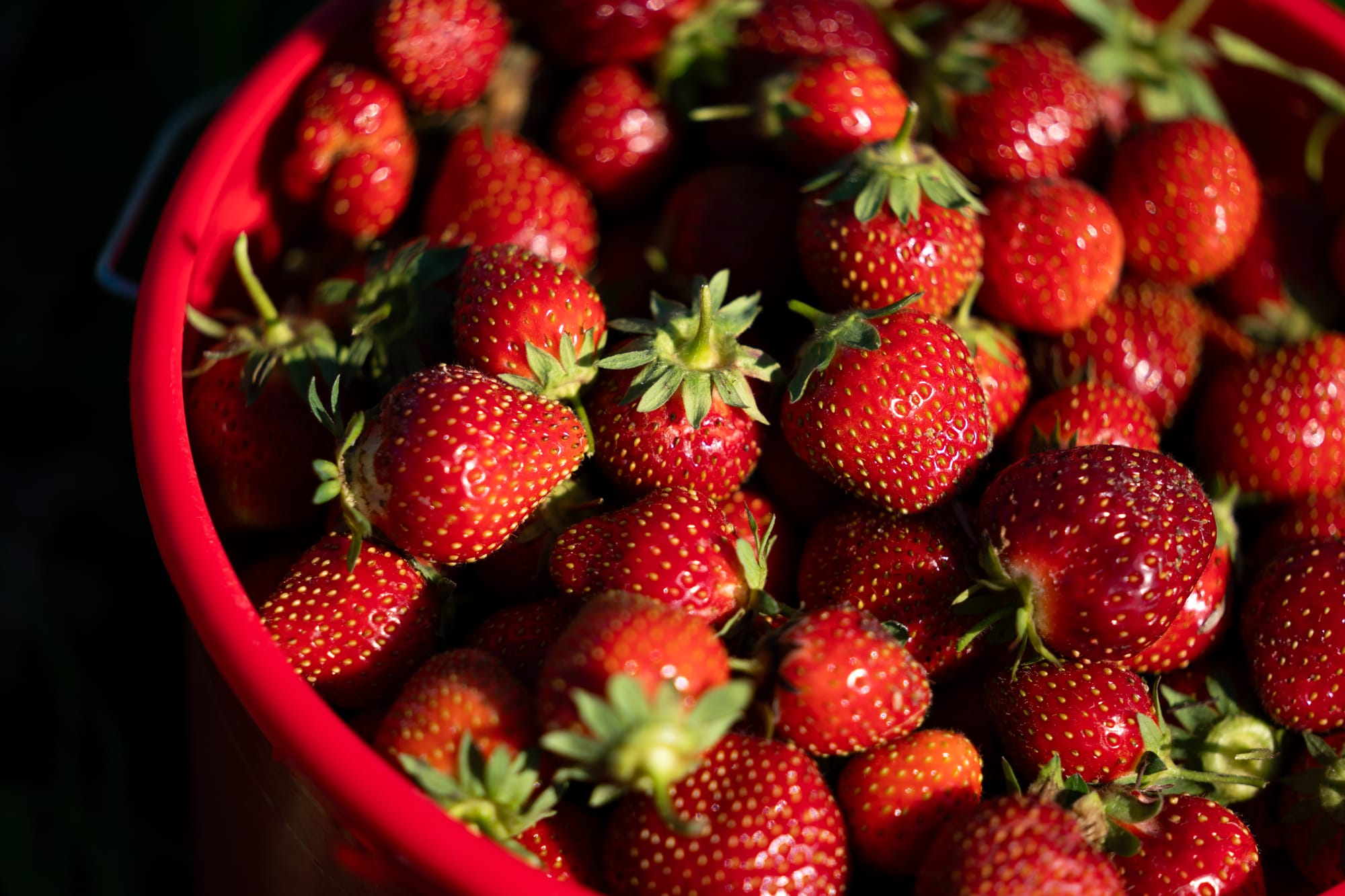
Strawberries are labor intensive – weeds must be pulled by hand, Huebsch said. And they’re unpredictable. You can lose a whole crop overnight.
But they’re popular. Pickers flocked to the farm during the pandemic. And business hasn’t slowed down.
"It's almost like Black Friday, people coming and lining up," Huebsch said.
In 2018 they added a corn maze, which pairs well with the strawberry business and helps them diversify revenue on the farm. The number of acres growing berries has varied. Right now it's about 4 acres, and Huebsch planted another 3 acres in May to increase that to 7 acres for 2027.
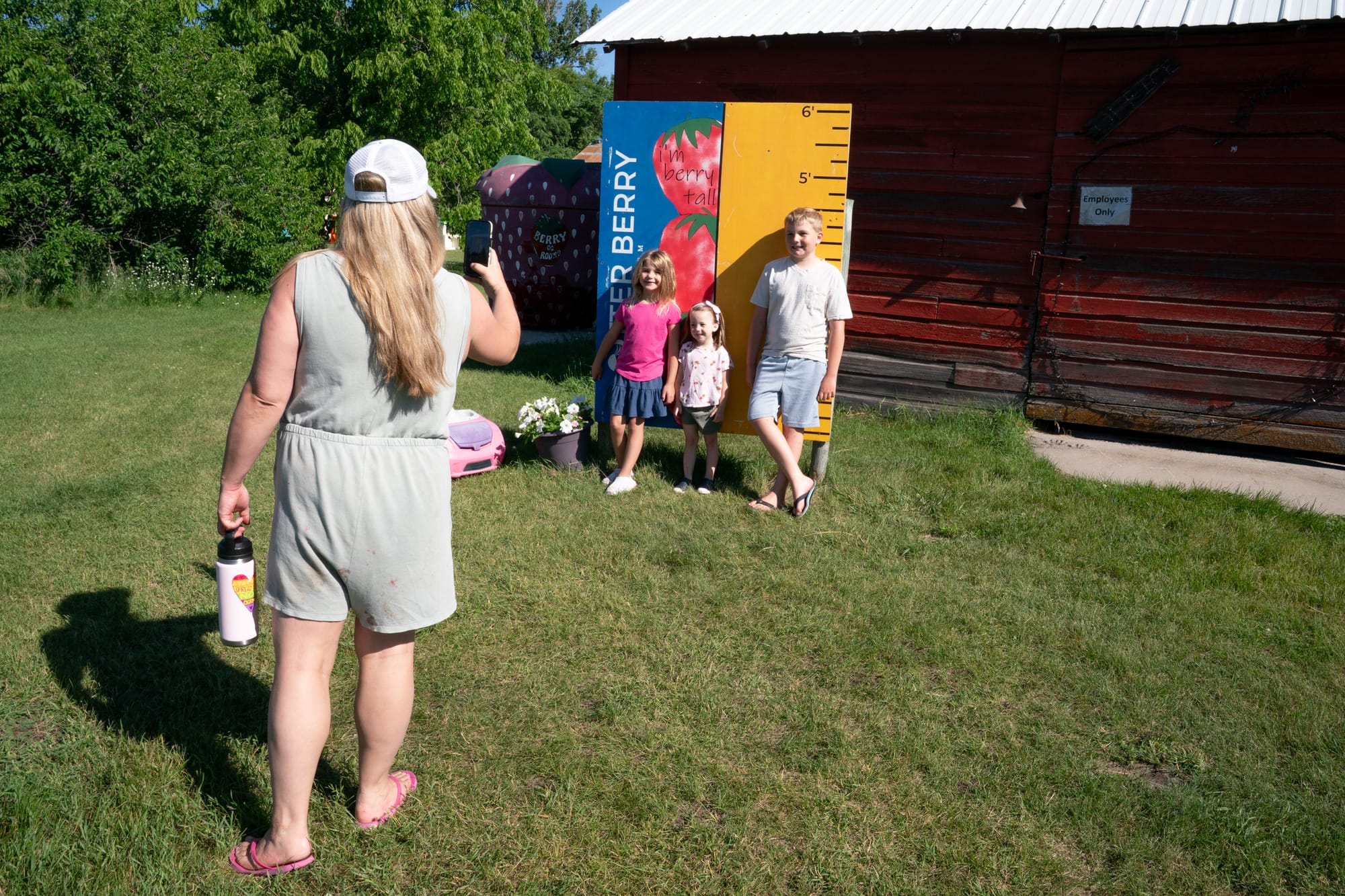
She likes to watch families come and connect on the farm. She’s seen a family come with four generations. Even teenagers tend to engage.

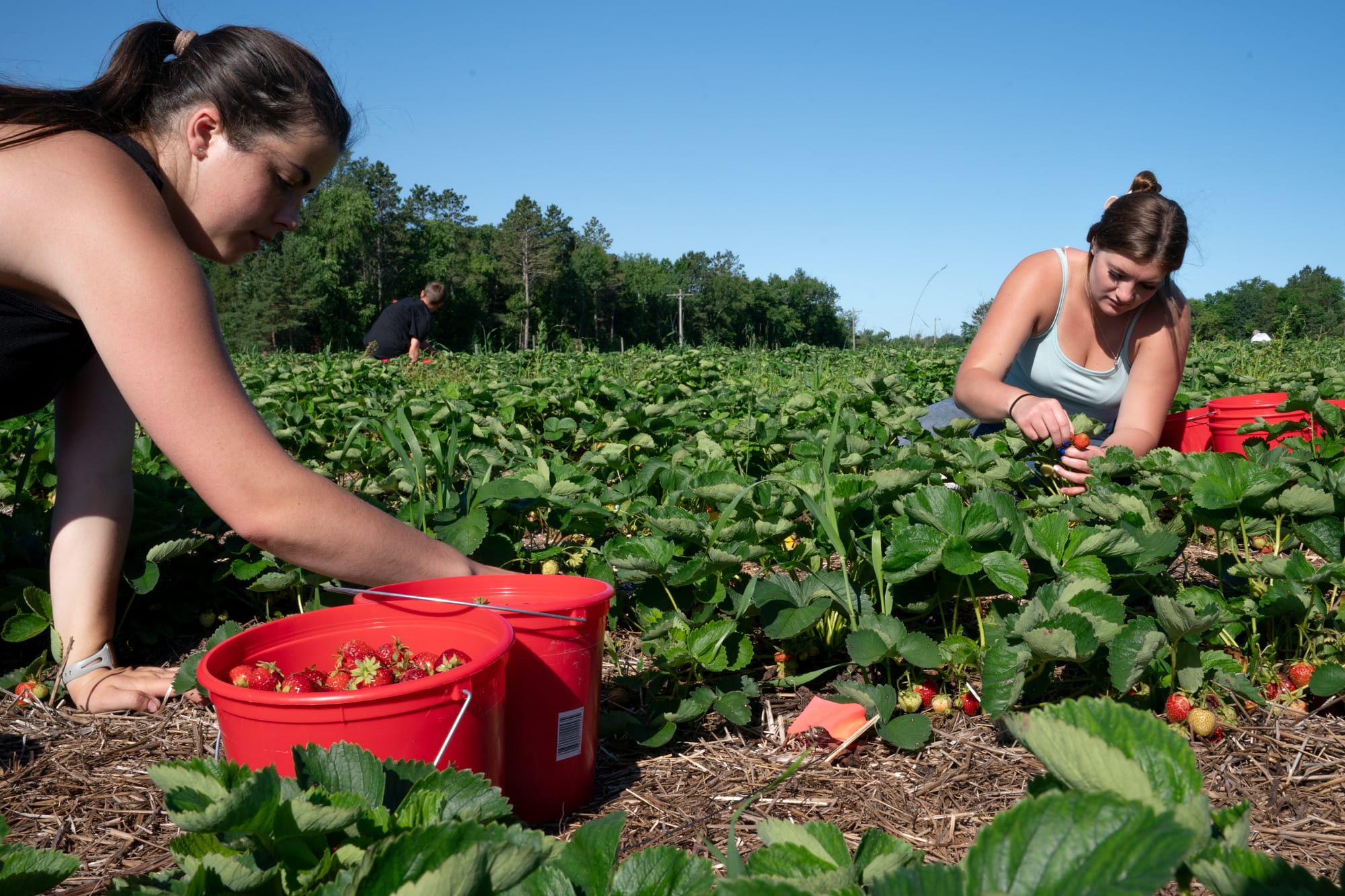
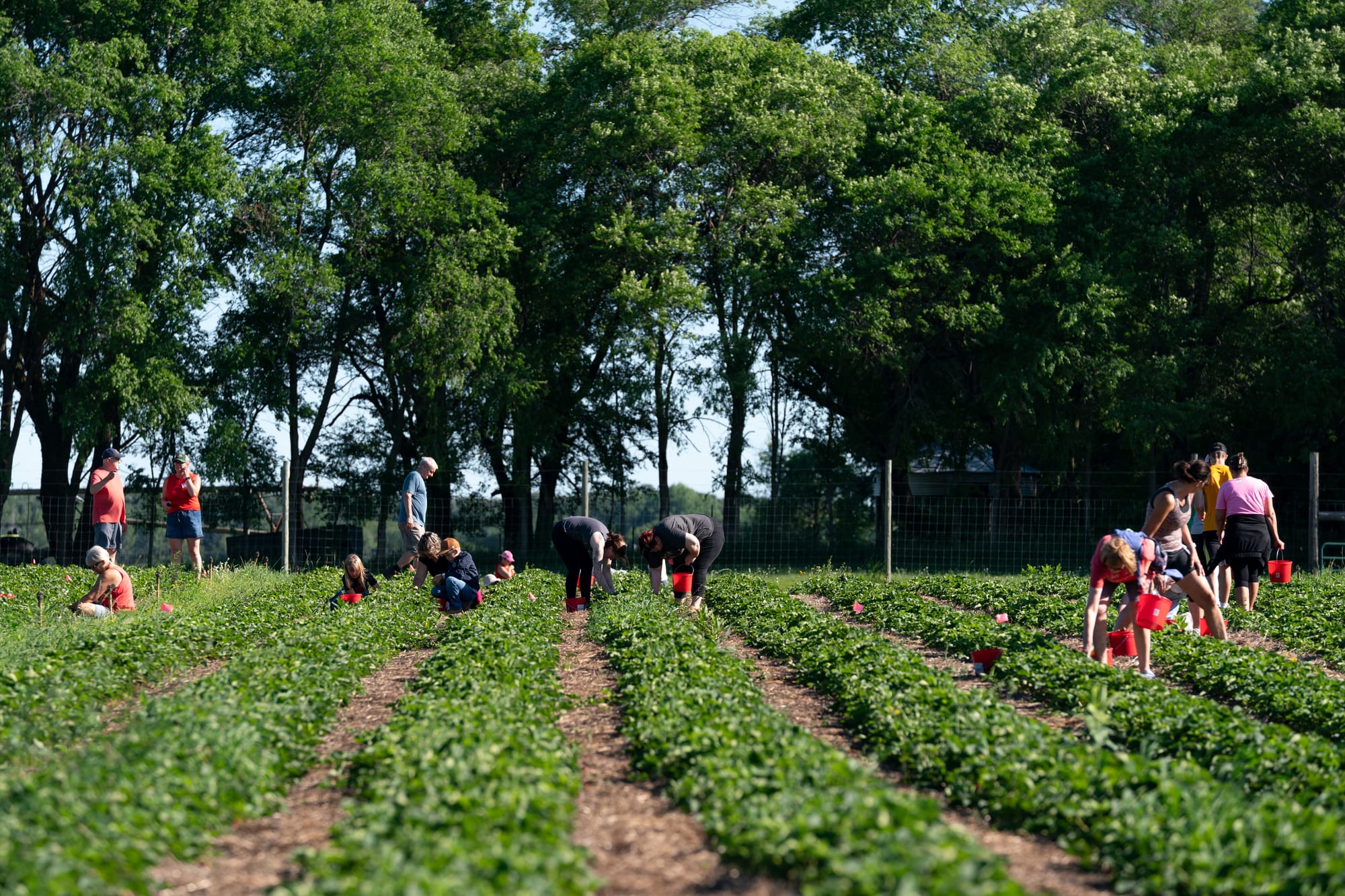
Visitors to Otter Berry Farm pick strawberries on June 30, 2026, in New York Mills, Minn. (Erica Dischino for Project Optimist)
Huebsch hopes to see more women in agriculture even though farming is still considered a man’s world.
Growing up, farmer’s wives were often viewed as assisting the operation rather than running it, Huebsch said. She has seen that change in the last 15 or 20 years.
"Gals have opportunities in everything: tractor sales, seed sales, … cattle operations, fruit farms like us. Flower farms are becoming insanely popular," Huebsch said. "There's quite a few of us who grew up farming. It's in our blood, and we don't know how not to."
Are you interested in starting a farm?
Enderlin, N.D. – Michele Trangsrud was a self-described "city girl" who married into farming in 1990. To stay viable, the Trangsruds transitioned their North Dakota land to organic that same decade.
A young woman can succeed in farming today, Trangsrud told Project Optimist in June. Here are a few tips to help her chances.
- Be a self-starter.
- Launch with some funding behind you, and keep a supplemental source of income.
- Learn something about mechanics. Maintaining your own equipment and buying used can save money. "It costs an arm and a leg to get anything fixed on your tractor," Trangsrud said.
The University of Minnesota Extension has educational programs for new farmers and is home to the 10-year-old Women in Ag Network. A few educators in the extension program, including Susanne Hinrichs, teach about the business side of farming: finances, record keeping, taxes, and policy.
Trainings through the Women in Ag Network use a discussion-based model so the participants can feel comfortable to ask questions and share their knowledge, Hinrichs said.
Minnesota has been a leader in programs to support emerging farmers, she said. There’s a down payment assistance grant, beginning farmer infrastructure grants, and the beginning farmer tax credit.
"Women are choosing to go into farming," Hinrichs said. "There’s a trend of people, in general, wanting to get back to the land and know where their food is coming from."
This story was edited by Becca Most. Nora Hertel fact-checked it.
 Lisa McClintick