
Data center primer: Highlights from southeast Minnesota
Learn the basics on data centers' water and energy impact

There are more than 2,500 data centers proposed or under construction across the U.S.
Yet negative views toward data centers have increased throughout this year, according to Pew Research Center. A majority of Americans believe data centers are mostly bad for the environment – 54%. And 60% would not be comfortable "with a new data center operating in their area."
Hundreds of communities across the U.S. have put moratoriums in place to grant them time to prepare for the data center boom including Mankato, Waite Park, Minneapolis, and Wright County in Minnesota.
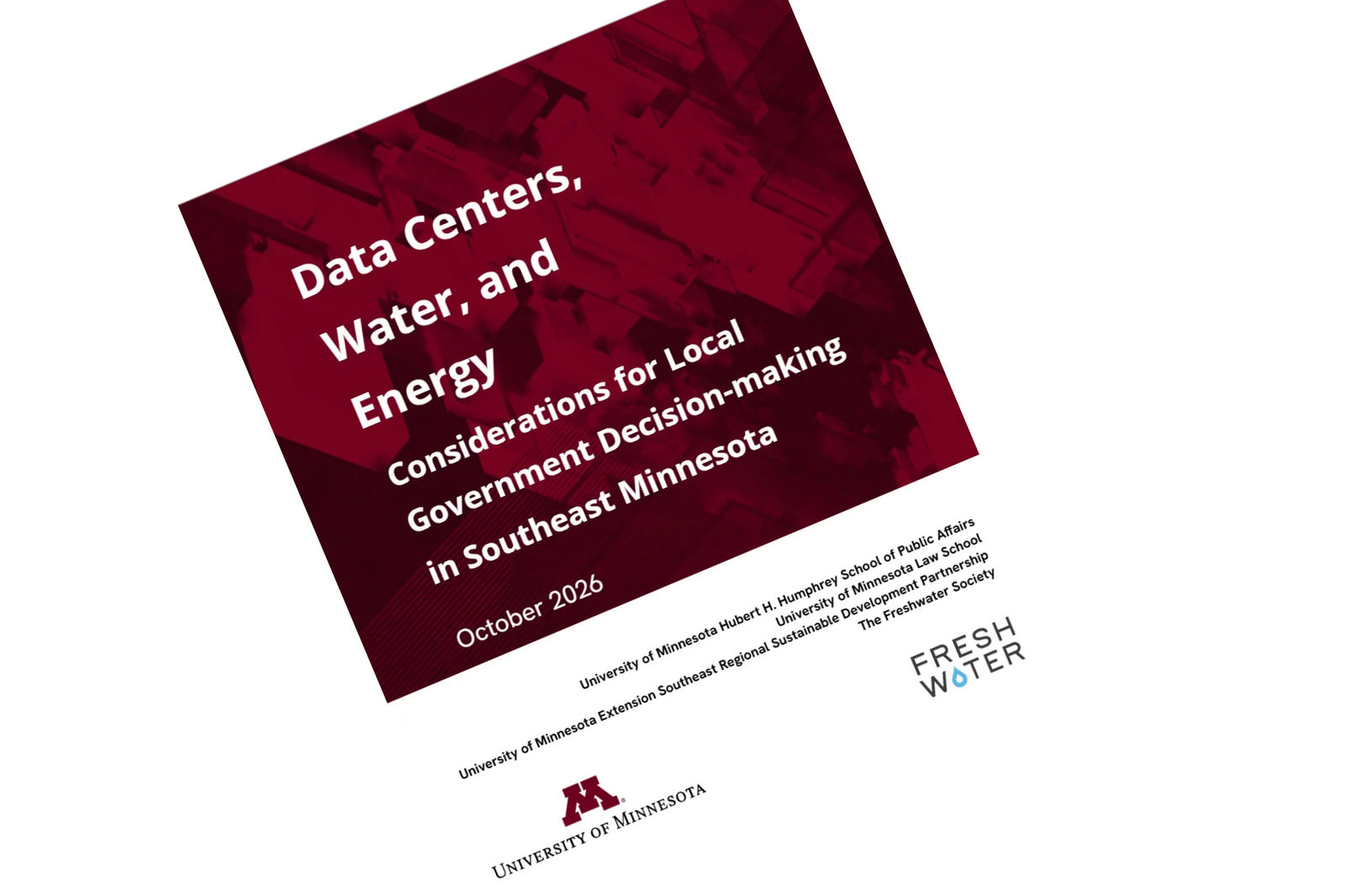
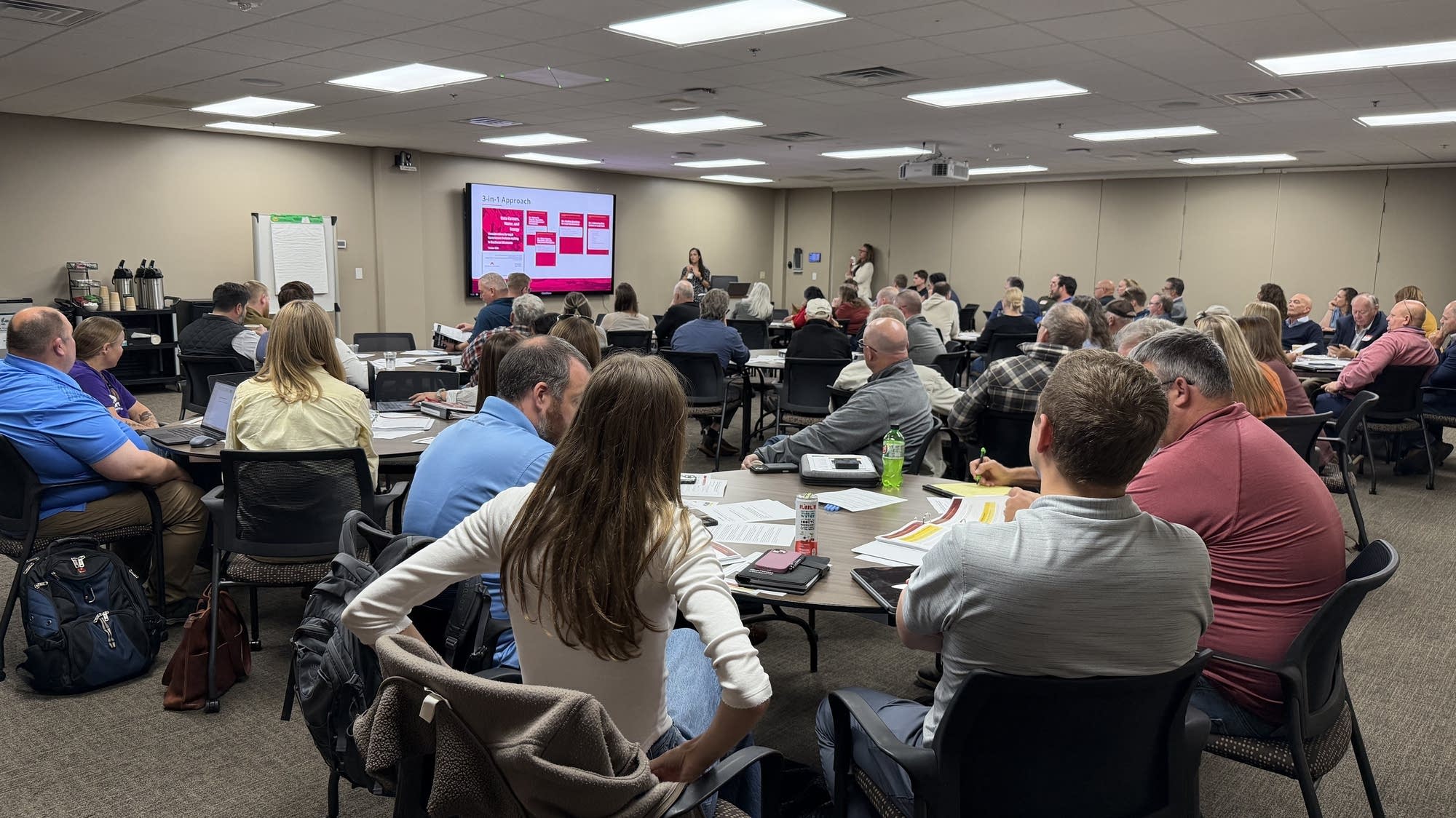
Last year, when local officials in southeastern Minnesota realized they needed more information, a collaborative research effort launched to study the water and energy impacts around data centers. A toolkit came out in October from authors at the University of Minnesota and Freshwater Society.
The report answers common questions and untangles a network of federal, state, and local authority over energy, water, noise, and air pollution in Minnesota.
Local governments are not in charge of setting electricity rates if they don't have a municipal electric utility, for example. But they're still likely to get questions on rate changes when a data center comes knocking.
Here are some highlights from the report.
Energy
Data centers used less than 5% of total electricity consumption in the United States in 2024 and are expected to represent between 9% and 15% of electricity use by 2030, according to estimates cited in the report.
"Minnesota's electricity use has largely followed the national pattern of flat, or even slightly declining, electricity demand. As of 2025, Minnesota had 63 megawatts (MW) of installed power capacity for computing equipment, which is dwarfed by the amount of computing capacity under construction (202 MW), committed (196 MW), or in early stages (1,529 MW)."
Data centers aren't the only source of increasing demand for electricity. Electric vehicles, building electrification, and domestic manufacturing are expected to increase the load.
The report delineates data centers by size. A small facility could be the size of a commercial building. A hyperscale or artificial intelligence (AI) campus could use as much electricity as a city.
There's only one hyperscale data center in the state that's under construction, a Meta data center in Rosemount with two buildings requiring over 300 MW together. The proposed Pine Island data center could eventually use 1 GW – which would be 11% of Xcel Energy’s load in the upper Midwest, according to the report.
There are ways to protect regular users from carrying added costs or risks related to these developments.
"When a local government considering a data center project wants to know if the project will raise electricity rates for its residents, businesses, or other industries, it should mostly be asking whether the utility is assured enough money from the data center that other consumers will be held harmless or ideally even benefit from lower rates," advises the toolkit.
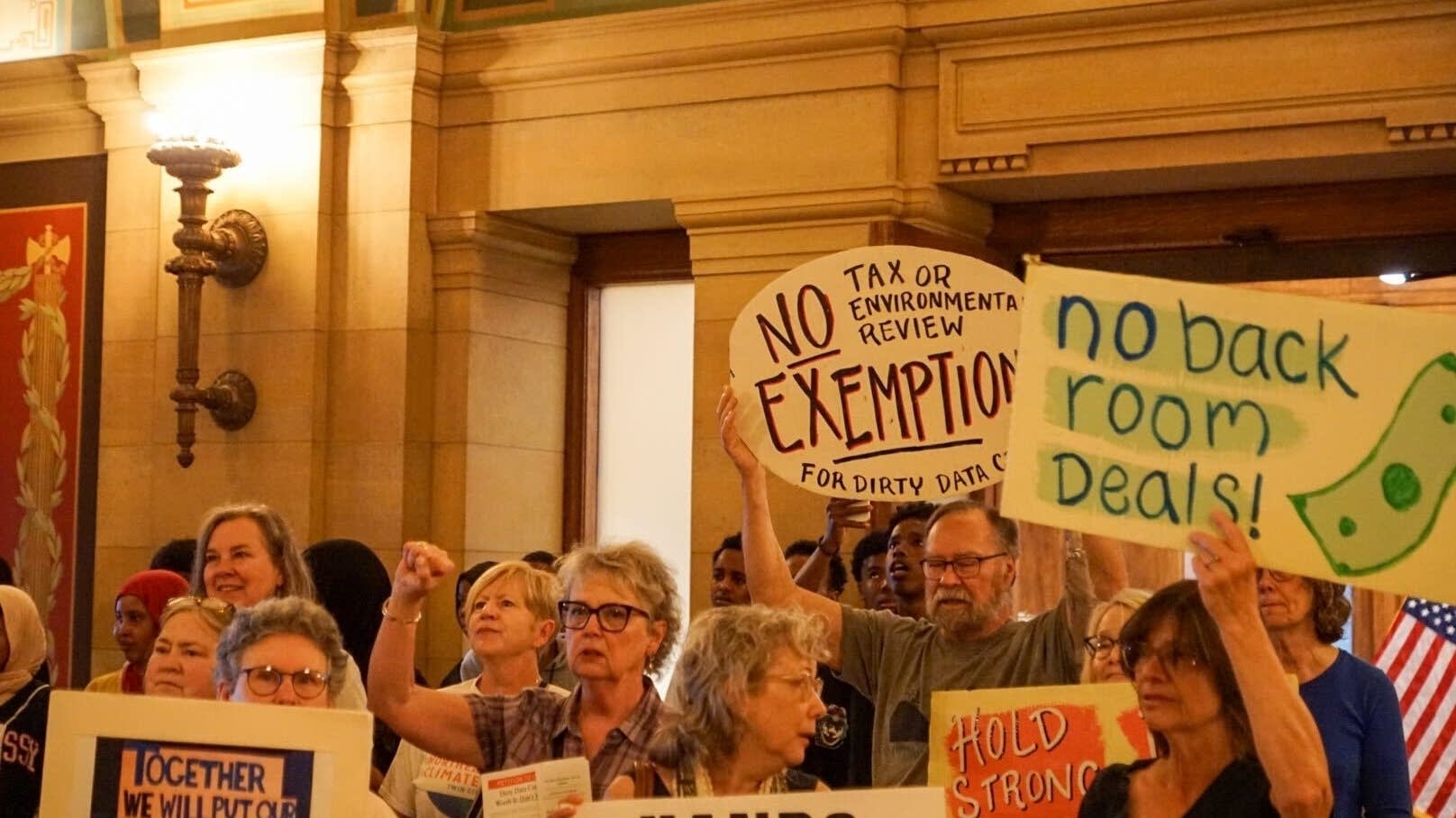
Last year Minnesota lawmakers passed tax breaks for data centers as well as policies meant to protect other utility customers and the environment.
 Kirsti Marohn
Water
Liquid is used to absorb heat in data centers.
Water use varies a lot between centers depending on their server efficiency, cooling systems, the water used in electricity production, and other factors, according to the report.
Some can reduce their on-site water use with cooling technologies, shifting the water use to off-site electricity production. That's why it's important to track water use and electricity use to fully gauge the environmental impact of proposed data centers.
"Some single data center facilities use more than the annual allocation a city may have from the Minnesota Department of Natural Resources, but many data centers are using far less water on site," according to the toolkit.
The Minnesota DNR gets involved when it comes to use of collective water. Regional planning organizations do too.
"Direct water use may be the area where local governments have the most direct impact, but indirect water use can represent up to 71-75% of data center water use," according to the toolkit. Direct water use is on-site use.
Data centers may also produce wastewater that's sent through local wastewater treatment facilities. Cooling can create water discharge with minerals, treatment chemicals, and heat.
Other environmental considerations
Data centers keep generators on site to back up their technology if the electricity goes out. Generators produce air pollution and noise.
Local officials can regulate these things. For example, Monticello, Minn., has a policy that allows back-up power generators to power data centers only during a power outage, not during a curtailment of power supply or voluntary shutdown of power. It's part of an ordinance passed this year to establish a Data Center Planned Unit Development zoning district.
Because of their energy needs, data center growth comes with increasing carbon emissions. Full impacts will depend on the mix of carbon-free and fossil fuel energy sources.
"The proposed Google project in Pine Island, Minn., includes proposed contractual requirements for new renewable energy, battery energy storage, and contributions to Xcel’s existing program to support battery storage in Minnesota," according to the report.
 Molly Castle Work
Eden Prairie, Minn., officials changed their codes to regulate data centers, requiring developers to explain how they will align projects with the city's sustainability goals.
Data center proposals have attracted protest and scrutiny for their use of resources and the changes they may impose on local landscapes and soundscapes. They're also a place where people can see and feel the impact of technology and artificial intelligence.
From the report: "Data center projects are emerging as a tangible symbol in the debate about AI more broadly."
 Mikki Morrissette